
Grillaio vs Falco cuculo
Falco naumanni contro Falco vespertinus
Fai un quiz con Grillaio e Falco cuculo
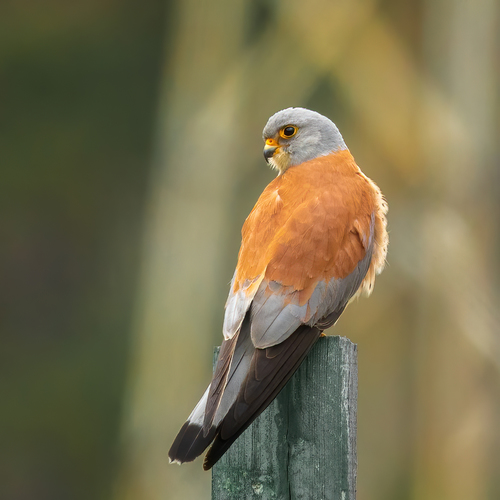 Grillaio
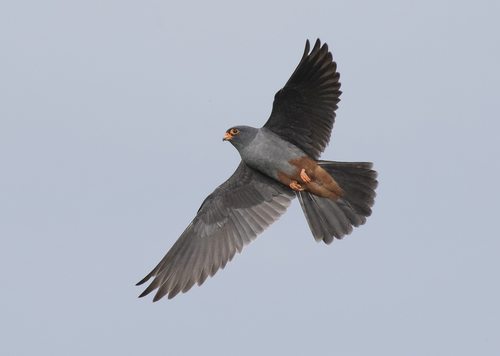 Falco cuculo
In breve
Il segno di campo più affidabile tra Grillaio e Falco cuculo è la colorazione del maschio adulto: i maschi di Falco cuculo sono completamente blu-grigio con gambe e sottocoda rosse, mentre i maschi di Grillaio hanno una testa e una coda grigia ma un dorso marrone e mancano delle tonalità rosse. Le piume giovanili e femminili sono più simili e possono essere confuse, ma sottili differenze nel motivo del viso, nella colorazione delle ali e nella struttura aiutano a separarli. Entrambe le specie sono simili in dimensioni e spesso si sovrappongono in distribuzione e habitat, ma il loro modo di volare e i richiami differiscono. Un'attenzione particolare all'età, al sesso e soprattutto al motivo del viso e alla colorazione delle ali inferiori è cruciale per un'identificazione sicura.
Consigli di identificazione
- Adult male coloration: Male Falco cuculo is all blue-grey with red undertail and legs; male Grillaio has a grey head and tail but a brown back and lacks any red tones. This is the most straightforward separation in adult males.
- Female and juvenile face pattern: Female and juvenile Red-footed Falcons have a white face with a strong black eye stripe and moustaches, giving a masked appearance. Grillaio females and young are paler, with less contrast and lack the bold facial markings.
- Underwing coloration (adults): Falco cuculo adult males have uniformly grey underwings; Grillaio males have grey patches but not the uniformity or extent of blue-grey.
- Back color (adults): Grillaio males have a brown back, while Falco cuculo males are blue-grey above. Females of both species are grey-backed, but Falco cuculo females have orange heads and underparts.
- Leg and talon color: Falco cuculo has red legs (all ages), while Grillaio has pale, whitish-horn talons (unusual for falcons), but this is only visible at close range.
- Malar stripe: Grillaio males lack the black malar stripe; Falco cuculo females and juveniles have a black moustachial stripe.
- Overall tone: Grillaio females and juveniles are paler and less contrasting than Falco cuculo equivalents, which show more orange and stronger facial contrast.
- Wing and tail proportions: Grillaio has proportionally shorter wings and tail compared to Falco cuculo, which appears longer-winged and more falcon-like in flight.
- Flight jizz: Falco cuculo often appears more buoyant and agile in flight, while Grillaio is more delicate and fluttery.
- Vocalizations: Listen for the harsh 'chay-chay-chay' of Grillaio; Falco cuculo does not give this call.
- Habitat context: If in the Mediterranean or Central Asia, Grillaio is more likely; in eastern Europe and the Carpathian Basin, both are possible, but Falco cuculo is more localized.
- Seasonal context: Both are summer migrants and may be seen together in overlapping ranges. In winter, Grillaio migrates to Africa and Pakistan, while Falco cuculo's wintering grounds are not detailed here.
- Colony behavior: Both may nest colonially, but massive communal roosts (thousands of birds) are more typical of Grillaio in winter.
- Bill and talon details: Not usually visible in the field, but Grillaio's pale talons are unique among falcons.
- When in doubt: Focus on face pattern (especially in females and juveniles), overall coloration, and call, as these are the most reliable field marks when plumage is ambiguous.
Taglia
Entrambe le specie sono quasi identiche in dimensioni e massa, con il Grillaio che pesa in media 159 g e il Falco cuculo 158,5 g [wikidata]. La lunghezza e l'apertura alare si sovrappongono completamente (27–33 cm e 63–72 cm per il Grillaio; 28–34 cm e 65–75 cm per il Falco cuculo) [wikipedia]. Sul campo, nessuna delle due specie appare visibilmente più grande o più robusta dell'altra, quindi la dimensione non è un separatore affidabile.
Piumaggio
- Uccelli giovanili/immaturi: I giovani di entrambe le specie sono marroni sopra e color crema sotto con striature, ma i giovanili di Falco cuculo mostrano un motivo del viso simile a quello della femmina (viso bianco con striscia nera sugli occhi e baffi), mentre i giovanili di Grillaio sono più chiari nel complesso e mancano di marcature facciali forti. Il motivo delle ali inferiori non è descritto in dettaglio per i giovanili di entrambe le specie, quindi la separazione si basa sul viso e sul tono generale.
- Maschi adulti: I maschi di Falco cuculo sono completamente blu-grigio tranne per una sottocoda e gambe rosse, e le loro ali inferiori sono uniformemente grigie. I maschi di Grillaio hanno una testa e una coda grigia, un dorso marrone, parti inferiori grigie barrate e mancano della striscia malare nera; hanno anche macchie grigie sulle ali ma non l'uniformità blu-grigia del Falco cuculo. I maschi di Grillaio mancano completamente delle tonalità rosse.
- Femmine adulte: Le femmine di Falco cuculo hanno un dorso e ali grigie, una testa e parti inferiori arancioni, e un viso bianco con striscia nera sugli occhi e baffi. Le femmine di Grillaio sono più chiare nel complesso, con meno contrasto e marcature facciali meno distinte. Entrambe possono apparire simili a distanza, ma il motivo del viso e le tonalità arancioni del Falco cuculo sono distintivi.
- Colore delle gambe e degli artigli: Il Falco cuculo ha gambe rosse; il Grillaio ha artigli di colore bianco-avorio (insoliti per i falchi), ma questo è visibile solo a distanza ravvicinata.
Comportamento
Entrambe le specie cacciano da posatoi o planando e spesso catturano prede a terra. I Grillaio sono più strettamente insettivori, specialmente in inverno, e spesso si vedono in grandi dormitori comuni. I Falco cuculo possono anche cacciare in gruppi ma sono meno propensi a formare dormitori così massicci. Entrambi nidificano in colonie, spesso utilizzando edifici o fori negli alberi, e nessuno costruisce una struttura nido. In volo, il Grillaio può apparire leggermente più delicato e con ali e coda più corte, mentre il Falco cuculo è descritto come con ali lunghe e può mostrare un volo più leggero e simile a un falco.
Habitat
Entrambe le specie nidificano in campi aperti, steppe e paesaggi agricoli, sovrapponendosi spesso in distribuzione attraverso l'Europa meridionale e orientale e l'Asia Centrale. Il Grillaio è più diffuso nel Mediterraneo e in Asia Centrale, mentre il Falco cuculo è concentrato nell'Europa orientale e nella Pianura Carpatica, con popolazioni più piccole altrove. Entrambi utilizzano siti nido artificiali e a volte si trovano vicino agli insediamenti umani. Il Falco cuculo preferisce aree con più prati naturali, mentre il Grillaio è più flessibile ma anche influenzato dai cambiamenti dell'habitat.
Voce
Il Grillaio emette un duro richiamo 'chay-chay-chay', che è diagnostico e molto diverso dai richiami del Falco cuculo. Il richiamo tipico del Falco cuculo non è descritto in dettaglio qui, ma non è lo stesso di quello del Grillaio. Se senti il 'chay-chay-chay', è probabile che tu stia ascoltando un Grillaio.