

Least Tern vs Large-billed Tern
Sternula antillarum contro Phaetusa simplex
Fai un quiz con Least Tern e Large-billed Tern
 Least Tern
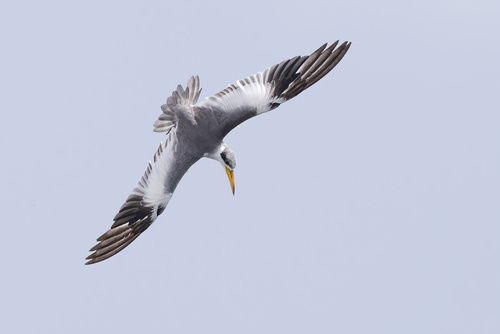 Large-billed Tern
In breve
Il segno distintivo più affidabile tra il Fraticello e il Large-billed Tern è la dimensione complessiva e la struttura del becco: il Large-billed Tern è molto più grande e ha un becco giallo lungo e sorprendentemente spesso, mentre il Fraticello è piccolo con un becco molto più fine. In volo o a riposo, il Fraticello mostra un aspetto compatto e delicato e uno stile di volo a gobba, mentre il Large-billed Tern è robusto e con un becco pesante. Il piumaggio adulto è superficialmente simile: entrambi hanno cappelli neri e parti inferiori bianche, ma le parti superiori del Fraticello sono più chiare e la sua coda e il suo dorso sono grigi, non bianchi. I modelli delle ali giovanili e immature non sono descritti per nessuno dei due, quindi ci si deve basare su dimensione, struttura e becco. Entrambe le specie hanno gambe gialle e teste bianco e nere, ma le differenze nel becco e nella dimensione sono inconfondibili a qualsiasi distanza.
Consigli di identificazione
- La dimensione è il separatore più veloce: il Large-billed Tern è quasi il doppio della lunghezza e diverse volte la massa del Fraticello. Se l'uccello sembra piccolo e delicato, non è un Large-billed Tern.
- La struttura del becco è diagnostica: il Fraticello ha un becco giallo fine e snodato (con una piccola punta nera in estate, tutto scuro in inverno); il becco del Large-billed Tern è spesso, lungo e completamente giallo—quasi simile a quello di un gabbiano.
- Stile di volo/jizz: il Fraticello vola con battiti d'ala rapidi e irregolari e una postura a gobba, spesso con il becco inclinato verso il basso. Il Large-billed Tern, essendo molto più grande e pesante, apparirà più stabile e robusto in volo.
- Colore delle parti superiori: il Fraticello è grigio più chiaro sopra; il Large-billed Tern è di un grigio medio più scuro. Questo è sottile ma visibile in buona luce.
- Colore della coda e del dorso: il Fraticello ha un dorso e una coda grigia (non bianca), mentre la coda e il dorso del Large-billed Tern sono bianchi. Questo può essere un segno sottile ma utile, specialmente in volo.
- Marcature delle ali: il Fraticello mostra marcature nere sulle primarie esterne; le ali del Large-billed Tern sono grigie sopra, con nessuna menzione di marcature nere sulle primarie.
- Colore delle gambe: entrambe le specie hanno gambe giallastre, quindi questo non è utile per la separazione.
- Schema della testa: entrambe hanno un cappello nero e una fronte bianca in piumaggio riproduttivo, ma la macchia bianca del Fraticello è più piccola e più nettamente definita. In non riproduzione, entrambe hanno una corona più chiara e una fronte bianca più estesa.
- Colore del becco in non riproduzione: il becco del Fraticello diventa tutto scuro (nerastro) in inverno, mentre il becco del Large-billed Tern rimane giallo.
- Contesto dell'habitat: il Fraticello è costiero o vicino alla costa, nidificando su spiagge e foraggiando in estuari/lagune; il Large-billed Tern si trova su fiumi e laghi interni in Sud America. Se sei lontano dalla costa, è improbabile che tu veda un Fraticello.
- Gamma geografica: il Fraticello è un nidificante nordamericano, il Large-billed Tern è sudamericano (a est delle Ande). L'overlap è raro e solo come vagabondi.
- Comportamento di riposo/nidificazione: il Fraticello nidifica apertamente su spiagge; il Large-billed Tern preferisce le barre di sabbia fluviali e le isole.
- Vocalizzazione: se udito, il richiamo del Fraticello è un distintivo squeak, ma la voce del Large-billed Tern non è descritta—quindi questo è utile solo per confermare il Fraticello.
- Fagotti misti: se visti in gruppo, il Fraticello sarà ridotto in dimensioni da qualsiasi Large-billed Tern presente.
- Nessun segnale di modello di ali giovanili/immaturi: poiché i segni di volo giovanili di nessuna delle due specie sono descritti, non fare affidamento sul modello delle ali per i giovani uccelli—usa dimensione e becco.
Taglia
Il Large-billed Tern è drammaticamente più grande: circa 38 cm di lunghezza e pesa circa 235 g [wikidata], rispetto ai 22–24 cm e 39–52 g del Fraticello [wikipedia]. In campo, questo significa che il Large-billed Tern è quasi il doppio della lunghezza e diverse volte più pesante. La differenza è ovvia anche a distanza o in gruppi misti di sterne. Il Fraticello è la sterne più piccola del Nord America, mentre il Large-billed Tern è robusto e pesante per una sterne.
Piumaggio
- Modello di ali giovanili/immaturi: Non descritto per nessuna delle due specie nelle fonti, quindi non sono disponibili segni di volo specifici per età per la separazione.
- Riproduzione adulta: Entrambe le specie hanno cappelli neri, parti inferiori bianche e parti superiori grigie. Le parti superiori del Fraticello sono grigie più chiare, e il suo dorso e la sua coda sono grigi (non bianchi come nel Fraticello del Vecchio Mondo). Il Large-billed Tern ha parti superiori grigie e una coda e un dorso bianchi. Entrambi hanno gambe gialle e una macchia bianca sulla fronte in piumaggio riproduttivo, ma quella del Fraticello è più piccola e più nettamente definita.
- Non riproduzione: Entrambe le specie mostrano una corona più chiara e una maggiore estensione di bianco sulla fronte, con un cappello nero meno nettamente definito. Il becco del Fraticello diventa scuro (nerastro) in inverno, mentre il Large-billed Tern mantiene un grande becco giallo tutto l'anno.
- Becco: Il Fraticello ha un becco giallo snodato con una piccola punta nera in estate; il becco del Large-billed Tern è molto più spesso, lungo e completamente giallo (non è menzionata alcuna punta nera).
- Ali: Il Fraticello ha ali grigie chiare con marcature nere sulle primarie più esterne; le ali del Large-billed Tern sono grigie sopra, con parti inferiori bianche e senza menzione di marcature nere sulle primarie.
Comportamento
Il Fraticello è agile, con battiti d'ala rapidi e irregolari e una postura di volo distintiva a gobba, spesso con il becco inclinato leggermente verso il basso. Si libra e si tuffa per piccoli pesci, raramente immergendosi completamente. Il Large-billed Tern è più massiccio e probabilmente vola con battiti d'ala più stabili e potenti, ma lo stile di volo dettagliato non è descritto. Il Fraticello spesso si riposa e nidifica su terreni aperti, mentre il Large-billed Tern è associato a barre di sabbia fluviali e laghi d'acqua dolce.
Habitat
Il Fraticello nidifica su spiagge sabbiose o ghiaiose aperte, estuari e lagune in Nord America e localmente nel nord del Sud America. Si nutre in estuari poco profondi, lagune e acque costiere. Il Large-billed Tern si trova in gran parte del Sud America (a est delle Ande), abitante fiumi e laghi d'acqua dolce, favorendo in particolare isole fluviali e barre di sabbia. L'overlap è minimo tranne che come vagabondi; il contesto è un forte indizio: il Fraticello è costiero o vicino alla costa, il Large-billed Tern è strettamente interno su fiumi e laghi.
Voce
Non è disponibile un confronto vocale diretto. Il Fraticello è noto per un richiamo che scricchiola e che differisce dalle sterne del Vecchio Mondo; la voce del Large-billed Tern non è descritta nelle fonti.