

Charrancito Americano vs Charrán Picudo
Sternula antillarum frente a Phaetusa simplex
Juega un quiz con Charrancito Americano y Charrán Picudo
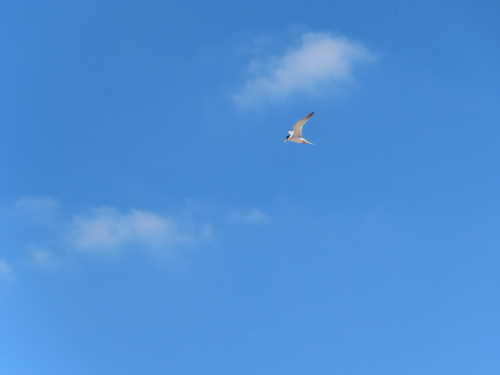 Charrancito Americano
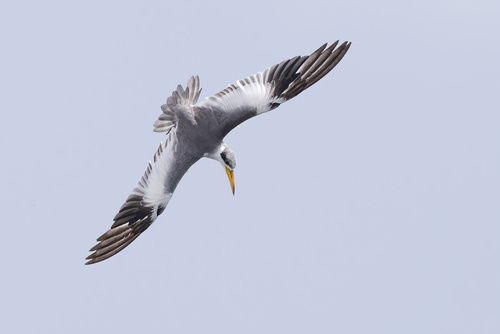 Charrán Picudo
En breve
La marca de campo más confiable entre el Charrancito Americano y el Charrán Picudo es el tamaño general y la estructura del pico: el Charrán Picudo es mucho más grande y tiene un pico amarillo largo y notablemente grueso, mientras que el Charrancito Americano es pequeño con un pico mucho más fino. En vuelo o en reposo, el Charrancito Americano muestra una apariencia compacta y delicada y un estilo de vuelo jorobado y ligero, mientras que el Charrán Picudo es robusto y de pico grueso. El plumaje adulto es superficialmente similar: ambos tienen gorras negras y partes inferiores blancas, pero las partes superiores del Charrancito Americano son más claras y su cola y rabadilla son grises, no blancas. No se describen patrones de alas juveniles e inmaduros para ninguno de los dos, así que confíe en el tamaño, la estructura y el pico. Ambas especies tienen patas amarillas y cabezas en blanco y negro, pero las diferencias en el pico y el tamaño son inconfundibles a cualquier distancia.
Consejos de identificación
- El tamaño es el separador más rápido: el Charrán Picudo es casi el doble de largo y varias veces más pesado que el Charrancito Americano. Si el ave parece pequeña y delicada, no es un Charrán Picudo.
- La estructura del pico es diagnóstica: el Charrancito Americano tiene un pico amarillo fino y esbelto (con una pequeña punta negra en verano, todo oscuro en invierno); el pico del Charrán Picudo es grueso, largo y completamente amarillo, casi como el de una gaviota en proporción.
- Estilo de vuelo/jizz: el Charrancito Americano vuela con batidos de alas rápidos y bruscos y una postura jorobada, a menudo con el pico inclinado hacia abajo. El Charrán Picudo, siendo mucho más grande y pesado, parecerá más estable y robusto en vuelo.
- Color de las partes superiores: el Charrancito Americano es de un gris más claro arriba; el Charrán Picudo es de un gris medio más oscuro. Esto es sutil pero visible en buena luz.
- Color de la cola y rabadilla: el Charrancito Americano tiene una rabadilla y cola grises (no blancas), mientras que la cola y rabadilla del Charrán Picudo son blancas. Esto puede ser una marca sutil pero útil, especialmente en vuelo.
- Marcas en las alas: el Charrancito Americano muestra marcas negras en las primarias externas; las alas del Charrán Picudo son grises arriba, sin mención de marcas primarias negras.
- Color de las patas: ambas especies tienen patas amarillas, por lo que esto no es útil para la separación.
- Patrón de la cabeza: ambos tienen una gorra negra y una frente blanca en plumaje de cría, pero la mancha blanca del Charrancito Americano es más pequeña y más definida. En no cría, ambos tienen una corona más clara y una frente blanca más extensa.
- Color del pico en no cría: el pico del Charrancito Americano se vuelve completamente oscuro (negruzco) en invierno, mientras que el pico del Charrán Picudo permanece amarillo.
- Contexto del hábitat: el Charrancito Americano es costero o cerca de la costa, anidando en playas y forrajeando en estuarios/lagoons; el Charrán Picudo se encuentra en ríos y lagos interiores en América del Sur. Si está lejos de la costa, es poco probable que sea un Charrancito Americano.
- Rango geográfico: el Charrancito Americano es un criador de América del Norte, el Charrán Picudo es sudamericano (al este de los Andes). La superposición es rara y solo como vagabundos.
- Comportamiento de descanso/nidificación: el Charrancito Americano anida abiertamente en playas; el Charrán Picudo prefiere bancos de arena ribereños e islas.
- Vocalización: si se escucha, el llamado del Charrancito Americano es un chirrido distintivo, pero la voz del Charrán Picudo no está descrita, por lo que esto solo es útil para confirmar el Charrancito Americano.
- Bandadas mixtas: si se ve en un grupo, el Charrancito Americano será enano comparado con cualquier Charrán Picudo presente.
- Sin pistas de patrón de alas juveniles/inmaduros: dado que no se describen las marcas de vuelo juveniles de ninguna de las especies, no confíe en el patrón de alas para aves jóvenes; use tamaño y pico.
Tamaño
El Charrán Picudo es dramáticamente más grande: aproximadamente 38 cm de longitud y pesando alrededor de 235 g [wikidata], en comparación con los 22–24 cm y 39–52 g [wikipedia] del Charrancito Americano. En el campo, esto significa que el Charrán Picudo es casi el doble de largo y varias veces más pesado. La diferencia es obvia incluso a distancia o en bandadas de charranes mixtas. El Charrancito Americano es el charrán más pequeño de América del Norte, mientras que el Charrán Picudo es robusto y corpulento para un charrán.
Plumaje
- Patrón de alas juveniles/inmaduros: No se describe para ninguna de las especies en las fuentes, por lo que no hay marcas de vuelo específicas de edad disponibles para la separación.
- Cría adulta: Ambas especies tienen gorras negras, partes inferiores blancas y partes superiores grises. Las partes superiores del Charrancito Americano son de un gris más claro, y su rabadilla y cola son grises (no blancas como en el Charrán Común del Viejo Mundo). El Charrán Picudo tiene partes superiores grises y una cola y rabadilla blancas. Ambas tienen patas amarillas y una mancha blanca en la frente en plumaje de cría, pero la del Charrancito Americano es más pequeña y más definida.
- No cría: Ambas especies muestran una corona más clara y más blanco extenso en la frente, con una gorra negra menos definida. El pico del Charrancito Americano se vuelve oscuro (negruzco) en invierno, mientras que el Charrán Picudo retiene un gran pico amarillo durante todo el año.
- Pico: El Charrancito Americano tiene un pico amarillo esbelto con una pequeña punta negra en verano; el pico del Charrán Picudo es mucho más grueso, largo y completamente amarillo (no se menciona punta negra).
- Alas: El Charrancito Americano tiene alas de gris pálido con marcas negras en las primarias más externas; las alas del Charrán Picudo son grises arriba, con partes inferiores blancas y sin mención de marcas primarias negras.
Comportamiento
El Charrancito Americano es ágil, con batidos de alas rápidos y bruscos y una postura de vuelo jorobada distintiva, a menudo con el pico ligeramente inclinado hacia abajo. Se queda suspendido y se zambulle para pescar pequeños peces, rara vez sumergiéndose completamente. El Charrán Picudo es más robusto y probablemente vuela con batidos de alas más estables y poderosos, pero no se describe un estilo de vuelo detallado. El Charrancito Americano a menudo se posa y anida en terreno abierto, mientras que el Charrán Picudo se asocia con bancos de arena ribereños y lagos de agua dulce.
Hábitat
El Charrancito Americano cría en playas abiertas de arena o grava, estuarios y lagunas en América del Norte y localmente en el norte de América del Sur. Forrajea en estuarios poco profundos, lagunas y aguas cercanas a la costa. El Charrán Picudo se encuentra en la mayor parte de América del Sur (al este de los Andes), habitando ríos y lagos de agua dulce, favoreciendo especialmente islas y bancos de arena en ríos. La superposición es mínima excepto como vagabundos; el contexto es una pista fuerte: el Charrancito Americano es costero o cerca de la costa, el Charrán Picudo es estrictamente interior en ríos y lagos.
Voz
No hay comparación vocal directa disponible. Se nota que el Charrancito Americano tiene un llamado chirriante que difiere de los charranes del Viejo Mundo; la voz del Charrán Picudo no está descrita en las fuentes.