

Lappet-faced Vulture vs White-backed Vulture
Torgos tracheliotos contro Gyps africanus
Fai un quiz con Lappet-faced Vulture e White-backed Vulture
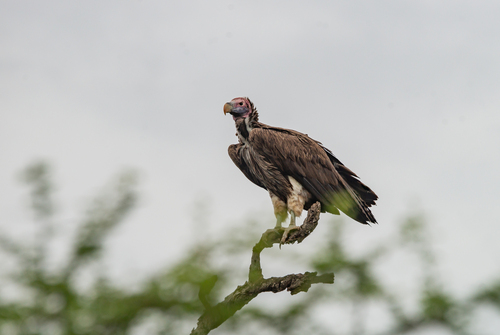 Lappet-faced Vulture
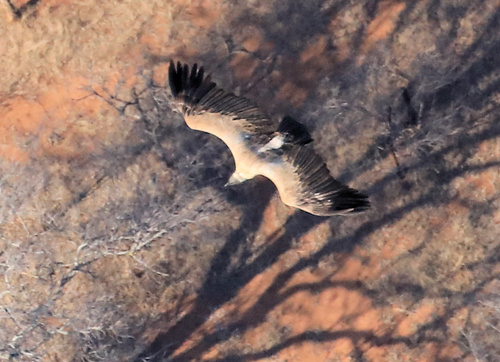 White-backed Vulture
In breve
Il segno distintivo più affidabile tra il Lappet-faced Vulture e il White-backed Vulture è la dimensione e la struttura della testa: il Lappet-faced è molto più grande, con un becco massiccio e un aspetto a testa carnosa vividamente colorato, mentre il White-backed è più piccolo e snello, con un dorso chiaro e una testa meno appariscente. In volo, il Lappet-faced mostra ali larghe e nerastre con piume bianche contrastanti sulle cosce, mentre gli adulti del White-backed Vulture hanno un dorso chiaro e parti inferiori generalmente più chiare, con i giovani che sono per lo più scuri. Se vedi un avvoltoio con una testa enorme, colorata e rugosa e una corporatura potente, è un Lappet-faced; un avvoltoio con dorso più chiaro e più piccolo con un collare bianco è un White-backed. Gli avvoltoi immaturi White-backed sono più uniformemente scuri e possono essere confusi con altri avvoltoi scuri, ma non mostrano mai il becco massiccio o le pieghe della testa del Lappet-faced.
Consigli di identificazione
- Dimensione e robustezza: Il Lappet-faced è molto più grande e robusto del White-backed. Se vedi entrambi insieme, la differenza è ovvia; da solo, confronta con altri avvoltoi o grandi rapaci nelle vicinanze.
- Struttura della testa: Il Lappet-faced ha una testa enorme, nuda e colorata con pieghe carnose (lappets) sui lati; la testa del White-backed è più piccola, coperta di piumino e priva di lappets o colorazione brillante.
- Dimensione del becco: Il becco del Lappet-faced è massiccio e profondo, facilmente visibile anche da lontano; il becco del White-backed è di dimensioni medie e meno prominente.
- Piume bianche sulle cosce: Il Lappet-faced mostra piume bianche sulle cosce che contrastano con il corpo e le ali scure, visibili sia in perching che in volo; il White-backed non mostra mai questa caratteristica.
- Colore del dorso (adulti): L'adulto White-backed ha un dorso chiaro e biancastro che si distingue contro ali e corpo scuri; il Lappet-faced è uniformemente scuro sopra (eccetto per le cosce bianche), mai con dorso chiaro.
- Collare: Gli adulti White-backed hanno un collare bianco evidente; il Lappet-faced ne è privo, mostrando invece pelle nuda e pieghe.
- Confusione giovanile: Gli avvoltoi immaturi White-backed sono tutti scuri e possono essere confusi con altri avvoltoi scuri, ma non mostrano mai il becco massiccio, le pieghe della testa o le cosce bianche del Lappet-faced.
- Colore della testa: La testa del Lappet-faced varia da rosso a rosa a grigio, a seconda della regione; la testa del White-backed è sempre chiara e coperta di piumino, mai colorata vivacemente.
- Silhouette in volo: Il Lappet-faced ha ali larghe con bordi paralleli e punte delle ali seghettate e un volo potente e pesante; il White-backed ha ali più snelle e meno imponenti in aria.
- Comportamento sulla carcassa: Il Lappet-faced spesso domina e si nutre da solo o in coppia, a volte cacciando prede vive; il White-backed è gregario, si nutre in gruppi e arriva presto sulle carcasse.
- Postura in perching: Il Lappet-faced si siede dritto, apparendo massiccio con un becco pesante e una testa nuda e rugosa; il White-backed si appollaia più curvo, con una testa più piccola e piumosa e un collare visibile.
- Contesto dell'habitat: Grandi gruppi di avvoltoi circolanti o su una carcassa sono probabilmente White-backed; un avvoltoio solitario e imponente in un paese aperto è più probabilmente un Lappet-faced.
- Trappola: A grande distanza, la dimensione e la struttura della testa possono essere difficili da giudicare; concentrati sulle piume bianche delle cosce (Lappet-faced) rispetto al dorso chiaro e al collare (adulto White-backed) quando possibile.
- Nessuna separazione vocale: Non sono descritte differenze vocali diagnostiche nelle fonti.
- Sesso/stagione: Non ci sono forti differenze di piumaggio sessuale o stagionale in nessuna delle due specie; l'età è più importante per l'identificazione.
Taglia
Il Lappet-faced Vulture è il più grande avvoltoio nel suo areale africano, misurando 95–115 cm di lunghezza con un'apertura alare di 2.5–2.9 m e pesando 4.4–13.6 kg (le femmine anche più pesanti). Al contrario, il White-backed Vulture è molto più piccolo: 78–98 cm di lunghezza, apertura alare 1.96–2.25 m e peso 4.2–7.2 kg. Sul campo, il Lappet-faced appare più robusto, con una presenza più imponente sia in perching che in volo. Il White-backed è decisamente più leggero e snello, particolarmente evidente quando entrambe le specie sono viste insieme su una carcassa.
Piumaggio
- Giovanile/immaturo White-backed Vulture: Uniformemente scuro nel complesso, privo del dorso chiaro e del collare bianco degli adulti. Questo può farli sembrare superficialmente simili ad altri avvoltoi scuri, ma non mostrano mai le piume bianche delle cosce del Lappet-faced o la testa colorata e rugosa.
- Adulto White-backed Vulture: Mostra un dorso chiaro e biancastro che contrasta con il piumaggio altrimenti scuro, e un collare bianco distintivo. La testa è coperta di piumino, non di pelle nuda, e non è mai colorata vivacemente.
- Lappet-faced Vulture (tutte le età): Nere sopra con piume bianche delle cosce fortemente contrastanti (visibili sia in perching che in volo). La testa è nuda, con pelle colorata (rossastra, rosa o grigia a seconda della regione) e pieghe carnose prominenti (lappets) sui lati. Le parti inferiori possono variare da bianche a marrone chiaro. In volo, le ali sono larghe e scure con punte delle ali seghettate, e le piume bianche delle cosce possono essere un segno chiave.
- Contrasto chiave: Solo il Lappet-faced mostra la combinazione di una testa massiccia, colorata e rugosa e piume bianche delle cosce; solo l'adulto White-backed ha un dorso chiaro e un collare bianco.
Comportamento
I Lappet-faced Vultures sono più solitari o si trovano in coppie, spesso dominando sulle carcasse a causa della loro dimensione e del potente becco, e sono noti per cacciare piccole prede vive o depredare altri rapaci. I White-backed Vultures sono altamente sociali, si nutrono in gruppi e spesso tra i primi ad arrivare sulle carcasse, contando l'uno sull'altro per trovare cibo. Il Lappet-faced spesso scaccia il White-backed su una carcassa, specialmente quando entrambi sono presenti.
Habitat
Entrambe le specie si trovano in savane aperte e regioni semi-aride, spesso sovrapponendosi sulle carcasse. I White-backed Vultures sono più abbondanti e diffusi, specialmente nelle savane boschive, e nidificano sugli alberi. I Lappet-faced Vultures sono più rari, spesso trovati in habitat più aridi o aperti, e il loro numero in diminuzione li rende molto meno probabili da vedere. Se vedi un avvoltoio in un grande gruppo, è più probabile che sia un White-backed; un avvoltoio solitario e imponente è più probabile che sia un Lappet-faced.
Lappet-faced Vulture · White-backed Vulture · I miei uccelli difficili