

Japanese Leaf Warbler vs Luì boreale
Phylloscopus xanthodryas contro Phylloscopus borealis
Fai un quiz con Japanese Leaf Warbler e Luì boreale
 Japanese Leaf Warbler
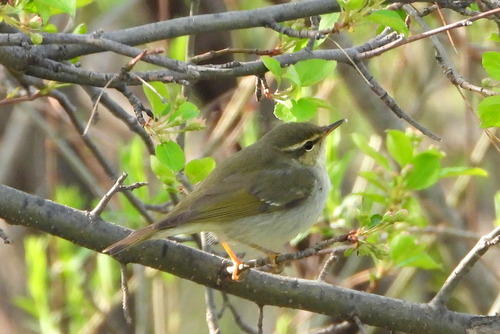 Luì boreale
In breve
Il segno di campo più affidabile tra il Japanese Leaf Warbler e il Luì boreale è il tono generale del piumaggio: il Japanese Leaf Warbler è nettamente più brillante, di un verde oliva sopra, mentre il Luì boreale è di un verde grigiastro più opaco. Entrambe le specie mostrano una singola barra alare bianca, ma quella del Japanese Leaf Warbler è spesso più prominente e si staglia su uno sfondo più verde. I giovani di entrambe le specie sono più opachi, ma il Japanese Leaf Warbler rimane più oliva, mentre il Luì boreale è sempre più cenere. Strutturalmente, il Luì boreale ha un becco più pesante, simile a un pugnale, con una punta scura sulla mandibola inferiore, rispetto al becco più corto e nerastro del Japanese Leaf Warbler. Il canto e il richiamo differiscono, ma richiedono esperienza: il canto del Luì boreale è un trillo veloce, mentre quello del Japanese Leaf Warbler è più lento e a tonalità più bassa.
Consigli di identificazione
- Upperparts color: Il Japanese Leaf Warbler è di un verde oliva brillante sopra, mentre il Luì boreale è di un verde grigiastro più opaco. Questo è il segno singolo più utile in buona luce, specialmente negli adulti.
- Wingbar: Entrambi hanno una singola barra alare bianca, ma quella del Japanese Leaf Warbler è spesso più brillante e più nettamente definita contro il dorso verde; quella del Luì boreale è meno contrastante su uno sfondo più opaco. Funziona meglio su adulti con piumaggio fresco.
- Supercilium (striscia sopra l'occhio): Il Japanese Leaf Warbler mostra un supercilium giallo-bianco chiaro, spesso con una sfumatura giallastra; quello del Luì boreale è più chiaro, meno giallo e meno appariscente. Questo può essere sottile su uccelli usurati o giovani.
- Bill structure: Il Luì boreale ha un becco visibilmente più pesante, lungo, simile a un pugnale, con una punta scura sulla mandibola inferiore. Il becco del Japanese Leaf Warbler è più corto, nerastro (con un accenno di giallo) e più fine. La forma del becco è meglio giudicata a distanza ravvicinata o in foto.
- Tail color: La coda del Japanese Leaf Warbler è verdastra, in sintonia con il dorso; la coda del Luì boreale è meno verde, fondendosi con le parti superiori più opache.
- Underparts: Il Japanese Leaf Warbler è di un verde chiaro sotto, mentre il Luì boreale è di un bianco sporco. Questo è sottile e può essere influenzato dalla luce o dall'usura.
- Juvenile/immature plumage: I giovani Japanese Leaf Warbler sono più opachi, di un grigio-marrone più scuro sopra, ma mostrano ancora alcune tonalità di oliva; i giovani Luì boreale sono di un grigio cenere sopra e di un bianco sporco sotto, privi di qualsiasi tonalità verdastra. Usa questo per gli uccelli autunnali.
- Leg color: Le gambe del Japanese Leaf Warbler sono estremamente piccole e variano da giallo pallido a marrone-arancio; il colore delle gambe del Luì boreale non è distintivo per la separazione.
- Song: Il canto del Japanese Leaf Warbler è più lento, a tonalità più bassa, e in brevi frasi ripetute (1.5–2 sec); quello del Luì boreale è un trillo veloce e acuto. Utile se canta, ma richiede esperienza.
- Call: Il Japanese Leaf Warbler emette un “brrt” secco e basso; il richiamo del Luì boreale è più acuto e alto. I richiami sono sottili e meglio utilizzati da ascoltatori esperti.
- Habitat and context: In Giappone durante la stagione di nidificazione, ci si aspetta il Japanese Leaf Warbler; il Luì boreale è un migrante raro. In Fennoscandia o Alaska, solo il Luì boreale nidifica. Considera sempre la posizione e la stagione.
- Size: Il Luì boreale è leggermente più grande e più robusto, ma questo è raramente diagnostico a meno che entrambi non siano visti insieme.
- Sex differences: Entrambe le specie sono sessualmente monomorfiche; non usare il sesso per la separazione.
- Behavior: Entrambe le specie sono foraggiatori attivi tra il fogliame; il comportamento non è un separatore affidabile.
- Pitfalls: Non fare affidamento esclusivamente sulla presenza della barra alare, poiché entrambe le specie mostrano una singola barra alare bianca. Combina sempre diversi segni, specialmente i toni di colore e la forma del becco, per un'identificazione sicura.
Taglia
Entrambe le specie sono simili in lunghezza (Japanese Leaf Warbler: 12–13 cm), ma il Luì boreale è leggermente più grande nel complesso e appare più robusto, con un becco visibilmente più pesante. Sul campo, questa differenza di dimensioni è sottile e meglio giudicata con un confronto diretto o esperienza.
Piumaggio
Gli uccelli giovani e immaturi di entrambe le specie sono più opachi rispetto agli adulti, ma i giovani Japanese Leaf Warbler sono più grigio-marroni, mentre i giovani Luì boreale sono di un grigio cenere sopra e di un bianco sporco sotto. Entrambe le specie mostrano una singola barra alare bianca, ma quella del Japanese Leaf Warbler è spesso più brillante e più contrastante rispetto alle sue parti superiori verde oliva, mentre la barra alare del Luì boreale è impostata su uno sfondo più opaco, grigiastro-verde. Il Japanese Leaf Warbler ha una chiara striscia sopra l'occhio giallo-bianca (supercilium) e una coda verdastra, mentre il supercilium del Luì boreale è più chiaro e meno giallo, e la coda è meno verde. Le parti inferiori del Japanese Leaf Warbler sono di un verde chiaro, mentre il Luì boreale è di un bianco sporco sotto. Entrambi i sessi sono simili in entrambe le specie.
Comportamento
Entrambe le specie sono foraggiatori attivi e irrequieti tra il fogliame, spesso sbattendo le ali e le code. Non sono state notate forti differenze comportamentali nelle fonti per la separazione sul campo.
Habitat
Il Japanese Leaf Warbler nidifica in Giappone e migra attraverso la Cina orientale e le isole vicine, svernando a Taiwan, nelle Filippine, a Borneo e a Giava. Il Luì boreale nidifica in Fennoscandia, nel Palearctico settentrionale e in Alaska, svernando nel sud-est asiatico. In Giappone, il Japanese Leaf Warbler è il nidificante atteso, mentre il Luì boreale è un migrante raro o un vagabondo. Entrambi preferiscono habitat boschivi, ma il Luì boreale è più associato a foreste di betulle o miste di betulle vicino all'acqua nel suo areale di nidificazione.
Voce
Il canto del Japanese Leaf Warbler è una serie di brevi frasi, ripetute più volte, della durata di 1.5–2 secondi, a tonalità più bassa e più lento rispetto al Luì boreale. Il suo richiamo è un “brrt” secco e basso. Il canto del Luì boreale è un trillo veloce, più acuto e più rapido rispetto al Japanese Leaf Warbler. I richiami sono meno distintivi sul campo a meno che non si sia familiari con entrambi.
Japanese Leaf Warbler · Luì boreale · I miei uccelli difficili