

Gabbiano d'Islanda vs Prothonotary Warbler
Larus glaucoides contro Protonotaria citrea
Fai un quiz con Gabbiano d'Islanda e Prothonotary Warbler
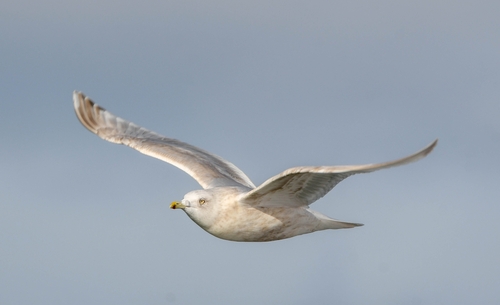 Gabbiano d'Islanda
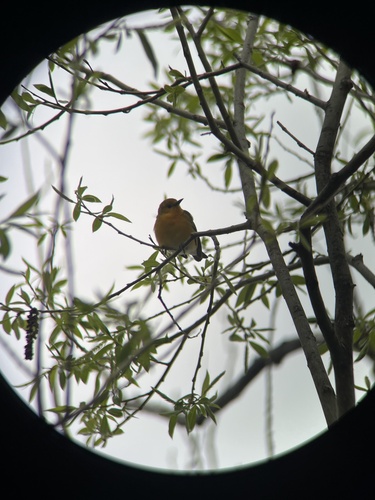 Prothonotary Warbler
In breve
The most reliable way to separate Iceland Gull from Prothonotary Warbler is by overall size, structure, and flight style: Iceland Gull is a large, pale gull with long wings and a hefty bill, while Prothonotary Warbler is a tiny, bright yellow songbird with a slender, pointed bill and short tail. If seen in flight, Iceland Gull (even as an immature) shows long, broad wings with pale upperparts and no black in the wingtips, while Prothonotary Warbler flashes a short, two-toned tail from below. Even at a distance, the gull’s pale, silvery-grey tones and bulk contrast sharply with the warbler’s vivid yellow and olive plumage. Any confusion likely stems from poor views or unusual lighting, but careful attention to size, shape, and color will resolve the ID.
Consigli di identificazione
- Size: Iceland Gull is many times larger than Prothonotary Warbler. If you see a bird the size of a pigeon or larger, it cannot be a Prothonotary Warbler.
- Bill shape: Iceland Gull has a thick, heavy, slightly hooked bill (yellowish-green in adults, dark in immatures), while Prothonotary Warbler has a slender, sharply pointed bill suited for insect-eating.
- Wing pattern in flight (all ages): Iceland Gull always shows long, pale wings with no black in the tips, while Prothonotary Warbler flashes a short, wide tail with a white base and dark tip from below. This tail pattern is unique among eastern warblers and never shown by gulls.
- Plumage color: Iceland Gull is overall pale grey and white, with a cold, silvery look. Prothonotary Warbler is bright yellow below and on the head (especially males), with olive back and blue-grey wings and tail.
- Head color: Adult male Prothonotary Warbler has a vivid orange-yellow head, while Iceland Gull’s head is always white or pale grey, never yellow.
- Leg color: Prothonotary Warbler has black legs, while Iceland Gull’s legs are pale pinkish or greyish (not always visible at a distance).
- Tail shape: Prothonotary Warbler’s tail is short and squared, with a clear two-toned pattern from below. Iceland Gull’s tail is longer, pale, and lacks any dark tip.
- Behavior: Iceland Gull is often seen soaring, gliding, or swimming in open areas; Prothonotary Warbler is active, hopping, and foraging low in dense, wet woods.
- Habitat: If the bird is in a wooded swamp or flooded forest, it is almost certainly a Prothonotary Warbler. Iceland Gull is found in open, coastal, or urban settings, never in dense woods.
- Jizz/flight style: Iceland Gull has slow, deep wingbeats and a steady, buoyant flight. Prothonotary Warbler has rapid, fluttery wingbeats and erratic, short flights.
- Bill color (immatures): Immature Iceland Gulls have a mostly dark bill, but never as fine or pointed as a warbler’s.
- Sex/age confusion: Female and immature Prothonotary Warblers are duller yellow but still never approach the pale, cold tones of Iceland Gull. No age or sex of Iceland Gull is yellow or olive.
- Group context: Iceland Gulls are often seen in groups with other gulls; Prothonotary Warblers are usually solitary or in mixed flocks of small songbirds.
- Feeding behavior: Iceland Gull scavenges or feeds on fish and refuse, often on the ground or water. Prothonotary Warbler gleans insects from foliage or bark, rarely on the ground.
- Voice: Not diagnostic here, but if you hear a loud, ringing "sweet-sweet-sweet" song, it is Prothonotary Warbler. Iceland Gull is mostly silent or gives harsh calls.
Taglia
Iceland Gull is vastly larger than Prothonotary Warbler. The gull measures 50–64 cm in length with a wingspan of 115–150 cm and weighs 480–1,100 g [wikipedia], making it a medium-sized gull but still enormous compared to any warbler. Prothonotary Warbler is only 13 cm long, with a wingspan of 22 cm and a mean mass of 14.9 g [wikidata]. Even a distant Iceland Gull will appear much bigger and bulkier than the most robust songbird, while Prothonotary Warbler is delicate and sparrow-sized.
Piumaggio
For all ages, Iceland Gull is extremely pale, with adults showing pale grey upperparts and white underparts, and no black in the wingtips at any age [wikipedia]. Immatures are also very pale, with a mostly dark bill but still lacking the pink base seen in Glaucous Gull. In flight, both adult and immature Iceland Gulls show long, pale wings with no dark markings, and a pale tail. Prothonotary Warbler, by contrast, is bright yellow below and on the head (especially males), with an olive back and blue-grey wings and tail. In flight, the warbler shows a short, wide tail with a distinctive two-toned pattern: white at the base and dark at the tip, easily visible from below. Females and immatures are duller yellow but still never approach the cold, pale tones of the gull. There is no overlap in wing pattern or overall coloration between the two species at any age or season.
Comportamento
Iceland Gull is typically seen soaring, gliding, or swimming, often in flocks around coasts, harbors, or garbage dumps. Its flight is strong and buoyant, with slow, deep wingbeats. Prothonotary Warbler is active and restless, moving with quick, jerky hops and sometimes crawling on branches, even upside down. It is almost always seen in wooded wetlands, foraging low or near water, and rarely perches in the open for long. The warbler’s flight is short and fluttery, with rapid wingbeats and frequent tail flicks, utterly unlike the gull’s powerful, steady flight.
Habitat
Iceland Gull breeds on Arctic coasts and cliffs in Canada and Greenland, wintering along northern Atlantic coasts, often near open water, harbors, or refuse sites [wikipedia]. It is never found in forested wetlands. Prothonotary Warbler is a specialist of wooded swamps, flooded forests, and slow-moving streams, especially in the eastern US. It nests in natural or artificial cavities in trees over water. The two species do not overlap in preferred habitat; any sighting in a wooded wetland is almost certainly Prothonotary Warbler, while large pale gulls in open, coastal, or urban settings are Iceland Gulls.
Gabbiano d'Islanda · Prothonotary Warbler · I miei uccelli difficili