

Harris's Sparrow vs LeConte's Sparrow
Zonotrichia querula contro Ammospiza leconteii
Fai un quiz con Harris's Sparrow e LeConte's Sparrow
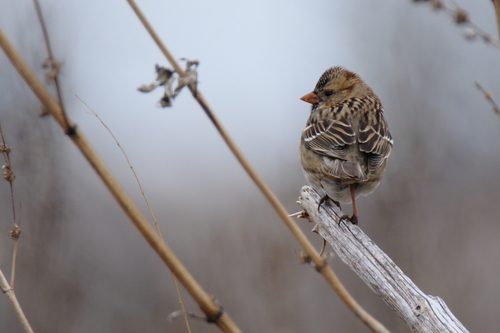 Harris's Sparrow
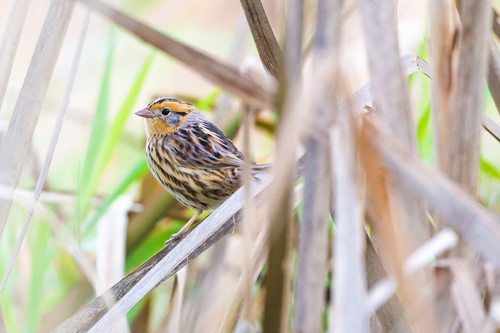 LeConte's Sparrow
In breve
Il modo più affidabile per separare Harris's Sparrow da LeConte's Sparrow è per dimensioni e struttura generale: Harris's è molto più grande e massiccio, con un becco rosa robusto, mentre LeConte's è piccolo e delicato con un becco grigio corto. In tutte le livree, Harris's mostra un volto e un bavero neri audaci (soprattutto negli adulti), mentre LeConte's ha un volto arancione chiaro con guance grigie e una striscia centrale bianca sulla corona. Gli Harris's immaturi possono essere confusi, ma mostrano comunque una struttura più grande e massiccia e un nero più esteso sulle parti inferiori rispetto a qualsiasi LeConte's. LeConte's preferisce rimanere nascosto nell'erba, mentre Harris's è più probabile che venga visto in posato. Se vedi un passero con un grande becco rosa e un evidente nero sul volto o sulla gola, è Harris's; se è un passero piccolo e rotondo con un volto arancione chiaro e una striscia bianca sulla corona, è LeConte's.
Consigli di identificazione
- La dimensione è il controllo più veloce: Harris's Sparrow è molto più grande e pesante di LeConte's. Se l'uccello sembra massiccio e grande per un passero, è Harris's; se è piccolo e rotondo, è LeConte's. Questo vale per tutte le età e le stagioni.
- Forma e colore del becco: Harris's ha un grande becco conico rosa (tutte le età); LeConte's ha un becco grigio corto. Il colore del becco è particolarmente evidente negli adulti, ma la dimensione è sempre utile.
- Schema del volto e della gola: L'adulto Harris's mostra una corona nera audace, volto, gola e parte superiore del petto, in contrasto con i lati grigi della testa. LeConte's non mostra mai nero sul volto o sulla gola; invece, cerca un volto arancione chiaro con guance grigie e una striscia centrale bianca sulla corona (tutte le età).
- Confusione immatura/giovanile: L'immaturo Harris's può mostrare meno nero, ma ha comunque un mento/gola bianchi, una striscia malare nera e una larga fascia nera sfumata sul petto. LeConte's non mostra mai una striscia malare o sul petto nera, ma ha un volto arancione chiaro pulito e lati striati. Se vedi del nero sulla gola o sul petto, è Harris's.
- Striscia sulla corona: LeConte's ha sempre una striscia centrale bianca sulla corona bordata di marrone scuro, visibile in tutte le livree. La corona di Harris's è nera negli adulti, marrone con striature nere nei giovanili, ma non mostra mai una striscia centrale bianca pulita.
- Parti inferiori: Gli adulti di Harris's hanno parti inferiori bianche con nero sulla parte superiore del petto e alcune macchie nere sui fianchi; gli immaturi hanno più nero sotto. LeConte's ha un ventre bianco sporco e un petto/lati arancione-giallo chiaro con striature marroni scure, mai nero.
- Schiena e barre alari: Harris's ha una schiena marrone con pesanti striature nere e due barre alari bianche. LeConte's ha una schiena striata di marrone e beige, ma senza barre alari distinte.
- Coda: Harris's ha una coda lunga; LeConte's ha una coda corta e appuntita. In volo o in posato, la lunghezza della coda è un utile indizio.
- Postura e comportamento: Harris's è spesso visto in posato, a volte in stormi, e non è strettamente terrestre. LeConte's è segreto, rimane basso nell'erba densa e raramente si posa in aperto tranne quando canta.
- Habitat: Harris's si trova in bordi cespugliosi, boschi aperti e campi, specialmente in inverno. LeConte's è limitato a praterie dense e campi infestati, raramente avventurandosi in aree aperte o cespugliose.
- Canto: Harris's canta frasi chiare e fischiate da posatoi alti; il canto di LeConte's è un trill simile a un insetto, spesso emesso da dentro l'erba. Se senti un ronzio simile a un grillo, è LeConte's; fischi chiari indicano Harris's.
- Cambiamento stagionale: Harris's perde un po' di nero nella livrea non riproduttiva, diventando più chiaro e marrone, ma mostra comunque una dimensione e un becco più grandi. LeConte's è simile tutto l'anno.
- Contesto di stormo: Harris's può unirsi a stormi misti di passeri in inverno ed è spesso il passero più grande presente. LeConte's è solitamente solitario o in piccoli gruppi, sempre in erba folta.
- Volo di fuga: LeConte's di solito fugge da terra, vola basso e si tuffa rapidamente nel riparo. Harris's è meno probabile che fugga in questo modo ed è più probabile che venga visto volare tra i posatoi o nutrirsi in modo aperto.
- Quando hai dubbi: Se vedi un passero con un becco rosa e qualsiasi nero sul volto o sulla gola, è Harris's. Se è piccolo, rotondo, con un volto arancione chiaro e una striscia bianca sulla corona, e senza nero, è LeConte's.
Taglia
Harris's Sparrow è drammaticamente più grande di LeConte's Sparrow. Harris's misura 17–20 cm di lunghezza con un'apertura alare di circa 27 cm e una massa corporea che varia da 26–49 g [wikipedia], rendendolo il passero nordamericano più grande. LeConte's Sparrow è uno dei passeri più piccoli, con solo 12 cm di lunghezza, 18 cm di apertura alare e 13,8 g di massa [wikidata]. Sul campo, Harris's appare grande, con corpo pesante e coda lunga, mentre LeConte's è piccolo, rotondo e con coda corta. Anche a distanza o in stormi misti, il divario di dimensioni è sorprendente.
Piumaggio
- Giovanile/Immature: Il giovanile Harris's Sparrow mostra una corona marrone striata di nero e sottili striature scure sotto, oltre ad alcune marcature nere più ampie sulla parte inferiore. Gli immaturi hanno un mento e una gola bianchi, una striscia malare nera e una larga fascia nera sfumata sul petto. I giovanili e gli immaturi di LeConte's non sono descritti in dettaglio, ma tutte le età mostrano un volto arancione chiaro con guance grigie, una corona marrone scuro con una striscia centrale bianca e una schiena striata. Nessuna età di LeConte's mostra nero sul volto o sulla gola.
- Adulto (Riproduzione): Gli adulti di Harris's Sparrow hanno una corona nera sorprendente, volto, gola e parte superiore del petto, un becco rosa, lati grigi della testa e del collo, schiena striata di marrone e due barre alari bianche. Le parti inferiori sono bianche con alcune macchie nere sui fianchi. Gli adulti di LeConte's hanno un volto arancione chiaro, guance grigie, corona marrone scuro con una striscia centrale bianca, nuca grigio-lilla con striature castanee e una schiena striata di marrone/beige. Le parti inferiori sono bianche sporche sul ventre, arancione-giallo chiaro sul petto/lati con striature marroni scure.
- Adulto (Non riproduzione): Harris's diventa più chiaro e marrone, con nero ridotto sulla testa e sulla gola, a volte con scalloping bianco. LeConte's rimane simile tutto l'anno.
- Schema alare in volo: Non è descritto alcun schema distintivo della parte superiore dell'ala o di volo per nessuna delle due specie che sia diagnostico per età o specie.
Comportamento
Harris's Sparrow è spesso visto in posato su arbusti o alberi, specialmente quando canta o in stormi invernali. Può essere trovato in aree aperte ma non è strettamente terrestre. LeConte's Sparrow è segreto, preferendo rimanere nascosto in erbe alte e dense, e raramente viene visto in posato in aperto tranne quando canta da un fusto d'erba. Harris's è più probabile che si unisca a stormi misti di passeri e sia visibile, mentre LeConte's è più probabile che fugga da terra e si tuffi di nuovo nel riparo.
Habitat
Harris's Sparrow nidifica nel Canada centrale settentrionale e sverna nelle Grandi Pianure centrali (dal sud del Dakota del Sud al Texas centrale), spesso in boschi aperti, bordi cespugliosi e campi. LeConte's Sparrow nidifica nelle praterie settentrionali e sverna negli Stati Uniti meridionali, favorendo sempre erba densa e alta o campi infestati. Se trovi un passero in prateria aperta o prateria, specialmente se fugge da terra e scompare nel riparo, è più probabile che sia LeConte's. Harris's è più probabile che si trovi in habitat cespugliosi, di margine o boschivi ed è più evidente.
Voce
Harris's Sparrow canta una serie di fischi chiari, alti e tremolanti, a volte seguiti da un'altra serie a un tono diverso, e emette un forte richiamo metallico 'chink' oltre a un cinguettio musicale. Il canto di LeConte's Sparrow è un ronzio simile a un grillo con una nota acuta all'inizio e un breve cinguettio alla fine (tika-zzzzzzzzzzzz-tik), e il suo richiamo è un breve 'tsip.' Il canto di Harris's è musicale e fischiato, mentre quello di LeConte's è simile a un insetto e ronzante. LeConte's canta spesso da posizioni nascoste nell'erba, mentre Harris's canta da posatoi alti.
Harris's Sparrow · LeConte's Sparrow · I miei uccelli difficili