

Oca selvatica vs Oca granaiola della taiga
Anser anser contro Anser fabalis
Fai un quiz con Oca selvatica e Oca granaiola della taiga
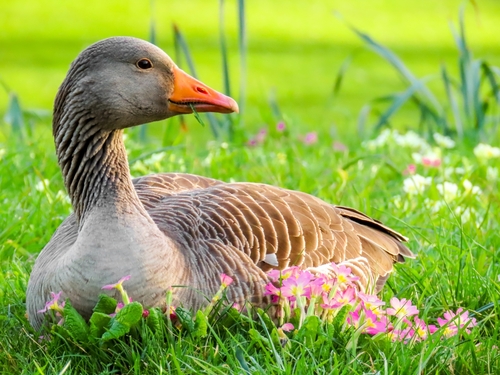 Oca selvatica
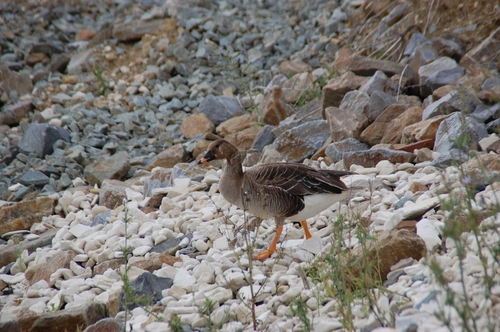 Oca granaiola della taiga
In breve
Il segno distintivo più affidabile tra Oca selvatica e Oca granaiola della taiga è il colore del becco e delle gambe: l'Oca selvatica mostra un becco arancione brillante e gambe rosa, mentre l'Oca granaiola della taiga ha un becco di base nera con una banda arancione e gambe arancioni brillanti. In volo o a riposo, l'ala anteriore chiara e il sopracciglio dell'Oca selvatica si distinguono, in contrasto con l'ala superiore generalmente più scura dell'Oca granaiola. I giovani Oche selvatiche non presentano le macchie nere sul ventre degli adulti ma mostrano comunque copritrici delle ali chiare, mentre l'Oca granaiola della taiga ha sempre copritrici delle ali superiori marroni scure con frange bianche strette. Entrambe sono oche grandi e massicce, ma l'Oca selvatica è leggermente più pesante e più chiara nel complesso. Prestare attenzione al modello del becco, al colore delle gambe e al tono delle ali è fondamentale, specialmente in stormi misti o in condizioni di scarsa illuminazione.
Consigli di identificazione
- Colore e modello del becco: L'Oca selvatica ha un becco arancione semplice senza nero; l'Oca granaiola della taiga mostra una base e una punta nere con una banda arancione al centro. Questo è diagnostico a distanza ravvicinata per tutte le età e stagioni.
- Colore delle gambe: L'Oca selvatica ha gambe rosa, mentre l'Oca granaiola della taiga ha gambe e piedi arancioni brillanti. Utile quando gli uccelli sono in piedi o camminano.
- Ala superiore in volo (tutte le età): L'Oca selvatica mostra un'ala anteriore grigia chiara e un sopracciglio, con copritrici delle ali chiare in contrasto con piume di volo più scure. L'Oca granaiola della taiga ha copritrici delle ali superiori marroni scure con solo frange bianche strette, dando un aspetto dell'ala più uniforme e scuro.
- Ventre e petto dei giovani: I giovani Oche selvatiche non presentano le macchie nere sul petto e sul ventre visibili negli adulti, ma mostrano comunque l'ala e il sopracciglio chiari. I giovani Oche granaiola della taiga sono sempre più scuri sotto, privi delle parti inferiori chiare dell'Oca selvatica.
- Modello del collo: L'Oca selvatica adulta mostra un aspetto distintivo 'a fisarmonica' o piegato delle piume del collo, specialmente quando è allerta. Il collo dell'Oca granaiola è più liscio e uniforme.
- Tono generale del piumaggio: L'Oca selvatica è più chiara, con grigio e bianco maculato, e un petto e ventre più chiari. L'Oca granaiola della taiga è più scura nel complesso, con meno contrasto tra corpo e ali.
- Linea bianca sul fianco: L'Oca selvatica mostra spesso una linea bianca che delimita i fianchi superiori, specialmente quando nuota o è a riposo. Questo è assente o molto meno evidente nell'Oca granaiola della taiga.
- Dimensioni e struttura: L'Oca selvatica è più massiccia e pesante, con un collo più spesso e una testa più grande. L'Oca granaiola della taiga è leggermente più snella e con collo più lungo, ma la dimensione non è sempre affidabile a causa della sovrapposizione.
- Contesto dell'habitat: In Europa occidentale, l'Oca selvatica è molto più probabile nei parchi, nelle terre agricole e nei laghi urbani. L'Oca granaiola della taiga è un visitatore invernale raro, solitamente in zone umide o campi più selvaggi e meno disturbati.
- Composizione del branco: L'Oca selvatica spesso si associa a oche domestiche e può essere molto docile. L'Oca granaiola della taiga è più timida e meno probabile da trovare in stormi domestici misti.
- Vocalizzazione: Il richiamo dell'Oca selvatica è un profondo e nasale cackle, mentre l'Oca granaiola della taiga emette un honk più acuto. Usare con cautela, poiché i richiami si sovrappongono e sono variabili.
- Macchie sul petto e sul ventre: L'Oca selvatica adulta mostra spesso macchie nere sul petto e sul ventre; l'Oca granaiola della taiga manca di questa caratteristica.
- Copritrici delle ali (in pericolo o mentre si puliscono): Le copritrici delle ali dell'Oca selvatica sono chiare e argentate, in contrasto con il resto dell'ala. Quelle dell'Oca granaiola sono marroni scure con solo frange chiare strette.
- Struttura del becco: Entrambi hanno becco piuttosto lungo, ma quello dell'Oca selvatica è più robusto e più triangolare nel profilo, mentre quello dell'Oca granaiola è leggermente più lungo e più affusolato, anche se questo è sottile.
- Quando si è in dubbio: Concentrarsi prima sul colore del becco e delle gambe, poi cercare l'ala anteriore chiara e il sopracciglio in volo per l'Oca selvatica, o l'ala complessivamente più scura e uniforme dell'Oca granaiola della taiga.
Taglia
L'Oca selvatica è la più pesante delle due, con un peso medio di circa 3465 g contro i 3020 g dell'Oca granaiola della taiga. Entrambe sono oche grandi, ma l'Oca selvatica è tipicamente un po' più massiccia e lunga (74–91 cm contro i 68–90 cm dell'Oca granaiola), anche se c'è sovrapposizione. Sul campo, l'Oca selvatica appare spesso più robusta e con collo spesso, mentre l'Oca granaiola può apparire leggermente più snella e con collo più lungo, specialmente quando è allerta. Tuttavia, la dimensione da sola non è affidabile a causa della sovrapposizione e della variazione per sesso e sottospecie.
Piumaggio
-
Uccelli giovani/immaturi: I giovani Oche selvatiche non presentano le macchie nere sul ventre degli adulti ma mostrano comunque un'ala anteriore grigia chiara e un sopracciglio, e le loro copritrici delle ali sono chiare con piume di volo più scure in contrasto. I giovani Oche granaiola della taiga hanno copritrici delle ali superiori marroni scure con frange bianche strette, privi dell'aspetto chiaro e argentato dell'ala superiore dell'Oca selvatica. Questo contrasto dell'ala superiore è spesso visibile in volo o quando si stirano le ali a terra.
-
Adulti: Gli adulti dell'Oca selvatica hanno un piumaggio generalmente più chiaro, maculato e striato di grigio e bianco, con un'ala anteriore e un sopracciglio chiari, e una linea bianca che delimita i fianchi superiori. Il loro collo mostra un modello 'a fisarmonica' di pieghe delle piume. Gli adulti dell'Oca granaiola della taiga sono complessivamente marroni più scuri, con copritrici delle ali superiori marroni scure e solo frange bianche strette, dando un aspetto dell'ala più uniforme e scuro. Entrambe le specie hanno alcune frange di piume chiare, ma quelle dell'Oca selvatica sono più ampie e più evidenti.
-
Becco e gambe: Il becco dell'Oca selvatica è arancione e senza segni, le gambe sono rosa. Il becco dell'Oca granaiola è nero alla base e alla punta con una banda arancione, le gambe e i piedi sono arancioni brillanti. Questo è spesso il modo più veloce per separarli a distanza ravvicinata.
Comportamento
Entrambe le specie sono sociali e spesso viste in stormi, a volte mescolate con altre oche Anser. L'Oca selvatica tende ad essere più avvicinabile ed è spesso trovata in parchi e terre agricole, a volte associandosi a oche domestiche. L'Oca granaiola della taiga è più timida e più probabile da trovare in habitat più selvaggi e meno disturbati, specialmente durante la migrazione e l'inverno. Entrambe pascolano su erba e colture, ma l'Oca selvatica è più probabile da vedere in ambienti urbani o semi-urbani.
Habitat
L'Oca selvatica è diffusa in tutta la Paleartide, nidificando in una varietà di habitat umidi tra cui laghi, paludi e persino parchi urbani. È più probabile incontrarla in terre agricole di pianura, bacini idrici e paesaggi alterati dall'uomo. L'Oca granaiola della taiga nidifica nel nord dell'Europa e dell'Asia, preferendo mosaici di taiga e habitat umidi, e sverna più a sud in zone umide più remote e campi agricoli. In Europa occidentale, l'Oca selvatica è molto più comune e probabile nella maggior parte degli habitat di pianura, mentre l'Oca granaiola della taiga è un visitatore invernale più raro, solitamente in aree meno disturbate.
Voce
L'Oca selvatica ha un richiamo forte e cackling, spesso descritto come "aahng-ung-ung," simile a quello delle oche domestiche, e gli stormi possono suonare come cani da caccia. L'Oca granaiola della taiga emette un honk forte, ma la separazione sul campo per voce è difficile a meno che non si sia molto familiari con entrambe. I richiami dell'Oca selvatica sono generalmente più profondi e nasali, mentre gli honk dell'Oca granaiola sono più acuti, ma la sovrapposizione e la variazione individuale rendono questo un segno secondario, non primario, sul campo.
Oca selvatica · Oca granaiola della taiga · I miei uccelli difficili