

Oca selvatica vs Oca colombaccio
Anser anser contro Branta bernicla
Fai un quiz con Oca selvatica e Oca colombaccio
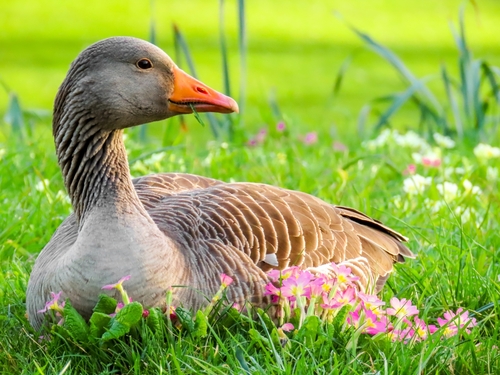 Oca selvatica
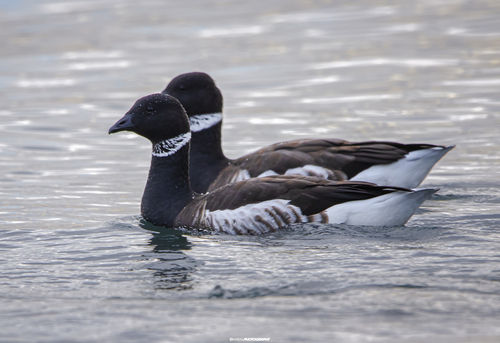 Oca colombaccio
In breve
Il segno di campo più affidabile per separare l'Oca selvatica dall'Oca colombaccio è la dimensione e la struttura complessiva: l'Oca selvatica è un uccello molto più grande e massiccio con un becco arancione pesante e gambe rosa, mentre l'Oca colombaccio è compatta, con collo corto e scura, con un becco nero tozzo e gambe nere. In volo o a riposo, l'Oca selvatica mostra ali anteriori e un sopracciglio grigio chiaro, in contrasto con le sue piume da volo più scure, mentre l'Oca colombaccio (tutte le forme) è molto più scura nel complesso, con una testa e un collo neri distintivi e piccole macchie bianche sul collo. L'Oca selvatica giovane manca delle macchie nere sul ventre degli adulti ma rimane chiara e grande; i giovani Oche colombaccio sono simili agli adulti ma sempre molto più scuri e compatti. Se vedi un'oca con un volto chiaro, con becco arancione e gambe rosa, è un'Oca selvatica; un'oca piccola, scura, con becco nero e un sottocoda bianco è un'Oca colombaccio.
Consigli di identificazione
- Dimensione e massa: L'Oca selvatica è molto più grande e pesante dell'Oca colombaccio. Anche a distanza, la dimensione dell'Oca selvatica è ovvia, specialmente se entrambe le specie sono presenti.
- Colore e forma del becco: L'Oca selvatica ha un grande becco arancione profondo (a volte tendente al rosa), mentre l'Oca colombaccio ha un becco nero corto e tozzo. Il colore del becco è visibile anche a distanza moderata.
- Colore delle gambe: Le gambe dell'Oca selvatica sono rosa; quelle dell'Oca colombaccio sono nere. Il colore delle gambe è più utile quando gli uccelli sono a terra e non oscurati.
- Schema del collo e della testa: L'Oca selvatica ha una testa e un collo grigio-marrone uniforme con un pattern di piume a 'concertina'; l'Oca colombaccio ha una testa e un collo neri con una piccola macchia bianca su ciascun lato (a volte formando un collare parziale in alcune sottospecie).
- Colore del corpo: L'Oca selvatica è grigio-marrone chiaro con un ventre più chiaro e spesso macchie nere sul ventre (adulti); l'Oca colombaccio è molto più scura, con parti superiori marrone scuro e ventre scuro o chiaro a seconda della sottospecie, ma sempre più scura dell'Oca selvatica.
- Sottocoda e coda: L'Oca colombaccio mostra sempre un sottocoda bianco puro e una coda molto corta e nera. L'Oca selvatica ha una coda più lunga e chiara con un sopracciglio bianco.
- Schema di volo: In volo, l'Oca selvatica mostra ali anteriori e un sopracciglio grigio chiaro in contrasto con piume da volo più scure; l'Oca colombaccio è uniformemente scura sopra con un sottocoda bianco e una coda nera corta.
- Differenze giovanili: L'Oca selvatica giovane manca delle macchie nere sul ventre e ha gambe grigie, ma rimane chiara e grande; l'Oca colombaccio giovane è sempre scura, con lo stesso sottocoda bianco e macchia sul collo degli adulti.
- Contesto dell'habitat: Nell'entroterra, specialmente in acque dolci, l'Oca selvatica è molto più probabile. Su paludi salmastre o pianure di marea, specialmente in inverno, ci si aspetta l'Oca colombaccio.
- Struttura del gruppo: L'Oca selvatica forma spesso stormi o coppie sciolti e rumorosi; l'Oca colombaccio forma stormi stretti e coesi, specialmente in volo.
- Voce: Il forte e nasale richiamo dell'Oca selvatica è distintivo e simile a quello delle oche domestiche; l'Oca colombaccio è più silenziosa, con richiami più morbidi e graffianti.
- Aspetto generale: L'Oca selvatica appare pesante, con collo lungo e movimento lento; l'Oca colombaccio è compatta, con collo corto e movimento rapido.
- Linea bianca laterale: L'Oca selvatica mostra una linea bianca lungo i fianchi superiori, visibile a riposo; l'Oca colombaccio non ha questa caratteristica.
- Variazione delle sottospecie: Le sottospecie dell'Oca colombaccio variano nel colore del ventre, ma tutte sono molto più scure dell'Oca selvatica e condividono la testa/collo neri e la macchia bianca sul collo.
- Quando i segni falliscono: In scarsa illuminazione o a grande distanza, fare affidamento su dimensione, colore del becco e oscurità complessiva; l'Oca selvatica è sempre più grande e più chiara, l'Oca colombaccio sempre più piccola e più scura.
Taglia
L'Oca selvatica è sostanzialmente più grande: 74–91 cm di lunghezza e una media di 3464,5 g di massa [wikidata], rendendola l'oca selvatica più grande in gran parte del suo areale. L'Oca colombaccio è molto più piccola, con 55–66 cm di lunghezza e 0,88–2,2 kg di massa [wikipedia]. Sul campo, l'Oca selvatica appare massiccia e corpulenta, mentre l'Oca colombaccio è compatta e leggera, con un collo e una coda notevolmente corti. Questa differenza di dimensione è ovvia anche a distanza o in stormi misti.
Piumaggio
-
Confronto giovanile/immaturo: L'Oca selvatica giovane manca delle macchie nere sul petto e sul ventre visibili negli adulti, ma rimane grigio-marrone chiaro nel complesso con un'ala anteriore e un sopracciglio chiaro, e gambe grigie. L'Oca colombaccio giovane assomiglia molto agli adulti, mostrando sempre un corpo marrone scuro, testa e collo neri, e sottocoda bianco, con una piccola macchia bianca sul collo (l'estensione varia a seconda della sottospecie).
-
Confronto adulto: L'Oca selvatica adulta è grigio-marrone chiaro con un petto e un ventre più chiari, macchie nere sul ventre variabili, ala anteriore e sopracciglio grigio chiaro (conspicua in volo), e una linea bianca lungo i fianchi superiori. La testa è leggermente più scura e il collo mostra un pattern di pieghe di piume a 'concertina'. Gli adulti dell'Oca colombaccio sono molto più scuri: testa e collo neri con una piccola macchia bianca sul collo, parti superiori marrone scuro e ventre scuro o chiaro a seconda della sottospecie. Il sottocoda è sempre bianco puro e la coda è molto corta e nera. Il contrasto tra il collo nero e la macchia bianca sul collo è unico per l'Oca colombaccio.
-
In volo: L'Oca selvatica mostra ali anteriori e un sopracciglio chiaro, in contrasto con piume da volo scure; l'Oca colombaccio è uniformemente scura sopra con un sottocoda bianco sorprendente e una coda nera corta.
Comportamento
Le Oche selvatica sono spesso viste pascolare in campi aperti o nuotare in laghi e paludi, di solito in coppie o gruppi familiari, a volte in grandi stormi. Tendono ad essere più avvicinabili e meno diffidenti rispetto alle Oche colombaccio. Le Oche colombaccio sono tipicamente costiere in inverno, nutrendosi su paludi salmastre, estuari e pianure di marea, spesso in stormi stretti e coesi. Il loro volo è più agile e compatto, in linea con la loro dimensione più piccola. Il volo dell'Oca selvatica è pesante e diretto, con battiti d'ala lenti e profondi, mentre quello dell'Oca colombaccio è più veloce e più leggero.
Habitat
L'Oca selvatica predilige le zone umide interne, laghi, fiumi e campi agricoli, specialmente durante la stagione di riproduzione, ma può anche essere trovata in parchi urbani. L'Oca colombaccio è fortemente associata a habitat costieri in inverno—paludi salmastre, estuari e pianure di marea—e nidifica nella tundra artica alta. Se vedi un'oca nell'entroterra su un lago o un campo d'acqua dolce, è molto più probabile che sia un'Oca selvatica; un'oca piccola e scura su un estuario di marea è probabilmente un'Oca colombaccio.
Voce
L'Oca selvatica emette un forte richiamo nasale ('aahng-ung-ung'), spesso paragonato a quello delle oche domestiche, e gli stormi possono sembrare come cani da caccia. L'Oca colombaccio è generalmente più silenziosa, con richiami più morbidi, graffianti o gutturali, ma questi sono meno distintivi e meno probabili da essere uditi a distanza. Se senti un classico honk di un'oca da fattoria, è un'Oca selvatica.