

Gray-fronted Dove vs Fork-tailed Palm Swift
Leptotila rufaxilla contro Tachornis squamata
Fai un quiz con Gray-fronted Dove e Fork-tailed Palm Swift
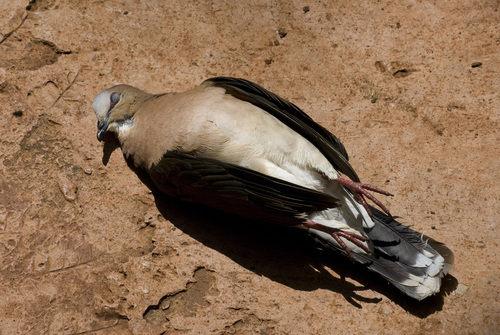 Gray-fronted Dove
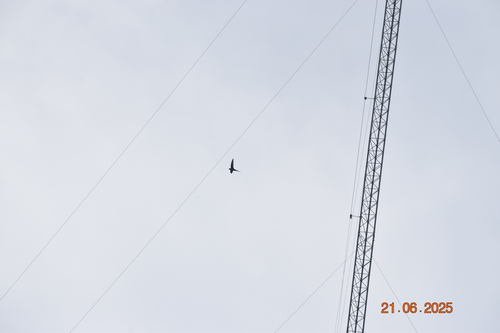 Fork-tailed Palm Swift
In breve
Il segno distintivo più affidabile è la struttura generale e lo stile di volo: Fork-tailed Palm Swift è un uccello minuscolo, snodato e veloce con una coda profondamente biforcuta e ali lunghe e strette, mentre il Gray-fronted Dove è un piccione molto più grande, dal corpo pesante e terrestre, con ali larghe e una coda arrotondata. Il piumaggio giovanile non è probabile che causi confusione, poiché i giovani di entrambe le specie assomigliano ai rispettivi adulti e non condividono schemi distintivi sulle ali superiori. In volo, le ali a falce del swift e la coda biforcuta sono inconfondibili, mentre il piccione mostra ali larghe e arrotondate e una coda a punta quadrata con angoli bianchi. In posizione di riposo, il piccione è robusto con un becco simile a quello di un piccione e gambe rosse, mentre il swift è raramente visto in posizione di riposo e apparirebbe minuscolo e delicato se così. L'habitat e il comportamento sono anche indizi forti: i piccioni camminano a terra o su posatoi bassi, i swift sono quasi sempre visti in volo.
Consigli di identificazione
- La dimensione è un indizio importante: Se l'uccello è delle dimensioni di un piccione o più grande, è un Gray-fronted Dove; se è minuscolo e simile a una rondine, è un Fork-tailed Palm Swift.
- Forma della coda: Fork-tailed Palm Swift ha una lunga coda profondamente biforcuta visibile anche a distanza, specialmente in volo. La coda del Gray-fronted Dove è larga, a punta quadrata, con angoli bianchi sulle piume esterne.
- Stile di volo: I swift sono quasi sempre visti volare rapidamente con ali rigide a forma di falce e movimenti erratici e acrobatici. I piccioni volano con battiti d'ali forti e diretti ma non sono agili o erratici; spesso si alzano da terra.
- Postura in posizione di riposo: I piccioni si posano eretti a terra o su rami bassi, mostrando un corpo robusto e rotondo e un collo corto. I swift raramente si posano, ma se visti, si aggrappano verticalmente a fronde di palma o fili, apparendo snelli e con il petto piatto.
- Forma del becco: Il Gray-fronted Dove ha un becco corto, spesso, simile a quello di un piccione; il Fork-tailed Palm Swift ha un becco minuscolo, quasi invisibile, adatto per catturare insetti.
- Colore delle gambe: Il Gray-fronted Dove ha gambe e piedi rossi, visibili quando è posato o cammina. Le gambe dei swift sono così corte che quasi mai si vedono; non camminano a terra.
- Schema facciale: I piccioni hanno una fronte grigia o blu, pelle rossa nuda attorno all'occhio e una gola bianco-rosata. I swift hanno un volto marrone grigiastro semplice con una gola pallida e maculata, priva di pelle nuda o forti contrasti di colore.
- Parte superiore: Il piccione è marrone oliva con un leggero bronzo o porpora sul mantello; il swift è marrone scuro con una lucentezza verdastra e bordi delle piume grigio chiaro.
- Parte inferiore: Il piccione ha un petto rosa grigiastro che sfuma in un ventre bianco; il swift è chiaro sotto con maculature marroni, specialmente sui lati e sull'undertail.
- Confusione giovanile: I giovanili del piccione hanno barre ruggine sul petto e parti superiori con bordi rugginosi; i giovanili dei swift hanno bordi delle piume color crema ma nessuna barra. Questi segni non sono probabili che si sovrappongano sul campo.
- Contesto dell'habitat: I piccioni si trovano a terra o bassi in dense foreste o boschi; i swift sono visti volare in alto su aree aperte con palme, raramente vicino a terra.
- Comportamento sociale: I swift volano spesso in piccoli gruppi; i piccioni sono solitamente solitari o in coppie.
- Voce: Non diagnostica con le note attuali, ma i piccioni spesso emettono coo morbidi, mentre i swift emettono richiami veloci e alti (non descritti in dettaglio qui).
- Differenze sessuali: Le femmine di piccione sono più marroni e più olive dei maschi, ma sono comunque molto più grandi e di forma diversa rispetto a qualsiasi swift. I swift non mostrano dimorfismo sessuale.
- Se hai dubbi, osserva l'atterraggio: Un uccello che atterra a terra è un piccione; un uccello che non atterra mai tranne brevemente su fronde di palma o fili è un swift.
Taglia
Il Gray-fronted Dove è significativamente più grande: circa 28 cm (11 in) di lunghezza e pesa 115–183 g [wikipedia]. Il Fork-tailed Palm Swift è molto più piccolo, solo circa 13 cm (5.1 in) di lunghezza e 9–13.6 g [wikipedia]. Il piccione è più di due volte più lungo e quasi dieci volte più pesante del swift. Questa differenza di dimensioni è ovvia anche a distanza.
Piumaggio
- Giovanili: I giovanili del Gray-fronted Dove hanno barre ruggine e marrone opaco sul petto e parti superiori con bordi rugginosi; i giovanili del Fork-tailed Palm Swift sono simili agli adulti ma con una sfumatura color crema sulla testa e bordi delle piume color crema sulle parti superiori. Nessuno ha uno schema distintivo delle ali in volo che potrebbe causare confusione tra i due.
- Adulti: Il Gray-fronted Dove mostra una fronte grigia o blu, una corona blu-grigia, parti superiori marrone oliva con un leggero bronzo o porpora sul mantello, e una coda con piume centrali marrone oliva e piume esterne nere con punte bianche evidenti. Il petto è rosa grigiastro, il ventre bianco e l'occhio è circondato da pelle rossa nuda. Gli adulti del Fork-tailed Palm Swift sono marrone scuro sopra con una lucentezza verdastra, bordi delle piume grigio chiaro e un sottocoda leggermente più chiaro. Le parti inferiori sono chiare con maculature marroni, la gola è molto pallida e marrone chiaro con maculature scure, e le copritrici dell'undertail sono marrone scuro con bordi chiari. La coda del swift è profondamente biforcuta e scura, priva degli angoli bianchi del piccione.
Comportamento
Il Gray-fronted Dove è terrestre o si posa a bassa quota, camminando a terra o su rami bassi, muovendosi lentamente e deliberatamente. Il Fork-tailed Palm Swift è quasi sempre visto in volo rapido e agile, raramente posandosi se non brevemente su fronde di palma o fili. Il swift cerca insetti in volo, spesso in piccoli gruppi, mentre il piccione cerca semi e frutta a terra. Il volo del piccione è diretto e forte ma non acrobatico, mentre il swift è altamente manovrabile e veloce.
Habitat
Il Gray-fronted Dove si trova in foreste e boschi, spesso a terra o in folta vegetazione, ed è generalmente timido e poco appariscente. Il Fork-tailed Palm Swift è strettamente legato ad aree aperte con palme, comprese savane, paludi di palma, foreste ripariali e persino aree urbane con palme decorative. Il swift è solitamente visto volare in alto sopra o intorno alle palme, raramente se mai a terra.
Gray-fronted Dove · Fork-tailed Palm Swift · I miei uccelli difficili