

Green-throated Carib vs Magnificent Frigatebird
Eulampis holosericeus contro Fregata magnificens
Fai un quiz con Green-throated Carib e Magnificent Frigatebird
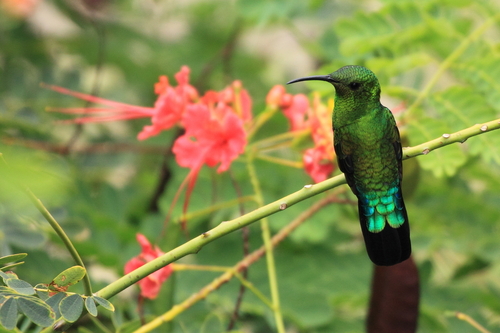 Green-throated Carib
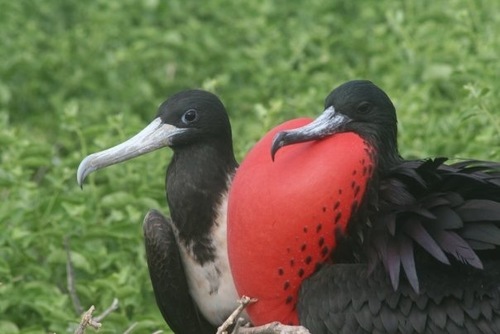 Magnificent Frigatebird
In breve
Il segno distintivo più affidabile per separare il Green-throated Carib dal Magnificent Frigatebird è la dimensione e la struttura: il fregata è un uccello marino massiccio e dalle lunghe ali con una coda profondamente biforcuta, mentre il carib è un piccolo colibrì compatto. Se vedi un uccello che vola in alto con un'apertura alare superiore a 2 metri, è un fregata; se sta sospeso sui fiori o appollaiato con un becco corto, è il carib. I fregata giovani hanno una testa e una parte inferiore bianche, il che potrebbe confondere a colpo d'occhio, ma le loro lunghe ali e la coda biforcuta sono inconfondibili. In qualsiasi contesto, il brillante gorget verde del carib e il suo volo sospeso e piccolo non sono mai eguagliati dal fregata.
Consigli di identificazione
- La dimensione è il controllo più veloce: Se l'uccello sembra enorme, con un'apertura alare superiore a 2 metri, è un Magnificent Frigatebird. Se è piccolo e simile a un colibrì, è un Green-throated Carib.
- Forma delle ali e della coda: I fregata hanno ali estremamente lunghe e strette e una coda profondamente biforcuta, visibili in tutte le età e sessi. I carib hanno ali corte e arrotondate e una coda quadrata.
- Piumaggio giovanile: I giovani fregata hanno testa bianca e ventre bianco con una macchia a forma di diamante—nessun carib mostra mai questo. Se vedi un uccello con testa bianca e ventre bianco con lunghe ali, è un fregata giovane.
- Piumaggio dell'adulto maschio: I maschi carib hanno un gorget e una schiena verde brillante, ventre nero e coda blu scuro. I maschi fregata sono completamente neri con una sacca gulare rossa (gonfiata durante la stagione degli amori), mai verde.
- Piumaggio dell'adulto femmina: Le femmine carib sono simili ai maschi ma più opache, senza bianco sotto. Le femmine fregata sono nere con un petto bianco e un collo inferiore bianco, una banda alare marrone e un anello oculare blu—nessuno di questi è visto nei carib.
- Stile di volo: I fregata planano e scivolano per ore, raramente battendo le ali, e non sostano mai. I carib sostano sui fiori e fanno voli rapidi e veloci.
- Forma del becco: I carib hanno un becco corto a medio, leggermente ricurvo (quello della femmina è più lungo e più curvo). I fregata hanno un becco lungo e ricurvo, visibile anche da lontano.
- Contesto e habitat: I fregata sono visti sopra l'oceano aperto o lungo le coste; i carib si trovano nell'entroterra, nei giardini o ai margini delle foreste.
- Vocalizzazioni: Solo il carib emette richiami acuti in campo; i fregata sono silenziosi tranne che nel nido.
- Coda in volo: La coda del fregata è sempre lunga e profondamente biforcuta, spesso tenuta chiusa per apparire appuntita; la coda del carib è corta e quadrata, mai biforcuta.
- Dimorfismo sessuale: Entrambe le specie mostrano differenze sessuali, ma solo le femmine fregata hanno un petto bianco e un anello oculare blu, e solo i maschi fregata hanno una sacca gulare rossa.
- Comportamento alimentare: I carib si nutrono sui fiori e a volte catturano insetti; i fregata afferrano pesci dalla superficie dell'oceano o infastidiscono altri uccelli marini.
- Postura appollaiata: I carib si appollaiano dritti su rami o fili; i fregata raramente si appollaiano tranne che nelle colonie o nei dormitori, e sembrano goffi a terra.
- Schema dell'ala superiore: Nessun carib mostra la banda alare marrone della femmina fregata o la parte inferiore bianca del giovane.
- Abbondanza e distribuzione: Nei Caraibi, entrambi possono essere localmente comuni, ma solo il carib si trova nell'entroterra e nei giardini; i fregata sono sempre associati al mare.
Taglia
Il Green-throated Carib è un piccolo colibrì, lungo circa 10.5–12 cm e pesante solo 6.2 grammi [wikidata]. Il Magnificent Frigatebird è enorme in confronto: 89–114 cm di lunghezza, con un'apertura alare di 2.17–2.44 metri, e pesa 1.1–1.59 kg [wikipedia]. Anche a grande distanza, la dimensione del fregata e le sue lunghe ali angolari sono evidenti, mentre il carib è sempre piccolo e compatto.
Piumaggio
I giovani Magnificent Frigatebirds sono per lo più bianchi sotto con una testa bianca e una distintiva macchia a forma di diamante sul ventre, mentre gli adulti sono completamente neri (maschi) o neri con un petto bianco e un collo inferiore bianco (femmine). Nessuna età del Green-throated Carib mostra mai bianco esteso sulla testa o sulla parte inferiore. I carib adulti di entrambi i sessi hanno una schiena e un gorget verde brillante, ventre nero e una coda blu scuro (che spesso appare nera). Le femmine carib sono leggermente più opache sopra e hanno un becco più lungo e più curvo, ma non mostrano mai bianco sotto. La sacca gulare rossa del maschio fregata è unica durante la riproduzione. In volo, le lunghe ali strette del fregata e la coda profondamente biforcuta contrastano con le ali corte e arrotondate e la coda quadrata del carib. Nessuna età o sesso di carib ha la banda alare marrone o l'anello oculare blu visti nelle femmine fregata.
Comportamento
Il Green-throated Carib è un nutriente sospeso, spesso visto che si muove rapidamente tra i fiori o si appollaia silenziosamente. Il Magnificent Frigatebird è quasi sempre visto che plana o scivola in alto sopra l'oceano, raramente battendo le ali e mai sostando sui fiori. I fregata possono trascorrere giorni in volo, utilizzando le termiche per salire e poi scivolando per lunghe distanze. I carib sono agili e veloci, ma non planano o scivolano per lunghi periodi.
Habitat
Il Green-throated Carib si trova in habitat terrestri—giardini, crescita secondaria e margini forestali—su Porto Rico e nelle Piccole Antille [wikipedia]. Il Magnificent Frigatebird è un uccello marino, visto sopra oceani tropicali e subtropicali, raramente entrando nell'entroterra tranne che vicino a colonie di nidificazione o dormitori costieri. Se l'uccello è sopra acqua aperta o lontano dalla terra, è un fregata; se è in un giardino o in una foresta, è un carib.
Voce
Il Green-throated Carib emette un richiamo acuto 'chup!' o 'chuwp!', e a volte rattles o fruscia le sue ali durante le dispute [wikipedia]. Il Magnificent Frigatebird è silenzioso in volo, producendo solo suoni di rattling nel nido. Se senti un richiamo, è probabile che sia il carib.
Green-throated Carib · Magnificent Frigatebird · I miei uccelli difficili