

Airone verde vs Sgarza ciuffetto
Butorides virescens contro Ardeola ralloides
Fai un quiz con Airone verde e Sgarza ciuffetto
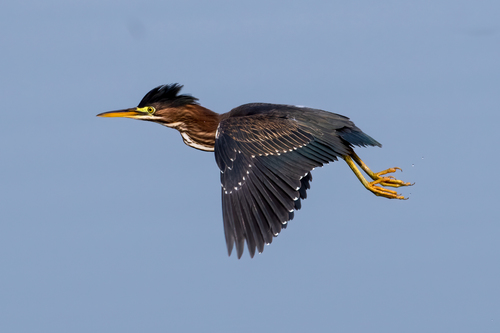 Airone verde
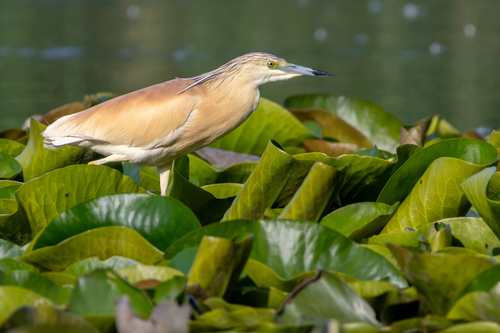 Sgarza ciuffetto
In breve
Il segno di campo più affidabile tra Airone verde e Sgarza ciuffetto è la drammatica differenza nel colore delle ali in volo: Sgarza ciuffetto mostra ali bianche sorprendenti che contrastano con il suo corpo color sabbia, mentre le ali dell'Airone verde sono scure e iridescenti, mai bianche. Gli Aironi verdi giovani sono pesantemente striati e maculati di marrone sopra, mentre i giovani Sgarze ciuffetto sono più chiari e meno marcati. Strutturalmente, l'Airone verde è più compatto con un collo e gambe più corti, e un becco più scuro e affilato, mentre la Sgarza ciuffetto è più robusta con un becco più corto e spesso e un dorso color sabbia-marrone. In posizione per lo più appollaiati, entrambi possono apparire curvi, ma le differenze nel piumaggio e nel becco rimangono chiare. La voce non è un forte separatore sul campo per questi due, ma il contesto e la geografia lo sono: l'Airone verde è strettamente del Nuovo Mondo, la Sgarza ciuffetto del Vecchio Mondo.
Consigli di identificazione
- Colore delle ali in volo (tutte le età): Sgarza ciuffetto mostra sempre ali bianche brillanti in volo, che contrastano con il suo corpo color sabbia. Le ali dell'Airone verde sono di un verde scuro o bluastro, mai bianche. Questo è il segno di campo più affidabile.
- Piumaggio giovanile: Gli Aironi verdi giovani sono pesantemente striati di marrone e bianco sotto, con parti superiori macchiate di beige e copritrici delle ali maculate. I giovani Sgarze ciuffetto sono più chiari, con parti superiori color sabbia e striature più leggere e meno audaci.
- Piumaggio degli adulti in posizione appollaiata: Gli adulti dell'Airone verde hanno un cappuccio lucido di verde scuro, un dorso e ali iridescenti di verde o blu-nerastro, e un collo castano con strisce bianche sulla gola. Gli adulti della Sgarza ciuffetto hanno un dorso color sabbia-marrone, parti inferiori bianche e (in stagione di riproduzione) lunghe piume sul collo.
- Forma e colore del becco: L'Airone verde ha un becco lungo, affilato e scuro. Il becco della Sgarza ciuffetto è più corto, più spesso e più chiaro, specialmente alla base.
- Collo e postura: L'Airone verde appare spesso più compatto, con il collo ritirato contro il corpo e gambe più corte. La Sgarza ciuffetto è più robusta ma può sembrare avere un collo più lungo quando è allerta.
- Colore delle gambe: L'Airone verde ha gambe corte gialle (a volte giallo-verdi); il colore delle gambe della Sgarza ciuffetto non è specificato nelle note, ma è tipicamente giallastro sul campo.
- Differenze sessuali: Le femmine degli Aironi verdi sono leggermente più piccole e meno vivaci dei maschi, specialmente in stagione di riproduzione. Non si nota un forte dimorfismo sessuale per la Sgarza ciuffetto.
- Comportamento: L'Airone verde è solitario e intollerante verso altri uccelli quando si nutre; la Sgarza ciuffetto nidifica in piccole colonie con altri trampolieri.
- Pesca con esca: L'Airone verde è noto per utilizzare oggetti per attirare pesci, un comportamento non descritto per la Sgarza ciuffetto.
- Gamma geografica: L'Airone verde è del Nuovo Mondo (Americhe); la Sgarza ciuffetto è del Vecchio Mondo (Europa, Medio Oriente, Africa). Se ti trovi nelle Americhe, un airone pallido con ali bianche non è quasi certamente una Sgarza.
- Dimensioni e struttura: La Sgarza ciuffetto è leggermente più pesante e ha un'apertura alare più lunga, ma entrambi sono simili in lunghezza; la dimensione non è un segno di campo affidabile.
- Voce: I richiami dell'Airone verde sono forti e bruschi; i richiami della Sgarza ciuffetto non sono descritti qui, quindi non fare affidamento sulla voce per la separazione.
- Contesto stagionale: L'Airone verde migra all'interno delle Americhe; la Sgarza ciuffetto migra tra Europa/Medio Oriente e Africa. Le segnalazioni fuori gamma sono rare e dovrebbero essere esaminate con attenzione.
- Habitat: Entrambi utilizzano zone umide di acqua dolce, ma l'Airone verde è più propenso a utilizzare habitat creati dall'uomo (canali, fossati) nelle Americhe.
- Trappole: Fai attenzione agli Aironi verdi giovani, che possono apparire più chiari e più striati, ma non mostrano mai ali bianche in volo. La Sgarza ciuffetto può apparire molto pallida quando è appollaiata, ma mostra sempre ali bianche quando vola.
Taglia
Both species are small herons, but Sgarza ciuffetto is slightly heavier (body mass ~288 g vs. Airone verde's ~240 g [wikidata, wikipedia]). Length is similar (Airone verde: 41–46 cm; Sgarza ciuffetto: 44–47 cm), but Sgarza ciuffetto has a noticeably longer wingspan (80–92 cm vs. Airone verde's 64–68 cm). In the hand or at close range, Sgarza ciuffetto is a bit bulkier, but in the field, size alone is not a reliable separator.
Piumaggio
- Juvenile/immature birds in flight: Sgarza ciuffetto always shows white wings, even in young birds, while Airone verde (all ages) has dark, greenish or bluish wings with no white. Juvenile Green Herons are heavily streaked brown and white below, with tan-splotched upperparts and wing coverts; their backs are duller and more mottled than adults. Juvenile Squacco Herons are paler overall, with tawny upperparts, lighter streaking, and less contrast between back and wings.
- Adults (perched): Airone verde adults have a glossy greenish-black cap, iridescent green or blue-black back and wings, and a rich chestnut neck with white throat stripes. Sgarza ciuffetto adults in breeding plumage have a buff-brown back, white underparts, and long neck plumes; their bill is shorter and thicker.
- Adults (in flight): Sgarza ciuffetto transforms in flight, with the entire upper- and underwing appearing bright white, in stark contrast to the body. Airone verde’s wings remain dark and never show white.
- Sex differences: Female Green Herons are slightly smaller and duller than males, especially in breeding season; no strong sexual dimorphism is noted for Sgarza ciuffetto.
Comportamento
Entrambe le specie sono tipicamente solitarie e riservate quando cercano cibo, spesso rimanendo immobili al bordo dell'acqua. L'Airone verde è intollerante verso altri uccelli quando si nutre e raramente cerca cibo in gruppo, mentre la Sgarza ciuffetto nidifica in piccole colonie con altri trampolieri. L'Airone verde è noto per la pesca con esca (utilizzando oggetti per attirare le prede), un comportamento non specificamente notato per la Sgarza ciuffetto. In volo, la Sgarza ciuffetto appare più bianca e più galleggiante grazie alle sue ali più lunghe, mentre l'Airone verde appare compatto e scuro.
Habitat
L'Airone verde si trova in Nord e Centro America, preferendo zone ripariali, zone umide, stagni, laghi e anche fossati e canali creati dall'uomo. La Sgarza ciuffetto è strettamente del Vecchio Mondo, nidificando nel sud Europa e nel Medio Oriente, svernando nell'Africa sub-sahariana e preferendo zone umide paludose. Un avvistamento al di fuori di queste aree è probabilmente un vagabondo. Entrambe le specie utilizzano habitat simili di acqua dolce, ma le loro gamme non si sovrappongono in circostanze normali.
Voce
L'Airone verde ha un richiamo forte e brusco 'kyow' e una serie di note più morbide 'kuk', con ulteriori richiami di corteggiamento ('raah-rahh', 'whoom-whoom-whoom', 'roo-roo', 'aaroo-aaroo'). I richiami della Sgarza ciuffetto non sono descritti nelle note fornite, e la voce non è un segno di campo primario per separare queste due specie.