

Oca lombardella vs Oca zamperosee
Anser albifrons contro Anser brachyrhynchus
Fai un quiz con Oca lombardella e Oca zamperosee
 Oca lombardella
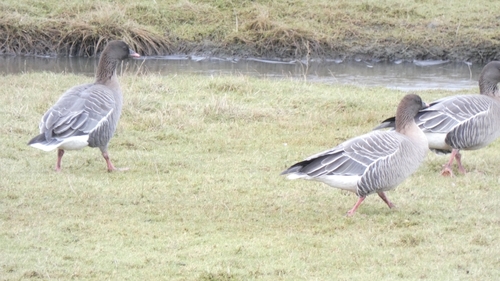 Oca zamperosee
In breve
Il segno distintivo più affidabile per separare l'Oca lombardella dall'Oca zamperosee è il becco: l'Oca lombardella ha un becco più lungo, per lo più rosa, mentre l'Oca zamperosee mostra un becco più corto con una distintiva banda rosa e una base/punta nera. In volo o posata, l'Oca lombardella mostra spesso una marcata striscia bianca alla base del becco e barre scure variabili sul ventre, mentre l'Oca zamperosee manca della striscia bianca e ha una testa e un collo di un marrone più scuro e uniforme. Le copritrici delle ali superiori e le barre delle ali differiscono sottilmente, ma sono meglio giudicate a distanza ravvicinata. Entrambe le specie sono simili in dimensioni e forma, quindi prestare attenzione al colore del becco e al motivo facciale è fondamentale.
Consigli di identificazione
- Colore e forma del becco: L'Oca lombardella ha un becco più lungo, per lo più rosa (a volte arancio-giallo negli uccelli della Groenlandia), mentre l'Oca zamperosee ha un becco notevolmente più corto con una banda rosa e una base/punta nera. Questo è il segno distintivo più affidabile in tutte le età e stagioni.
- Striscia facciale bianca: L'Oca lombardella adulta mostra una marcata striscia bianca alla base del becco, assente nell'Oca zamperosee. L'Oca lombardella giovane può mancare o avere una striscia ridotta, quindi non fare affidamento solo su questo negli uccelli del primo inverno.
- Barre sul ventre: L'Oca lombardella adulta mostra spesso barre e macchie scure variabili da marrone a nero sul ventre, mentre il ventre dell'Oca zamperosee è uniforme. Tuttavia, le barre sul ventre sono variabili e possono essere assenti nei giovani o in alcuni adulti, quindi usare con cautela.
- Motivo delle copritrici delle ali superiori in volo: L'Oca lombardella (soprattutto gli uccelli europei) ha margini bianchi prominenti sulle copritrici minori e mediane, creando barre delle ali marcate. L'ala superiore dell'Oca zamperosee è più uniforme di un grigio-bluastro pallido, priva di barre delle ali forti. Questo è sottile e meglio visibile a distanza ravvicinata o in buona luce.
- Motivo della coda: Entrambi hanno una coda con punta bianca, ma la punta e i lati bianchi dell'Oca lombardella sono più larghi e più evidenti rispetto a quelli dell'Oca zamperosee.
- Colore della testa e del collo: L'Oca zamperosee ha una testa e un collo di un marrone più ricco e scuro, in contrasto con un corpo più chiaro. L'Oca lombardella è più uniformemente grigio-marrone, con meno contrasto tra testa/collo e corpo.
- Colore delle gambe: Entrambi hanno gambe brillanti, ma quelle dell'Oca zamperosee sono distintamente rosa, mentre quelle dell'Oca lombardella sono arancioni o arancio-giallo. Questo può essere difficile da giudicare a distanza o in scarsa luce.
- Dimensioni e struttura: L'Oca lombardella può essere leggermente più grande e più robusta con un becco più lungo, ma la sovrapposizione è considerevole. Non è un segno affidabile a meno che gli uccelli non siano affiancati.
- Voce: Ascolta il cackling acuto 'he-he' dell'Oca lombardella rispetto al medley di honk dell'Oca zamperosee. I richiami sono meglio utilizzati quando gli uccelli sono vocali e vicini.
- Confusione giovanile/primo inverno: I giovani Oche lombardelle possono mancare della striscia bianca e delle barre sul ventre, facendoli apparire più semplici. In questi casi, il colore del becco e il motivo delle copritrici delle ali superiori diventano più importanti.
- Contesto e composizione del branco: Entrambe le specie spesso si mescolano in inverno, quindi non assumere una singola specie basandosi sulla dimensione del branco o sull'habitat.
- Variazione delle sottospecie: L'Oca lombardella della Groenlandia (A. a. flavirostris) mostra un becco arancio-giallo più lungo e snello e barre delle ali meno evidenti rispetto agli uccelli europei, somigliando occasionalmente all'Oca zamperosee in luce fioca. La struttura del becco e il motivo facciale rimangono fondamentali.
- Effetti di illuminazione: Il colore del becco e delle gambe può apparire diverso alla luce del sole brillante rispetto a quella fioca; controlla più caratteristiche se possibile.
- Posato vs. in volo: Il becco e il motivo facciale sono più facili da giudicare a terra; il motivo delle copritrici delle ali e la punta della coda sono più utili in volo.
- Non confondere con l'Oca lombardella minore: Solo l'Oca lombardella è in questo confronto; l'Oca lombardella minore è più piccola, con una striscia bianca molto più grande e un anello oculare giallo.
Taglia
Entrambe le specie sono oche di dimensioni medie e possono sovrapporsi in dimensioni, ma l'Oca lombardella può essere leggermente più grande (lunghezza 64–81 cm, apertura alare 130–165 cm, massa fino a 3,3 kg) rispetto all'Oca zamperosee (60–75 cm, apertura alare 135–170 cm, massa 1,8–3,4 kg) [wikipedia][wikidata]. Sul campo, la differenza di dimensioni è sottile e non è un separatore affidabile a meno che gli uccelli non siano affiancati. La struttura è simile, ma l'Oca lombardella può apparire un po' più robusta e con un becco più lungo.
Piumaggio
I giovani e gli adulti di entrambe le specie possono essere confusi, specialmente in volo. L'Oca lombardella (soprattutto l'europea A. a. albifrons) mostra margini bianchi prominenti sulle copritrici delle ali superiori, creando barre delle ali evidenti, e una punta bianca ampia sulla coda. L'Oca zamperosee ha copritrici delle ali superiori di un grigio-bluastro pallido più uniforme, priva di barre delle ali forti, e una coda con una punta bianca ampia ma meno contrasto. L'Oca lombardella adulta mostra una striscia bianca alla base del becco e barre sul ventre nere variabili (anche se queste possono essere assenti o deboli nei giovani), mentre l'Oca zamperosee manca della striscia bianca e ha una testa e un collo di un marrone più scuro e uniforme. Il colore del becco è fondamentale: l'Oca lombardella ha un becco per lo più rosa (a volte arancio-giallo negli uccelli della Groenlandia), mentre l'Oca zamperosee ha un becco corto con una banda rosa e una base/punta nera. Entrambi hanno gambe arancioni o rosa, ma quelle dell'Oca zamperosee sono distintamente rosa. Negli uccelli del primo inverno e giovani, la striscia bianca e le barre sul ventre sono ridotte o assenti nell'Oca lombardella, rendendo più importanti i motivi del becco e delle copritrici delle ali.
Comportamento
Entrambe le specie sono altamente gregarie, formando spesso grandi branchi in inverno. Si nutrono in campi aperti e zone umide, pascolando su erba e colture. Lo stile di volo è simile, con battiti regolari e diretti e frequenti richiami. Non sono state notate differenze comportamentali significative nelle fonti che siano utili per la separazione sul campo.
Habitat
Entrambe le specie sono migratorie e si sovrappongono nelle aree di svernamento nel nord-ovest dell'Europa, specialmente nel Regno Unito, in Irlanda e nei Paesi Bassi [wikipedia]. L'Oca lombardella nidifica più a est (nord del Canada, Alaska, Russia, Groenlandia), mentre l'Oca zamperosee nidifica principalmente nella Groenlandia orientale, in Islanda, Svalbard e recentemente a Novaya Zemlya. In inverno, entrambe utilizzano terreni agricoli, paludi e estuari, spesso insieme. L'habitat da solo non è diagnostico dove le aree si sovrappongono.
Voce
L'Oca lombardella emette un cackling acuto e ridanciano, spesso descritto come 'he-he', con una netta pausa tra le note. L'Oca zamperosee è molto vocale in volo, producendo un medley di richiami acuti che possono essere assordanti in grandi branchi. Entrambe sono rumorose, ma la qualità cackling dell'Oca lombardella può essere distintiva se ascoltata bene.