

Greater Pewee vs Northern Tropical Pewee
Contopus pertinax contro Contopus bogotensis
Fai un quiz con Greater Pewee e Northern Tropical Pewee
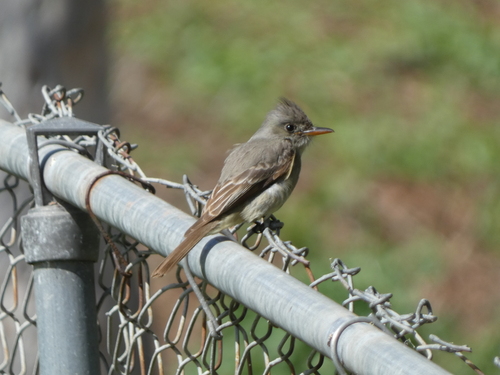 Greater Pewee
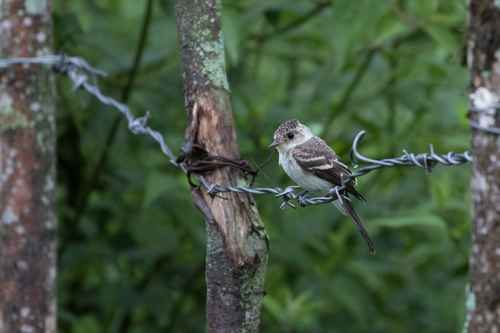 Northern Tropical Pewee
In breve
Il segno di campo più affidabile tra Greater Pewee e Northern Tropical Pewee è la dimensione complessiva: il Greater Pewee è molto più grande e pesante, con una struttura notevolmente più robusta. Sul campo, il Greater Pewee mostra un volto e una testa grigio-oliva semplici con solo deboli barre alari, mentre il Northern Tropical Pewee ha una corona più scura, un sottile anello oculare bianco e barre alari più distinte, specialmente nei giovani. Il giovane Northern Tropical Pewee mostra anche punte evidenti color cannella sui copritrici alari, una caratteristica mai presente nel Greater Pewee. Il colore del becco è simile, ma il becco del Greater Pewee appare leggermente più robusto. Se visti insieme, la differenza di dimensione e il contrasto facciale del Northern Tropical Pewee sono i modi più rapidi per separarli.
Consigli di identificazione
- La dimensione è il controllo più veloce: il Greater Pewee è molto più grande e pesante del Northern Tropical Pewee. Se vedi un cattura insetti che sembra grande e robusto, è probabile che sia un Greater Pewee; un uccello piccolo e delicato indica un Northern Tropical Pewee.
- Il piumaggio giovanile è diagnostico: il giovane Northern Tropical Pewee ha punte ampie color cannella sui copritrici alari e un mento marrone, mai visto nel Greater Pewee. Se vedi questi segni, hai un giovane Northern Tropical Pewee.
- Contrasto facciale: il Northern Tropical Pewee mostra un sottile anello oculare bianco e una corona più scura, dando un volto più contrastante. Il volto del Greater Pewee è semplice grigio-oliva con solo lore pallidi e senza anello oculare.
- Barre alari: entrambe le specie hanno due barre alari, ma nel Greater Pewee sono deboli e grigiastre; nel Northern Tropical Pewee (specialmente nei giovani) sono più distinte e possono essere di un pallido color cannella nei giovani uccelli.
- Forma della cresta: il Greater Pewee ha una cresta appuntita, che può sembrare più pronunciata rispetto alla leggera cresta del Northern Tropical Pewee.
- Struttura del becco: entrambe hanno un mandibola superiore scura e una inferiore giallastra o arancione, ma il becco del Greater Pewee è più robusto e proporzionalmente più grande, corrispondente alla sua testa più grande.
- Colore delle parti inferiori: il Greater Pewee ha un ventre color buff e copritrici del sottocoda; quelle del Northern Tropical Pewee sono bianche a bianco giallastro, con pale brown undertail coverts.
- Caratteristiche del coda: il Northern Tropical Pewee ha un ciuffo di piume bianche nascoste su ciascun lato della coda (non visibile a meno che non sia gonfiato o maneggiato), assente nel Greater Pewee.
- Colore dell'iride: entrambe hanno iridi marroni, non utili per la separazione.
- Colore delle gambe: entrambe le specie hanno gambe e piedi scuri o nerognoli; non è un segno utile sul campo.
- Comportamento di posarsi: il Northern Tropical Pewee spesso ritorna allo stesso posatoio e può tremare la coda all'atterraggio; questo è meno notato nel Greater Pewee.
- Habitat e altitudine: nelle regioni sovrapposte, il Greater Pewee è più probabile che si trovi in boschi di pino e quercia a maggiore altitudine, mentre il Northern Tropical Pewee preferisce i margini forestali più bassi e umidi.
- Sessi simili: entrambe le specie non mostrano dimorfismo sessuale nel piumaggio—non usare il sesso come indizio.
- Usura stagionale: il piumaggio del Greater Pewee sbiadisce con l'usura, diventando meno oliva, ma questo è sottile e non è un segno forte sul campo.
- Voce: Non trattato nelle note; non fare affidamento sulle vocalizzazioni per la separazione in base alle informazioni attuali.
Taglia
Il Greater Pewee è sostanzialmente più grande: 18–20 cm di lunghezza e circa 27 g di massa, rispetto ai 12–14 cm e 8–14 g del Northern Tropical Pewee. Questa è una differenza drammatica a mano e dovrebbe essere ovvia sul campo se hai qualche riferimento di dimensione. Il Greater Pewee appare più lungo e con un corpo più pesante, con una testa e un becco proporzionalmente più grandi. Il Northern Tropical Pewee è molto più piccolo, con una struttura più leggera e un becco più piccolo.
Piumaggio
Il giovane Northern Tropical Pewee è distintivo, mostrando parti superiori più marroni e punte ampie di un pallido color cannella sui copritrici alari, oltre a un mento marrone—nessuno di questi è mai visto nel Greater Pewee di qualsiasi età. L'adulto Northern Tropical Pewee ha una corona grigio scuro, un sottile anello oculare bianco, e un ciuffo di piume bianche nascoste su ciascun lato della coda; le sue barre alari sono sottili ma più distinte rispetto alle deboli barre del Greater Pewee. Gli adulti del Greater Pewee sono più semplici, con una cresta appuntita, una testa e parti superiori grigio-oliva semplici, e solo deboli barre alari grigiastre. Entrambe le specie hanno lore pallidi, ma solo il Northern Tropical Pewee mostra un chiaro anello oculare. Le parti inferiori differiscono sottilmente: il Greater Pewee ha un ventre color buff e copritrici del sottocoda, mentre quelle del Northern Tropical Pewee sono bianche a bianco giallastro, con copritrici del sottocoda marrone chiaro. Il colore del becco è simile (superiore scuro, inferiore giallastro o arancione), ma il becco del Greater Pewee è un po' più robusto. Entrambi hanno gambe scure e iridi marroni.
Comportamento
Entrambe le specie sono classici cattura insetti Contopus, lanciandosi da posatoi esposti per catturare insetti. Il Northern Tropical Pewee spesso ritorna allo stesso posatoio e può tremare la coda all'atterraggio, un comportamento non specificamente notato per il Greater Pewee. La maggiore dimensione del Greater Pewee può far sembrare i suoi movimenti più lenti e deliberati. Entrambi tendono a posarsi in posizione eretta e non sono noti per unirsi a stormi di specie miste.
Habitat
Il Greater Pewee si trova dall'Arizona e dal New Mexico a sud fino al Nicaragua, tipicamente in boschi di pino e quercia e foreste montane. Il Northern Tropical Pewee si estende dal Messico sudorientale al nord della Sud America, favorendo i margini forestali e i posatoi a livello medio. C'è qualche sovrapposizione in America Centrale, ma il Greater Pewee è più probabile a maggiori altitudini e in habitat di pino e quercia più secchi, mentre il Northern Tropical Pewee preferisce i margini forestali umidi e i livelli più bassi a medi all'interno della foresta.
Greater Pewee · Northern Tropical Pewee · I miei uccelli difficili