

Greater Pewee vs Eastern Wood-Pewee
Contopus pertinax contro Contopus virens
Fai un quiz con Greater Pewee e Eastern Wood-Pewee
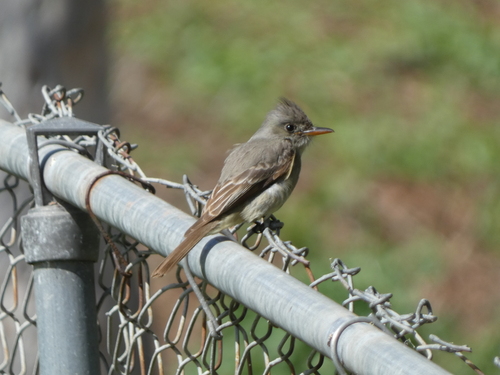 Greater Pewee
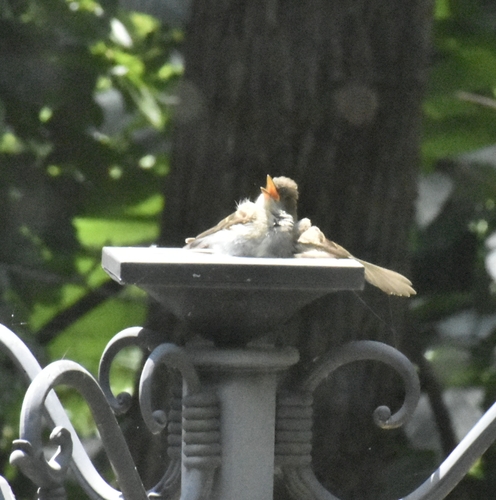 Eastern Wood-Pewee
In breve
Greater Pewee ed Eastern Wood-Pewee sono entrambi catturatori di insetti del genere Contopus, ma il Greater Pewee è notevolmente più grande e robusto, con una cresta spigolosa e un becco più robusto e lungo. Entrambi mostrano due barre alari chiare e toni simili di grigio-oliva, ma il volto del Greater Pewee è più semplice e leggermente più chiaro, e la sua mandibola inferiore è più distintamente arancione. Sul campo, la struttura e le dimensioni sono gli indizi più affidabili: il Greater Pewee appare più lungo, pesante e più eretto, mentre l'Eastern Wood-Pewee è più piccolo, snello e più delicato. Le vocalizzazioni sono completamente diverse e diagnostiche quando ascoltate.
Consigli di identificazione
- Size and bulk: Greater Pewee è molto più grande e pesante dell'Eastern Wood-Pewee; usa questo quando visti bene o con riferimento a uccelli vicini. Funziona per tutte le età e stagioni.
- Bill color and shape: Greater Pewee ha un becco più lungo e robusto con una mandibola inferiore più arancione o giallastra, spesso ovvia anche a distanza. Il becco dell'Eastern Wood-Pewee è più corto e la mandibola inferiore è giallastra ma meno brillante.
- Crest: Greater Pewee mostra una cresta spigolosa, specialmente quando è all'erta o agitato; la corona dell'Eastern Wood-Pewee è liscia e arrotondata. Questo è sottile ma affidabile in buone visioni.
- Facial pattern: Il volto del Greater Pewee è leggermente più chiaro della corona e della schiena, con lore chiare; il volto dell'Eastern Wood-Pewee non è visibilmente più chiaro rispetto al resto della testa. Funziona meglio in luce brillante.
- Wingbars: Entrambe le specie hanno due barre alari chiare, ma sono deboli e a volte difficili da vedere sul Greater Pewee, mentre più distinte sull'Eastern Wood-Pewee. Non sempre affidabili, specialmente in piumaggio usurato.
- Underparts: Greater Pewee mostra un mento grigiastro opaco, lati e gola grigio-oliva, e un ventre e sottocoda color crema. L'Eastern Wood-Pewee è più chiaro sotto, con un lavaggio olivastro sul petto ma non così color crema sul ventre.
- Primary projection: L'Eastern Wood-Pewee ha una lunga proiezione primaria, dando alla punta dell'ala un aspetto snello e appuntito. Le ali del Greater Pewee sono proporzionalmente più corte e meno appuntite. Sottile ma utile negli uccelli posati.
- Posture and jizz: Greater Pewee si posa più eretto e appare più robusto; l'Eastern Wood-Pewee è più snello e meno eretto. Utile quando si confrontano più uccelli.
- Tail: La coda del Greater Pewee è più lunga e di un grigio bruno scuro; la coda dell'Eastern Wood-Pewee è più corta e meno prominente.
- Voice: Se ascoltato, il canto è istantaneamente diagnostico: la frase fischiata del Greater Pewee ("José María") contro l'Eastern Wood-Pewee "pee-a'wee". Anche i richiami sono diversi.
- Range and habitat: Greater Pewee si trova nelle foreste di pino e quercia e nelle foreste montane del Sud-Ovest e verso sud; l'Eastern Wood-Pewee è nelle foreste decidue/miste dell'Est. Usare con cautela in migrazione o ai margini dell'areale.
- Sex and age: Entrambe le specie sono sessualmente monomorfiche; le differenze di età non sono fortemente marcate nel piumaggio, quindi gli indizi strutturali e vocali sono più affidabili.
- Comparison with similar species: Se vedi un anello oculare audace, non è nessuna di queste specie (probabilmente un Empidonax). Se l'uccello muove la coda, considera invece l'Eastern Phoebe.
- Seasonal timing: Nell'Est, l'Eastern Wood-Pewee arriva più tardi in primavera (fine aprile–maggio) rispetto all'Eastern Phoebe, ma questo non lo separa dal Greater Pewee.
- Worn plumage: Entrambe le specie possono apparire più opache e meno contrastanti dopo la riproduzione, ma le differenze strutturali e di dimensione rimangono affidabili.
Taglia
Greater Pewee è sostanzialmente più grande e pesante (massa corporea ~27.2 g [wikidata], lunghezza 18–20 cm) rispetto all'Eastern Wood-Pewee (lunghezza 13.5–15 cm, massa ~14 g [wikipedia]). Questa differenza di dimensioni è spesso ovvia in confronto diretto o con esperienza. Greater Pewee appare più robusto e lungo, con una coda e un becco proporzionalmente più lunghi.
Piumaggio
- Juvenile/immature upperwing pattern: Non sono descritti segni distintivi per le ali superiori di giovani o immaturi per nessuna delle due specie; entrambe mostrano due barre alari chiare a tutte le età, anche se queste sono deboli nel Greater Pewee e più distinte nell'Eastern Wood-Pewee.
- Adults: Greater Pewee è di un grigio-oliva uniforme sopra con un volto leggermente più chiaro e lore chiare, due barre alari deboli, e bordi chiari alle secondarie. Il suo mento è grigiastro opaco, con gola e lati grigio-oliva, e ventre e sottocoda color crema. L'Eastern Wood-Pewee è grigio-oliva sopra, con parti inferiori chiare lavate di oliva sul petto, e due barre alari chiare. Entrambi hanno una mandibola superiore scura e una mandibola inferiore giallastra, ma quella del Greater Pewee è più arancione e ovvia. Nessuna delle due specie mostra un forte anello oculare. Entrambi i sessi sono simili in entrambe le specie.
Comportamento
Greater Pewee spesso si posa eretto e in alto nella chioma, mostrando una postura più robusta e all'erta e a volte sollevando la sua cresta spigolosa. L'Eastern Wood-Pewee si posa anch'esso in modo aperto ma appare più delicato e snello, con una postura meno eretta. Entrambi si lanciano per gli insetti, ma i movimenti del Greater Pewee sono più lenti e deliberati, in linea con la sua dimensione maggiore.
Habitat
Greater Pewee si trova dall'Arizona e dal New Mexico a sud fino al Nicaragua, preferendo boschi di pino e quercia e foreste ad alta quota. L'Eastern Wood-Pewee nidifica in boschi decidui e misti o piantagioni di pino in tutta l'America del Nord orientale. I loro areali si sovrappongono minimamente nel Sud-Ovest degli Stati Uniti; il contesto può aiutare, ma non è sempre diagnostico.
Voce
Le vocalizzazioni sono altamente diagnostiche. Greater Pewee emette una frase fischiata distintiva "José María" o simile, molto diversa dalla triste frase fischiata "pee-a'wee" o "pe-wee" dell'Eastern Wood-Pewee. Se ascoltato, il canto da solo li separa istantaneamente.
Greater Pewee · Eastern Wood-Pewee · I miei uccelli difficili