

Great Spinetail vs Bananaquit
Synallaxis hypochondriaca contro Coereba flaveola
Fai un quiz con Great Spinetail e Bananaquit
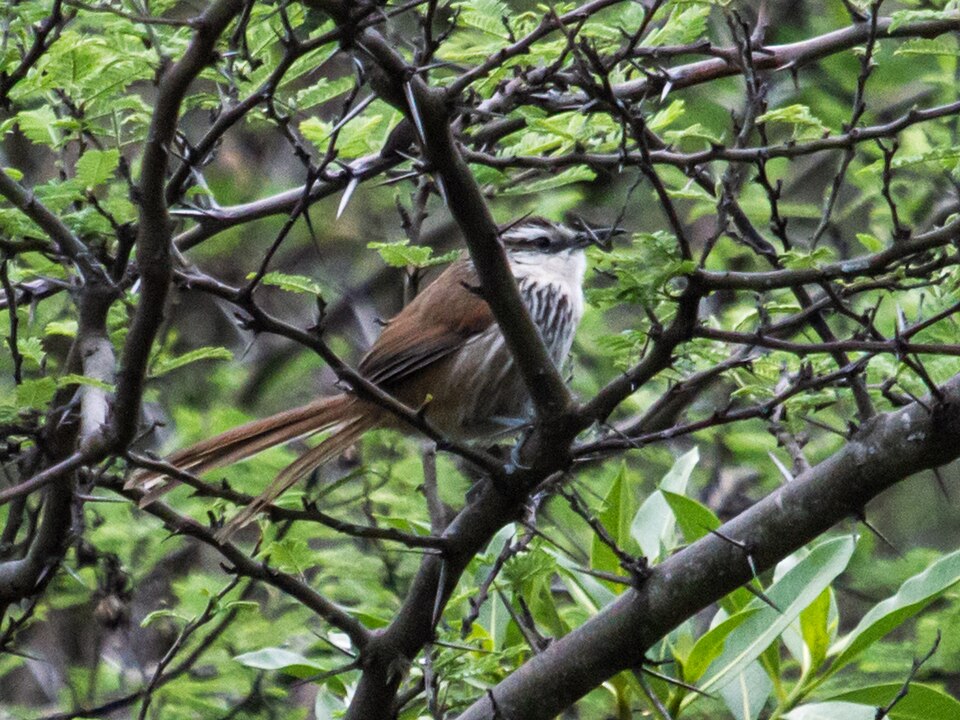 Great Spinetail
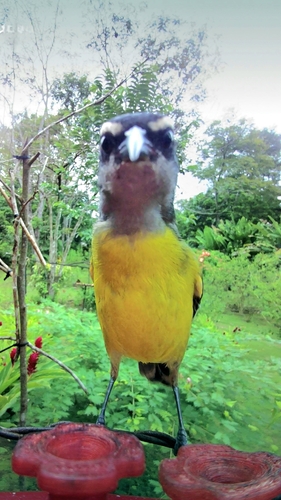 Bananaquit
In breve
Il segno di campo più affidabile per separare il Great Spinetail dal Bananaquit è la struttura generale e la forma del becco: il Great Spinetail è un furnariide grande e dalla coda lunga con un becco dritto e robusto, mentre il Bananaquit è molto più piccolo, con un becco snodato e fortemente curvato adattato per l'alimentazione al nettare. Nel piumaggio, il Great Spinetail mostra un ampio sopracciglio bianco e parti inferiori bianche pesantemente striate, mentre il Bananaquit ha un prominente sopracciglio bianco ma un ventre e un copritrumpa gialli. I giovani Bananaquit sono più opachi ma mostrano ancora toni gialli, mentre i giovani Great Spinetail hanno meno striature nelle parti inferiori ma non mostrano mai giallo. L'habitat è anche un forte indizio: il Great Spinetail è limitato a cespugli montani aridi nel nord del Perù, mentre il Bananaquit è diffuso nei giardini di pianura e di collina e in habitat aperti in tutto il Neotropico.
Consigli di identificazione
- Bill shape: Il Great Spinetail ha un becco dritto e robusto; il becco del Bananaquit è snodato e fortemente curvato. Questo è visibile anche a distanza ed è diagnostico in tutte le età.
- Size and structure: Il Great Spinetail è molto più grande e dalla coda lunga, con un corpo più massiccio e una coda graduata. Il Bananaquit è piccolo, compatto e dalla coda corta.
- Supercilium/eyebrow: Entrambi hanno un prominente sopracciglio bianco, ma quello del Great Spinetail è più ampio e contrasta con le lore scure e le copritrumpa; quello del Bananaquit è più stretto ma comunque notevole.
- Underparts color: Il Great Spinetail ha parti inferiori bianche con striature marrone-grigie (meno striate nei giovani), mai gialle. Il Bananaquit mostra sempre giallo sul ventre e sul copritrumpa, anche nei giovani opachi.
- Upperparts color: Il Great Spinetail è marrone a marrone grigiastro sopra; il Bananaquit è grigio scuro a nero sopra, con una corona nera e lati della testa.
- Tail: La coda del Great Spinetail è lunga, graduata e marrone scuro; la coda del Bananaquit è corta e scura, in abbinamento con le parti superiori.
- Juvenile differences: Il giovane Great Spinetail è più chiaro sotto con meno striature, ma non mostra mai toni gialli o nerognoli. Il giovane Bananaquit è più opaco dell'adulto ma ha ancora parti inferiori giallastre e un sopracciglio e una gola parzialmente gialli.
- Mandible color (juveniles): Il giovane Great Spinetail ha un mandibile più chiaro e più rosa; i giovani Bananaquit possono mostrare un'apertura rosa, specialmente nelle sottospecie caraibiche.
- Feeding behavior: Il Bananaquit è spesso visto nutrirsi di fiori o mangiatoie per zucchero, posandosi per sorseggiare il nettare; il Great Spinetail raccoglie insetti dalla vegetazione e dai rami, raramente visto sui fiori.
- Habitat: Il Great Spinetail è limitato a cespugli montani aridi nel nord del Perù; il Bananaquit è comune in giardini, parchi e habitat aperti in tutto il Neotropico, raramente sopra i 2.000 m.
- Voice: Se udito, il canto rapido e chiacchierino del Great Spinetail è distintivo e diverso dai richiami tipici del Bananaquit (non descritti qui).
- Sexes: Entrambe le specie sono sessualmente monomorfiche; le differenze nel piumaggio non sono basate sul sesso.
- Flight style: Non descritto in dettaglio, ma il Great Spinetail è probabilmente più pesante e meno agile in volo rispetto ai rapidi movimenti a scatti del Bananaquit.
- Context: Se l'uccello è domestico e si nutre intorno agli esseri umani o alle mangiatoie per zucchero, è molto più probabile che sia un Bananaquit; il Great Spinetail è timido e limitato a cespugli selvatici.
- Range: Al di fuori della valle superiore del Marañón nel nord del Perù, il Great Spinetail non si verifica; il Bananaquit è diffuso tranne che a Cuba e nelle dense foreste amazzoniche.
Taglia
Il Great Spinetail è sostanzialmente più grande, con una lunghezza di 17–19 cm e un peso di circa 24 g [wikidata], con una coda visibilmente lunga e graduata. Il Bananaquit è molto più piccolo, con una lunghezza di 10–13 cm e un peso di 5,5–19 g (tipicamente nella parte bassa) [wikipedia]. Sul campo, il Great Spinetail apparirà più massiccio e dalla coda lunga, mentre il Bananaquit è un piccolo uccello attivo con un aspetto compatto e arrotondato.
Piumaggio
I giovani e gli adulti Great Spinetail hanno entrambi un ampio sopracciglio bianco, lore scure e copritrumpa, una corona marrone opaco con deboli striature color crema, e un dorso di colore marrone più chiaro. Le loro parti inferiori sono bianche con striature marrone-grigie (meno striate nei giovani), e la loro coda è lunga, graduata e marrone scuro. Il Bananaquit, in tutti i piumaggi, mostra una prominente striscia bianca sugli occhi, ma differisce per avere parti superiori grigio scuro a nere, una corona nera e lati della testa, e un petto, ventre e copritrumpa gialli. I giovani Bananaquit sono più opachi, con sopraccigli e gola parzialmente gialli, ma mostrano ancora toni gialli assenti nel Great Spinetail. Il becco del Bananaquit è snodato e fortemente curvato, mentre quello del Great Spinetail è dritto e robusto. Non è descritto alcun modello specifico per l'ala superiore per nessuna delle due specie, ma la colorazione generale e la presenza/assenza di giallo sono fondamentali.
Comportamento
Il Great Spinetail si nutre principalmente in cespugli montani aridi densi, di solito singolarmente, in coppie o in piccoli gruppi familiari, raccogliendo artropodi dalla vegetazione e dai rami fino a 2 m sopra il suolo. È più riservato e meno probabile che venga visto in aree aperte. Il Bananaquit è molto attivo, spesso visto svolazzare in giardini, parchi e habitat aperti, nutrendosi di nettare, frutta e piccoli insetti. Visita frequentemente fiori e mangiatoie e può diventare molto domestico intorno agli esseri umani. Il Bananaquit deve posarsi per nutrirsi (non può sostare come un colibrì) ed è spesso visto muoversi rapidamente tra fiori e arbusti.
Habitat
Il Great Spinetail è rigorosamente limitato a cespugli montani aridi nella valle superiore del Marañón nel nord del Perù, a elevazioni di 2.000–2.800 m, a volte fino a 3.000 m [wikipedia]. È associato a cespugli densi, cactus e alberi sparsi come Acacia, Bombax e Alnus. Il Bananaquit, al contrario, è diffuso in tutto il Neotropico, assente solo a Cuba e in alcune foreste dense o deserti, ed è comune in giardini, parchi e habitat aperti o semi-aperti a basse elevazioni (raramente sopra i 2.000 m). Se vedi l'uccello in un giardino lussureggiante o in un parco di pianura, è quasi certamente un Bananaquit; se in cespugli montani aridi nel nord del Perù, è possibile che sia un Great Spinetail.
Voce
Il canto del Great Spinetail è un chiacchiericcio forte, rapido e sputacchiante di note 'thk' che salgono e scendono, spesso cantato in duetto, con richiami simili a un 'TCHEE-TCHEE' metallico o un più lungo 'tu-ter-CHEE-CHEE-CHEE' [wikipedia]. Le vocalizzazioni del Bananaquit non sono descritte in queste note, quindi la voce è meno affidabile per la separazione a meno che tu non sia familiare con il chiacchiericcio distintivo del Great Spinetail.