

Great Kiskadee vs Rusty-margined Flycatcher
Pitangus sulphuratus contro Myiozetetes cayanensis
Fai un quiz con Great Kiskadee e Rusty-margined Flycatcher
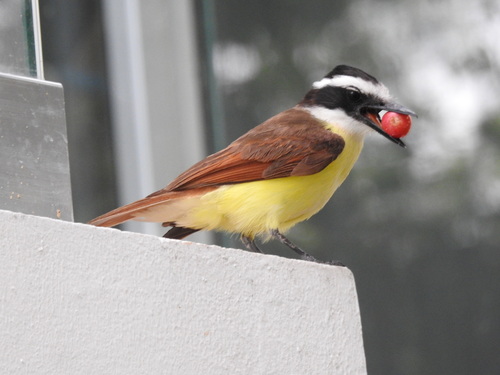 Great Kiskadee
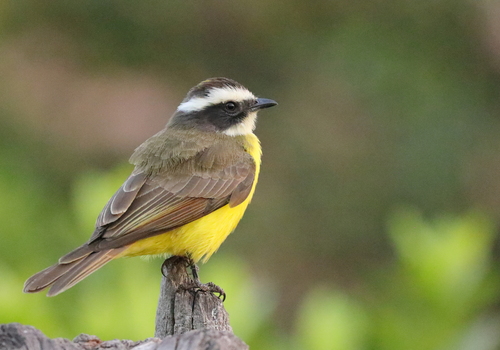 Rusty-margined Flycatcher
In breve
Il modo più affidabile per separare il Great Kiskadee dal Rusty-margined Flycatcher è per dimensioni e struttura: il Great Kiskadee è molto più grande e massiccio, con un becco più spesso e robusto e ali e coda con bordi rugginosi più evidenti. Entrambe le specie hanno una testa nerognola con un sopracciglio bianco e una striscia coronale gialla nascosta, ma il motivo della testa del Kiskadee è più audace e i bordi rugginosi delle ali e della coda sono più ampi e luminosi. I giovani Rusty-margined Flycatchers mostrano una maggiore estensione di ruggine-cannella sulle ali e sulla coda, ma non raggiungono mai le dimensioni o la forma del becco del Kiskadee. In vista da posato o in volo, concentrati prima su dimensioni, becco e quantità e luminosità di ruggine sulle ali e sulla coda.
Consigli di identificazione
- Size is the first check: Il Great Kiskadee è molto più grande e massiccio del Rusty-margined Flycatcher. Se l'uccello sembra delle dimensioni di una ghiandaia o visibilmente più grande di un kingbird, è quasi certamente un Kiskadee (tutte le età).
- Bill structure: Il Kiskadee ha un becco corto, spesso e pesante di colore nero, quasi simile a quello di un lanius. Il becco del Rusty-margined è più piccolo, più proporzionato alla dimensione della testa e mai così robusto (tutte le età).
- Head pattern: Entrambi hanno una corona nerognola con un sopracciglio bianco e una striscia coronale gialla nascosta, ma quella del Kiskadee è più audace, con una linea bianca più ampia e un maggiore contrasto tra nero e bianco. Il sopracciglio del Rusty-margined è più sottile ma si estende più indietro rispetto all'occhio (tutte le età).
- Rufous in wings and tail: Gli adulti del Kiskadee hanno forti e ampi bordi rugginosi sulle ali e sulla coda, visibili sia da posato che in volo. Il Rusty-margined mostra solo bordi rugginosi o cannella sottili e opachi, principalmente sulle secondarie e primarie esterne, mai così luminosi o estesi (tutte le età, ma soprattutto gli adulti).
- Juvenile Rusty-margined: I giovani hanno più ruggine-cannella sulle ali e sulla coda rispetto agli adulti, ma non così ampi o luminosi come il Kiskadee. Mancano di qualsiasi giallo sulla corona (solo giovani).
- Upperparts color: Le parti superiori del Kiskadee sono di un marrone uniforme; il Rusty-margined è marrone a marrone-oliva, a volte con un aspetto leggermente più semplice (tutte le età).
- Tail color: La coda del Kiskadee è marrone con forti bordi rugginosi; quella del Rusty-margined è di un marrone scuro con bordi olivastri chiari, priva di ruggine evidente (tutte le età).
- Underparts: Entrambe le specie hanno pance gialle brillanti e gole bianche, quindi questo non è un segno utile sul campo.
- Perched jizz: Il Kiskadee si siede dritto, spesso in alto e in modo evidente, con un aspetto massiccio e dalla testa grande. Il Rusty-margined è più snello e meno imponente, a volte in coppie o piccoli gruppi (tutte le età).
- Flight jizz: In volo, il Kiskadee appare pesante e con ali ampie, con evidente ruggine sulle ali e sulla coda. Il Rusty-margined è più agile, con meno ruggine evidente e un profilo più snello (tutte le età).
- Vocalizations: Se senti un forte e squillante "BEE-tee-WEE" o simile, è un Kiskadee. I richiami del Rusty-margined sono meno distintivi e non così forti (tutte le età).
- Habitat: Entrambi possono verificarsi in habitat simili, ma il Kiskadee è più probabile in aree urbane e presso i mangiatoie. Il Rusty-margined è più tipico del bordo della foresta e dei boschi semi-aperti (tutte le età).
- Feeding behavior: Il Kiskadee è audace, spesso lanciandosi da posatoi alti e prendendo una vasta gamma di prede, inclusi piccoli vertebrati. Il Rusty-margined è meno aggressivo e più insetti-vorace (tutte le età).
- Direct comparison: Se entrambe le specie sono presenti, le differenze di dimensioni e becco sono immediatamente evidenti. In situazioni con un solo uccello, concentrati sulla ruggine nelle ali/coda e sulla spessore del becco.
- Pitfalls: Fai attenzione ai giovani Rusty-margined, che possono sembrare più rugginosi degli adulti, ma non raggiungono mai le dimensioni o la forma del becco del Kiskadee. Se l'uccello è piccolo e snello, non è un Kiskadee.
Taglia
Il Great Kiskadee è uno dei più grandi tyrant flycatchers, con una lunghezza di 25–28 cm e un peso di circa 74 g [wikipedia][wikidata]. Il Rusty-margined Flycatcher è molto più piccolo, con una lunghezza di 16.5–18 cm e un peso di 22–29.5 g. Sul campo, questa differenza di dimensioni è evidente: il Kiskadee appare massiccio e quasi delle dimensioni di una ghiandaia, mentre il Rusty-margined è più vicino a un kingbird massiccio. Il becco del Kiskadee è notevolmente spesso e corto, quasi simile a quello di un lanius, mentre il Rusty-margined ha un becco più piccolo e tozzo. Anche senza un confronto diretto, la massa complessiva e la dimensione della testa del Kiskadee si distinguono.
Piumaggio
I giovani Rusty-margined Flycatchers hanno bordi rugginosi-cannella più estesi sulle ali e sulla coda rispetto agli adulti, ma mai così ampi o luminosi come i forti bordi rugginosi degli adulti del Great Kiskadee. Gli adulti del Kiskadee mostrano una corona nera audace con un ampio sopracciglio bianco e una striscia coronale gialla nascosta; le parti superiori sono marroni, con ali e coda che mostrano forti bordi rugginosi. Gli adulti del Rusty-margined hanno una corona di un marrone scuro fuligginoso a nerognolo (con una macchia gialla o arancione nascosta), un sopracciglio bianco che si estende bene oltre l'occhio e parti superiori marroni a marrone-oliva. Le loro ali hanno bordi rugginosi o cannella sottili (soprattutto sulle secondarie e primarie esterne), ma questi sono sempre più stretti e opachi rispetto a quelli del Kiskadee. La coda del Rusty-margined è di un marrone scuro con bordi olivastri chiari, priva della ruggine ampia del Kiskadee. Entrambe le specie hanno parti inferiori gialle brillanti e una gola bianca, ma il motivo della testa del Kiskadee è più audace e contrastante.
Comportamento
Il Great Kiskadee è evidente, rumoroso e spesso si posa in alto in spazi aperti, lanciandosi per insetti o anche piccoli vertebrati, ed è frequentemente visto attorno agli insediamenti umani. È audace e visiterà i mangiatoie. Il Rusty-margined Flycatcher è meno evidente e più probabile da vedere in coppie o piccoli gruppi, spesso in habitat di bordo o semi-aperti. Entrambe le specie possono posarsi apertamente, ma il comportamento del Kiskadee è più appariscente e aggressivo, mentre il Rusty-margined è più riservato.
Habitat
Entrambe le specie si trovano in boschi aperti e habitat di bordo, spesso vicino all'acqua e attorno agli insediamenti umani. Il Great Kiskadee è particolarmente comune in aree urbane e suburbane, ed è uno degli uccelli più evidenti nelle città dell'America Latina. Il Rusty-margined Flycatcher condivide gran parte dello stesso areale ma è generalmente meno abbondante in aree fortemente urbanizzate e più tipico del bordo della foresta, della crescita secondaria e dei boschi aperti. La sovrapposizione degli habitat è estesa, quindi il contesto da solo non è diagnostico.
Voce
Il Great Kiskadee ha un richiamo forte, esuberante e distintivo spesso reso come "BEE-tee-WEE" o simile, che è onomatopeico e dà all'uccello il suo nome in diverse lingue. Le vocalizzazioni del Rusty-margined Flycatcher sono meno ben descritte in queste note, ma non sono così forti o distintive come quelle del Kiskadee. In ambienti urbani rumorosi, il richiamo del Kiskadee è spesso l'indizio più evidente.
Great Kiskadee · Rusty-margined Flycatcher · I miei uccelli difficili