

Great Black Hawk vs Roadside Hawk
Buteogallus urubitinga contro Rupornis magnirostris
Fai un quiz con Great Black Hawk e Roadside Hawk
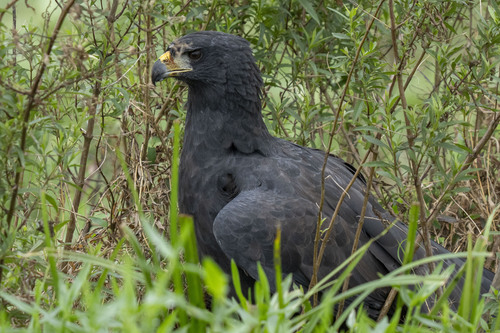 Great Black Hawk
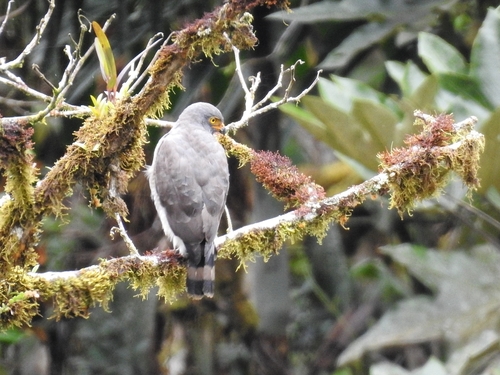 Roadside Hawk
In breve
Il segno distintivo più affidabile tra Great Black Hawk e Roadside Hawk è la dimensione e la struttura complessive: il Great Black Hawk è molto più grande, con ali molto larghe e una corta coda bianca con una punta nera audace, mentre il Roadside Hawk è notevolmente più piccolo, con una coda più lunga e ali corte e arrotondate. In volo, i giovani Great Black Hawk mostrano parti inferiori color crema con macchie scure e una coda con più barre scure, che possono sovrapporsi a alcune livree del Roadside Hawk, ma gli adulti sono completamente neri con una base della coda bianca e una punta nera molto evidente. Gli adulti del Roadside Hawk sono marroni o grigiastro con parti inferiori barrate e una coda con diverse barre grigie, e mostrano spesso un tocco di ruggine nelle ali. La voce e il comportamento sono anche abbastanza diversi: il Great Black Hawk emette un richiamo 'ooo-wheeeeee', mentre il Roadside Hawk ha un fischio acuto ed è molto più probabile vederlo posato in modo evidente o planare vicino alle strade.
Consigli di identificazione
- La dimensione è l'indizio più immediato: il Great Black Hawk pesa più di due volte e è molto più lungo del Roadside Hawk. Se l'uccello sembra massiccio, con un becco pesante e gambe spesse, è probabile che sia un Great Black Hawk.
- Schema della coda negli adulti: l'adulto del Great Black Hawk ha una coda corta che è per lo più bianca con una singola punta nera larga—unica tra questi due. Il Roadside Hawk ha sempre una coda più lunga con quattro o cinque barre grigie strette e nessuna base bianca solida.
- Forma dell'ala in volo: il Great Black Hawk mostra ali molto larghe, a forma di pala, mentre il Roadside Hawk ha ali corte e arrotondate e una coda proporzionalmente più lunga, dando un aspetto più compatto e agile in volo.
- Livrea nei giovani: i giovani Great Black Hawk sono marroni scuri sopra con striature e macchie, color crema sotto con macchie scure, e hanno una coda con diverse barre nere/oscure. I giovani Roadside Hawk sono più chiari, spesso con meno contrasto, e mostrano ancora una coda più lunga e più evidentemente barrata.
- Colore delle gambe e del cere: entrambe le specie hanno gambe e cere gialle, quindi questo non è un punto di separazione utile.
- Dimensione del becco: il becco del Roadside Hawk è relativamente grande per la sua dimensione, ma comunque molto più piccolo del massiccio becco del Great Black Hawk.
- Ruggine nelle ali: il Roadside Hawk mostra spesso un tocco di ruggine nelle ali, specialmente in volo—mai visto nel Great Black Hawk.
- Parti inferiori: l'adulto del Great Black Hawk è completamente nero sotto; il Roadside Hawk è barrato marrone e bianco sulle parti inferiori.
- Postura posata: il Roadside Hawk spesso si posa in modo evidente su fili o pali in campagna aperta; il Great Black Hawk preferisce alberi grandi ed è meno probabile vederlo in aperto.
- Vocalizzazioni: il Great Black Hawk emette un richiamo 'ooo-wheeeeee'; il Roadside Hawk emette un fischio acuto e penetrante. Se senti il richiamo, questo è un indizio forte.
- Habitat: il Roadside Hawk è comune in aree aperte, bordi di foreste e parchi urbani; il Great Black Hawk è raro e preferisce aree forestali o ripariali.
- Stile di volo: il Great Black Hawk vola con battiti d'ala lenti e pesanti; il Roadside Hawk vola più rapidamente e spesso batte le ali con colpi superficiali e rapidi.
- Abbondanza relativa: il Roadside Hawk è spesso il rapace più comune nel suo areale; il Great Black Hawk è raro o vagrante in Nord America.
- Differenze sessuali: entrambe le specie sono sessualmente simili nella livrea; la differenza di dimensione (femmine più grandi) è più pronunciata nel Roadside Hawk, ma non è un segno distintivo affidabile a meno che gli uccelli non siano affiancati.
- Variazione delle sottospecie: il Roadside Hawk mostra una notevole variazione della livrea nel suo areale, ma mantiene sempre la coda barrata e una dimensione più piccola rispetto al Great Black Hawk.
Taglia
Il Great Black Hawk è drammaticamente più grande: 56–64 cm (22–25 in) di lunghezza e circa 1,1 kg (2 lb 7 oz) [wikipedia], rendendolo un rapace massiccio con ali larghe e una corporatura pesante. Il Roadside Hawk è molto più piccolo, solo 31–41 cm (12–16 in) di lunghezza e 250–300 g (8.8–10.6 oz) [wikipedia], con un telaio notevolmente più snello e una coda proporzionalmente più lunga. La differenza di dimensione è ovvia anche a distanza, ed è il punto di separazione più affidabile se visti insieme o con altri rapaci per scala.
Piumaggio
I giovani Great Black Hawk sono marroni scuri sopra con macchie e striature, color crema sotto con macchie scure, e hanno una coda con diverse barre nere e scure—caratteristiche che possono sovrapporsi con il giovane Roadside Hawk, ma il Great Black Hawk è sempre più robusto e più scuro nel complesso. Gli adulti del Great Black Hawk sono completamente neri tranne che per una coda corta che è bianca con una larga punta nera; le ali sono molto larghe e le gambe e il cere sono gialli. Gli adulti del Roadside Hawk sono marroni o grigiastro sopra, con parti inferiori barrate marroni e bianche e una coda con quattro o cinque barre grigie. In volo, il Roadside Hawk mostra spesso un tocco di ruggine nelle ali, specialmente in alcune sottospecie, e la coda è più lunga e più evidentemente barrata. I giovani Roadside Hawk sono simili agli adulti ma possono essere più chiari e meno distintamente barrati. Il modello di coda nero e bianco del Great Black Hawk (bianco solido con una singola punta nera larga) è unico e non si verifica nel Roadside Hawk a nessuna età.
Comportamento
Il Great Black Hawk è tipicamente meno evidente, spesso visto planare con battiti d'ala lenti e pesanti o posato in grandi alberi vicino all'acqua o ai bordi delle foreste. Il Roadside Hawk è molto più probabile vederlo posato apertamente su fili, pali o piccoli alberi lungo le strade, e frequentemente plana con battiti d'ala rapidi e superficiali. Il Roadside Hawk è anche più vocale e spesso il rapace più comune nel suo areale, mentre il Great Black Hawk è raro in Nord America e generalmente meno avvicinabile.
Habitat
Il Roadside Hawk è altamente adattabile e spesso il rapace più comune in aree aperte, bordi di foreste, parchi urbani e specialmente lungo le strade nel suo areale. Il Great Black Hawk preferisce habitat più forestali o ripariali ed è raramente visto in campagna aperta o in ambienti urbani. In Nord America, il Great Black Hawk è un vagrante e estremamente raro, mentre il Roadside Hawk è comune nel suo areale.
Voce
Il Great Black Hawk emette un richiamo distintivo 'ooo-wheeeeee', che è di tono più basso e più prolungato rispetto al Roadside Hawk. Il Roadside Hawk ha un fischio molto acuto e penetrante, spesso ripetuto e dato da un posatoio o in volo. La differenza di tono e qualità è solitamente chiara se entrambi vengono uditi.