

Allodola vs Cesena
Alauda arvensis contro Turdus pilaris
Fai un quiz con Allodola e Cesena
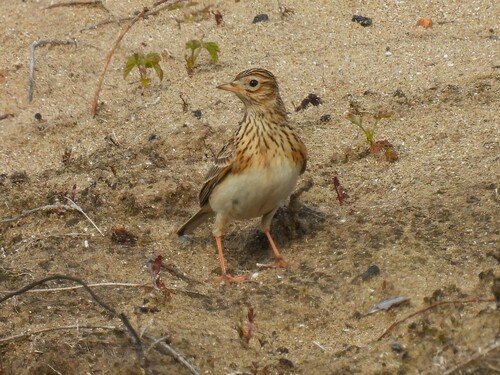 Allodola
 Cesena
In breve
Il segno distintivo più affidabile tra Allodola e Cesena è la testa e il sopracciglio grigio ardesia audaci della Cesena, e le sue sorprendenti coperture bianche delle ali inferiori visibili in volo, rispetto all'aspetto complessivo marrone e striato dell'Allodola e ai bordi bianchi delle ali e della coda. Le Cesene juvenile sono più opache ma mostrano ancora un motivo simile a un tordo, mentre le Allodole di tutte le età rimangono marroni e poco appariscenti, tranne che per la loro breve cresta e i bordi bianchi delle ali e della coda posteriori. In volo, le Cesene appaiono più grandi e robuste con un aspetto distintivo da tordo, mentre le Allodole sono più piccole, con code corte e ali larghe, spesso viste librarsi. Anche le vocalizzazioni sono distinte: i maschi di Allodola emettono lunghe canzoni frizzanti in volo sospeso, mentre le Cesene emettono richiami aspri 'tsak tsak', specialmente in volo.
Consigli di identificazione
- In volo, cerca le coperture bianche delle ali inferiori e le ascellari: Solo la Cesena mostra queste audaci macchie bianche sotto l'ala, visibili da sotto e a distanza. L'Allodola non mostra mai questa caratteristica.
- Testa e sopracciglio grigio ardesia: Gli adulti di Cesena hanno una testa e un sopracciglio grigio distintivo, in contrasto con un dorso castano e una coda nerognola. L'Allodola è marrone e striata ovunque, senza grigio o castano.
- Motivo del petto: La Cesena ha un petto e una gola cremosi e macchiati audaci, con chiare macchie scure. L'Allodola è più chiara sotto con striature fini, mai con macchie audaci simili a un tordo.
- Forma e motivo della coda: La coda della Cesena è arrotondata con 14 penne e alcune bianche sul bordo interno delle penne esterne. La coda dell'Allodola è corta, con bordi bianchi visibili solo da dietro in volo.
- Cresta: L'Allodola ha una breve cresta smussata che può essere sollevata e abbassata, a volte visibile quando è posata o allerta. La Cesena non ha alcuna cresta.
- Dimensioni e struttura: La Cesena è molto più grande, più robusta, e a forma di tordo, con un becco forte e leggermente curvato. L'Allodola è più piccola, più delicata, con un becco fine e un corpo compatto.
- Stile di volo: L'Allodola spesso si libra e canta in alto sopra i campi aperti, apparendo come un piccolo punto. La Cesena vola direttamente, spesso in stormi, e raramente si libra.
- Comportamento di posarsi: Le Cesene si posano sugli alberi o su rami esposti, specialmente in gruppi. Le Allodole quasi sempre rimangono a terra o basse nella vegetazione.
- Confusione giovanile: Le Cesene juvenile sono più opache ma mostrano ancora un motivo simile a un tordo e striature chiare, mutando rapidamente nel piumaggio degli adulti. I giovani Allodola assomigliano agli adulti—marroni e striati, senza un motivo audace.
- Vocalizzazioni: La canzone dell'Allodola è un lungo, musicale gorgheggio emesso in volo. Il richiamo della Cesena è un aspro 'tsak tsak', specialmente in volo o in allerta; la sua canzone è debole e raramente udita.
- Contesto dell'habitat: Se l'uccello si trova in terreni agricoli aperti o praterie, specialmente cantando in aria, è probabile che sia un'Allodola. Se si trova su un albero, una siepe, o in un gruppo in inverno, specialmente con richiami aspri, è probabile che sia una Cesena.
- Colore del becco: Il becco della Cesena è giallo-arancio in inverno, giallo in estate, con una punta scura; il becco dell'Allodola è semplice e fine.
- Differenze sessuali: Le femmine di Cesena sono più marroni e meno marcate rispetto ai maschi, ma mostrano comunque lo stesso motivo generale. I maschi di Allodola hanno ali più larghe per librarsi ma sono altrimenti simili alle femmine.
- Esibizione del canto: Solo l'Allodola esegue lunghi voli di canto sostenuti. La Cesena non si esibisce in questo modo.
- Bianco sulle ali e sulla coda: L'Allodola mostra bianco solo sul bordo posteriore dell'ala e della coda, visibile da dietro; il bianco della Cesena è sulle ali inferiori e sui bordi interni della coda, visibile da sotto.
Taglia
La Cesena è significativamente più grande e pesante dell'Allodola. La Cesena misura in media 25 cm di lunghezza con un'apertura alare di 39–42 cm e una massa corporea di circa 105 g [wikidata], mentre l'Allodola è più piccola, con una lunghezza di 18–19 cm e una struttura visibilmente più leggera (nessuna massa fornita, ma molto meno della Cesena). Le Cesene appaiono robuste e simili a tordi, mentre le Allodole sono compatte e delicate.
Piumaggio
Le Cesene juvenile sono più opache degli adulti ma mostrano ancora striature chiare e un motivo simile a un tordo, mutando rapidamente nel piumaggio distintivo degli adulti entro l'autunno. Gli adulti di entrambi i sessi hanno una testa, una nuca e un sopracciglio grigio ardesia, un dorso marrone scuro, una coda nerognola e un petto audacemente macchiato. In volo, le Cesene mostrano coperture bianche delle ali inferiori e ascellari, e una coda arrotondata con alcune bianche sui bordi interni delle penne esterne. Le Allodole di tutte le età sono marroni sopra e più chiare sotto, con striature fini e una breve cresta smussata. In volo, le Allodole mostrano una coda corta e ali larghe, con bordi bianchi sulla coda e sull'ala posteriore—questi sono visibili solo quando l'uccello vola via. Le Allodole non mostrano alcun motivo audace grigio, castano o nerognolo, e non mostrano mai il lampo bianco delle ali inferiori della Cesena. Le differenze sessuali sono sottili in entrambe le specie, ma le femmine di Cesena sono un po' più marroni e meno marcate rispetto ai maschi, mentre i maschi di Allodola hanno ali più larghe per librarsi.
Comportamento
Le Allodole sono famose per i loro voli di esibizione: i maschi si librano in alto nell'aria, cantando continuamente per minuti, apparendo spesso come un punto nel cielo. A terra, sono poco appariscenti, muovendosi attraverso l'erba e raramente posandosi in alto. Le Cesene sono molto più propense a posarsi sugli alberi o su rami esposti, spesso in stormi, e volano con un volo forte e diretto tipico dei tordi. Le Cesene raramente si librano e non si esibiscono in aria come le Allodole. In inverno, le Cesene sono spesso viste in grandi gruppi rumorosi, specialmente in campagna aperta o mentre si nutrono di bacche.
Habitat
Le Allodole sono uccelli di terreni agricoli aperti, praterie e brughiere, raramente avventurandosi in boschi o cespugli densi. Le Cesene nidificano in boschi e cespugli ma sono spesso viste in campi aperti, specialmente in inverno, a volte sovrapponendosi all'habitat dell'Allodola. Tuttavia, le Cesene sono più propense a trovarsi in alberi o siepi, specialmente al di fuori della stagione di nidificazione, mentre le Allodole evitano gli alberi e si attengono a terreni aperti.
Voce
I maschi di Allodola emettono una lunga, frizzante, canzone gorgheggiante, solitamente emessa in volo sospeso sostenuto in alto sopra il terreno aperto. La canzone può durare diversi minuti ed è continua, chiara e musicale. Le Cesene non cantano in volo nello stesso modo; la loro principale vocalizzazione è un aspro richiamo ripetuto 'tsak tsak', specialmente in volo o quando allarmate. La loro canzone è debole e raramente udita, un mix di frasi e squeak simili a quelle del merlo, solitamente emesso da un posatoio. La differenza nei richiami di volo è particolarmente utile: l'Allodola è musicale e continua, la Cesena è aspra e chiacchierina.