

Civetta nana vs Civetta capogrosso
Glaucidium passerinum contro Aegolius funereus
Fai un quiz con Civetta nana e Civetta capogrosso
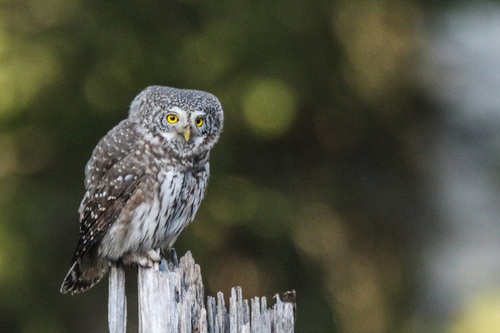 Civetta nana
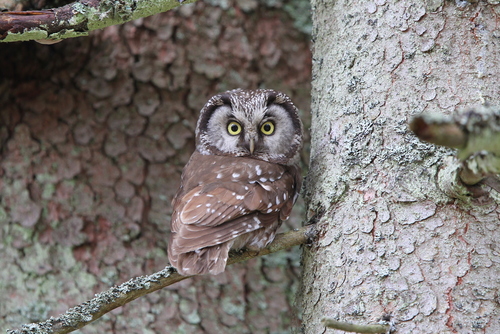 Civetta capogrosso
In breve
Il segno distintivo più affidabile tra Civetta nana e Civetta capogrosso è la loro struttura generale e il motivo facciale: la Civetta nana è notevolmente più piccola, con una coda corta e una testa rotonda e semplice priva di ciuffi auricolari, mentre la Civetta capogrosso è più grande, con una testa larga e arrotondata e un sorprendente disco facciale chiaro bordato di scuro, che conferisce un aspetto 'sorpreso'. I giovani Civette capogrosso sono marrone cioccolato con una larga 'X' bianca tra gli occhi, a differenza di qualsiasi piumaggio della Civetta nana. Negli adulti, le Civette nana mostrano un dorso rosso-bruno a grigio con macchie bianche e un mezzo collare, mentre la Civetta capogrosso ha un dorso marrone con evidenti macchie bianche 'perlacee' e una parte inferiore striata. Entrambe hanno occhi gialli, ma le proporzioni del viso e del corpo sono distinte. I richiami sono molto diversi: la Civetta nana emette note alte, flautate e monotone, mentre la Civetta capogrosso produce trilli e una varietà di richiami più morbidi e più aspri.
Consigli di identificazione
- Juvenile plumage: La Civetta capogrosso giovane è marrone cioccolato in generale con una larga 'X' bianca tra gli occhi e marcature bianche sul collo e sulle scapole—nessuna Civetta nana mostra mai questo motivo. Se vedi un giovane gufo marrone scuro, quasi uniforme, con una marcatura facciale chiara, è una Civetta capogrosso.
- Facial disc: La Civetta capogrosso adulta ha un grande disco facciale chiaro con un bordo scuro e 'sopracciglia' bianche, conferendo un aspetto 'sorpreso'. La Civetta nana ha una testa rotonda e semplice con solo deboli sopracciglia bianche a grigio e senza disco facciale.
- Size and jizz: La Civetta nana è molto più piccola e compatta, con una coda corta e una testa piccola e rotonda. La Civetta capogrosso è più grande, più robusta, con una testa larga e coda e ali più lunghe. Se vedi entrambe insieme, la differenza è ovvia, ma anche singolarmente, la Civetta nana spesso appare 'in miniatura'.
- Back and wing spotting: La Civetta capogrosso ha evidenti macchie bianche perlacee sul dorso e sulle ali, e la coda mostra tre file di macchie bianche che rimangono distinte anche quando è piegata. La Civetta nana ha macchie bianche sul dorso ma meno estese e non così 'perlacee'; la coda ha cinque barre bianche strette, non file di macchie.
- Underparts: La Civetta nana ha un ventre per lo più bianco con macchie marroni, mentre la Civetta capogrosso ha parti inferiori di colore crema con striature marrone ruggine—cerca striature contro macchie.
- Nape marking: La Civetta nana mostra un mezzo collare bianco sulla parte posteriore del collo; la Civetta capogrosso non ha questo ma può avere marcature bianche sul collo nei giovani.
- Tail pattern: La coda della Civetta nana è più scura del corpo con cinque barre bianche strette; la coda della Civetta capogrosso è marrone oliva con tre file di macchie bianche.
- Bill color: La Civetta capogrosso ha un becco giallo chiaro; il becco della Civetta nana è giallo-grigiastro, ma questo è sottile e raramente diagnostico sul campo.
- Eye color: Entrambe hanno occhi gialli, quindi questo non è un separatore.
- Ear tufts: Nessuna delle due specie ha ciuffi auricolari, quindi non usare questo segno.
- Vocalization: Se chiama, la Civetta nana emette note alte, flautate e monotone, mentre la Civetta capogrosso produce trilli e una varietà di richiami più morbidi e più aspri—ascolta la differenza, specialmente di notte.
- Behavior: La Civetta nana può essere vista posata apertamente all'alba o al tramonto; la Civetta capogrosso è strettamente notturna e raramente vista tranne che nel nido o se spaventata da un posatoio.
- Habitat: Entrambe nelle foreste boreali/taiga, ma la Civetta nana può verificarsi più ai margini delle foreste o in boschi misti; la Civetta capogrosso preferisce taiga profonda e matura.
- Flight: In volo, la Civetta nana appare compatta e con coda corta; la Civetta capogrosso è bulkier, con ali più larghe e un volo più galleggiante e dritto.
- Pitfalls: Fai attenzione a confondere i giovani Civette capogrosso con altri gufi marroni, ma la 'X' bianca e il disco facciale sono unici. La piccola dimensione e il viso semplice della Civetta nana sono chiave—se l'uccello appare 'carino' e minuscolo, è probabile che sia una Civetta nana.
Taglia
La Civetta nana è il gufo europeo più piccolo, con una massa media di circa 65,5 g e una lunghezza di 15–19 cm, che appare compatta e con coda corta. La Civetta capogrosso è notevolmente più grande e robusta, con una testa più larga e ali e coda più lunghe, anche se ancora piccola rispetto alla maggior parte dei gufi. Sul campo, la Civetta nana appare quasi 'giocattolo' accanto alla più robusta Civetta capogrosso.
Piumaggio
I giovani Civette capogrosso (circa 3 settimane fino all'involo) sono uniformemente marrone cioccolato sopra e sotto, con un disco facciale marrone scuro, marcature bianche sul collo, scapole e coda, e una larga 'X' bianca tra gli occhi—questo è unico e non è eguagliato da alcun piumaggio della Civetta nana. Gli adulti Civette capogrosso hanno un dorso marrone con evidenti macchie bianche perlacee, un disco facciale chiaro con un bordo scuro e parti inferiori di colore crema con striature ruggine. Le loro piume di volo e la coda mostrano file di macchie bianche, che rimangono distinte anche quando la coda è chiusa. Al contrario, gli adulti della Civetta nana sono rosso-bruni a grigio sopra con macchie bianche, un mezzo collare bianco sulla nuca e un ventre per lo più bianco con macchie marroni. La loro coda è più scura con cinque barre bianche strette. Le Civette nana mancano del bold disco facciale e dell'espressione 'sorpresa' della Civetta capogrosso. Entrambe le specie hanno occhi gialli, ma il viso della Civetta nana è più semplice e compatto.
Comportamento
Entrambe le specie sono gufi forestali, ma la Civetta capogrosso è strettamente notturna e spesso confidente se trovata durante il giorno, a volte permettendo un avvicinamento ravvicinato prima di volare. La Civetta nana è più propensa ad essere attiva all'alba e al tramonto e può essere vista posata apertamente, specialmente durante la stagione riproduttiva. Le Civette nana sono note per immagazzinare prede in autunno, mentre il comportamento della Civetta capogrosso è meno probabile da osservare a causa delle sue abitudini segrete e notturne.
Habitat
Entrambe le specie abitano foreste boreali e taiga, ma la Civetta nana si trova più spesso in boschi misti o conifere del nord e del centro Europa e Siberia, a volte ai margini delle foreste. La Civetta capogrosso preferisce taiga profonda e matura ed è meno probabile da vedere in habitat più aperti o ai margini. Entrambe sono raramente viste, ma la Civetta nana può essere più facilmente rilevata per il richiamo o l'attività diurna.
Voce
La Civetta nana emette una serie di note chiare e flautate ad alta tonalità e monotone, molto diverse dal classico 'hoot' dei gufi. La Civetta capogrosso ha un repertorio molto più vario: la canzone principale è un forte trillo, con melodie di corteggiamento più morbide, richiami di consegna, stridii, pigolii e hissate difensive. I richiami sono generalmente a tonalità più bassa e più complessi rispetto alla semplice e ripetitiva canzone della Civetta nana.
Civetta nana · Civetta capogrosso · I miei uccelli difficili