

Emerald-spotted Wood-Dove vs Tambourine Dove
Turtur chalcospilos contro Turtur tympanistria
Fai un quiz con Emerald-spotted Wood-Dove e Tambourine Dove
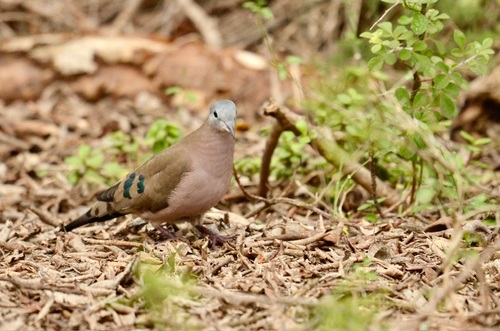 Emerald-spotted Wood-Dove
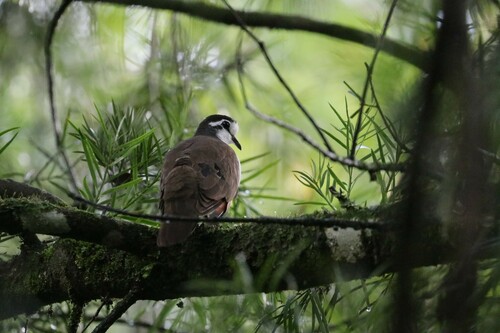 Tambourine Dove
In breve
Il segno di campo più affidabile tra Emerald-spotted Wood-Dove e Tambourine Dove è il colore e il motivo delle macchie sulle ali e dell'ala inferiore in volo: Emerald-spotted mostra macchie verdi metalliche sull'ala ripiegata e manca di castano nell'ala inferiore, mentre il Tambourine Dove ha grandi macchie viola scuro sull'ala ripiegata e mostra ali inferiori castane in volo. I giovani di entrambi possono essere confusi, ma il Tambourine è sempre più chiaro sotto e ha frange di piume castane. Strutturalmente, il Tambourine Dove è leggermente più grande e lungo, con un volto e parti inferiori più bianche nei maschi adulti, mentre l'Emerald-spotted è più uniformemente rosa sotto e manca di un forte contrasto facciale. Anche la preferenza dell'habitat aiuta: l'Emerald-spotted favorisce boschi aperti e più secchi, mentre il Tambourine è un uccello di boschi e cespugli densi e umidi.
Consigli di identificazione
- In volo, controlla il colore dell'ala inferiore: Il Tambourine Dove mostra sempre piume primarie castane e ali inferiori, mentre l'Emerald-spotted Wood-Dove manca di castano e ha ali inferiori più uniformi e chiare. Questo funziona per tutte le età ed è la separazione più affidabile.
- Macchie sulle ali ripiegate: L'Emerald-spotted mostra macchie verdi metalliche sull'ala ripiegata; il Tambourine Dove mostra grandi macchie viola scuro. Verde contro viola è sottile in scarsa illuminazione ma diagnostico in buone condizioni.
- Piumaggio giovanile/immaturo: I giovani Tambourine Doves hanno frange castane sulle piume della schiena, del petto e dei fianchi, e sono sempre più chiari sotto rispetto all'Emerald-spotted. Gli Emerald-spotted giovanili hanno frange color crema e macchie verdi opache, ma non castano.
- Motivo facciale (maschi adulti): Il Tambourine Dove ha un volto bianco sorprendente con una macchia nera dietro l'occhio; l'Emerald-spotted ha una corona blu-grigia più uniforme e manca del contrasto facciale bianco.
- Colore delle parti inferiori: L'Emerald-spotted è rosa malva sotto, sfumando a bianco sul ventre; il Tambourine Dove (maschio) è bianco sotto, la femmina è bianca solo sul ventre con petto e volto grigio chiaro-marrone.
- Colore della corona: L'Emerald-spotted ha una corona blu-grigia; il maschio del Tambourine Dove ha una corona grigia, la femmina ha grigio-marrone, mancando di blu-grigio.
- Colore del becco: L'Emerald-spotted ha un becco nerastro con una base rossa; il becco del Tambourine Dove è viola. Questo è sottile e difficile da vedere a distanza.
- Anello oculare e piedi: Il Tambourine Dove ha un anello oculare e piedi viola-rossi, che possono essere visibili a distanza ravvicinata; quelli dell'Emerald-spotted non sono descritti come distintivi.
- Motivo della coda: L'Emerald-spotted ha bande nerastre sulla parte bassa della schiena e sulla coda; l'ala inferiore del Tambourine Dove è marrone, senza menzione di bande.
- Contesto dell'habitat: In boschi densi e umidi o giardini lussureggianti, aspettati il Tambourine Dove; in boschi aperti e più secchi, l'Emerald-spotted è più probabile.
- Comportamento quando spaventato: Il Tambourine Dove tende a spaventarsi da coperture dense e vola basso e veloce; l'Emerald-spotted può essere visto foraggiando più apertamente o in piccoli gruppi presso le pozze d'acqua.
- Vocalizzazioni: Se sentito, l'Emerald-spotted emette una sequenza di cooing complessa e multi-parti; il Tambourine Dove ripete un semplice 'du-du-du-du-du'.
- Differenze sessuali: Entrambe le specie sono leggermente più opache nella femmina, ma il contrasto è più forte nel Tambourine Dove, dove la femmina manca del volto bianco ed è più uniformemente grigio-marrone chiaro.
- Dimensioni: Il Tambourine Dove è leggermente più grande e pesante, ma questo non è un segno di campo affidabile a meno che entrambi non siano visti insieme.
- Variazione del piumaggio: L'Emerald-spotted mostra alcune variazioni geografiche, ma le differenze sono clinali e non utili per la separazione dal Tambourine Dove.
Taglia
Il Tambourine Dove è leggermente più grande e pesante (67g contro 56g) e circa 2 cm più lungo (22 cm contro 20 cm) rispetto all'Emerald-spotted Wood-Dove [wikidata]. Entrambi sono piccioni piccoli e paffuti, ma la differenza è sottile e non sempre ovvia sul campo a meno che non siano visti fianco a fianco. La struttura è altrimenti simile, senza forti differenze nella forma della coda o del becco notate.
Piumaggio
- Giovanile/immaturo: Entrambe le specie hanno versioni più opache delle macchie sulle ali degli adulti, ma i giovani Tambourine Dove mostrano frange castane sulle piume della schiena, del petto e dei fianchi, e sono più chiari sotto rispetto all'Emerald-spotted a tutte le età. Gli immaturi Emerald-spotted hanno macchie verdi più opache e frange color crema, ma non castano.
- Maschio adulto: L'Emerald-spotted ha macchie verdi metalliche sulle ali, una corona blu-grigia che sfuma in grigio-rosato sulla gola e parti inferiori rosa malva; il Tambourine ha grandi macchie viola scuro sulle ali, un volto bianco con una macchia nera dietro l'occhio, parti inferiori bianche e una corona grigia.
- Femmina adulta: Entrambi sono più opachi, ma la femmina del Tambourine è bianca solo sul ventre, con volto e petto grigio chiaro-marrone, e manca della corona blu-grigia dell'Emerald-spotted.
- In volo: Il Tambourine Dove mostra piume primarie castane e ali inferiori, mentre l'Emerald-spotted non lo fa—questo è un punto di separazione chiave per tutte le età. Entrambi hanno parti superiori grigio-marrone chiare, ma il colore dell'ala inferiore è diagnostico.
Comportamento
Entrambe le specie sono solitamente solitarie o in piccoli gruppi e foraggiano a terra per semi. Il Tambourine Dove è più timido e più propenso a essere spaventato da coperture dense, volando basso e veloce; l'Emerald-spotted è meno gregario ma può formare gruppi presso le pozze d'acqua. Entrambi costruiscono nidi fragili di rametti e condividono i compiti di incubazione, ma il nido del Tambourine Dove è solitamente più basso in cespugli densi, mentre l'Emerald-spotted nidifica in alberi o arbusti.
Habitat
L'Emerald-spotted Wood-Dove preferisce boschi decidui aperti e più secchi e crescita secondaria, evitando la foresta pluviale sempreverde e il semideserto. Il Tambourine Dove è un uccello di boschi densi e umidi, giardini densi e piantagioni, ed è assente da aree più secche. Se trovi un piccolo Turtur in una foresta densa e umida o in giardini lussureggianti, è molto più probabile che sia un Tambourine; in boschi aperti e secchi, ci si aspetta di trovare l'Emerald-spotted.
Voce
L'Emerald-spotted Wood-Dove ha un richiamo in tre parti: due cooing lunghi e morbidi, poi una serie di cooing discendenti lenti per circa 10 secondi, terminando con 4 secondi di cooing rapidi e in dissolvenza. Il Tambourine Dove emette un 'du-du-du-du-du' ripetuto in modo persistente. La differenza è chiara se l'uccello vocalizza, ma entrambi possono essere silenziosi quando spaventati.
Emerald-spotted Wood-Dove · Tambourine Dove · I miei uccelli difficili