

Capovaccaio vs White-backed Vulture
Neophron percnopterus contro Gyps africanus
Fai un quiz con Capovaccaio e White-backed Vulture
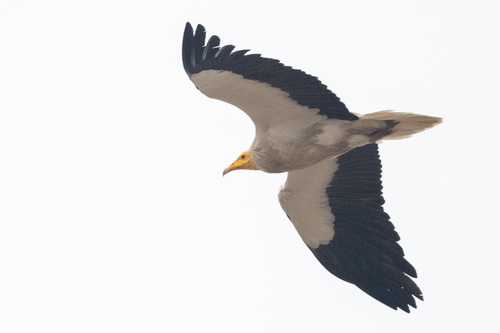 Capovaccaio
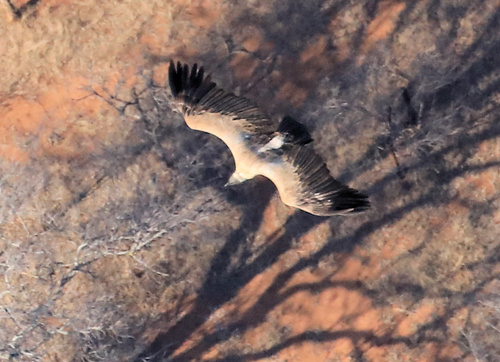 White-backed Vulture
In breve
Il segno distintivo più affidabile è la forma dell'ala e della coda in volo: il Capovaccaio (tutte le età) mostra un corpo e copritrici bianchi fortemente contrastanti con piume di volo nere e una coda a forma di cuneo, mentre il White-backed Vulture è complessivamente molto più scuro con solo una schiena chiara e manca di una coda a forma di cuneo. I giovani Capovaccai sono marrone scuro ma mostrano comunque un profilo con ali più piccole e appuntite e una coda a cuneo, a differenza del più massiccio e con ali larghe White-backed Vulture. La struttura è fondamentale: il Capovaccaio è molto più piccolo e snello, con un becco lungo e sottile e ali appuntite, mentre il White-backed è un avvoltoio pesante e con ali larghe, con una coda corta e un collo spesso. In posa, il viso giallo nudo e le gambe rosa del Capovaccaio contrastano con la testa lanosa e il collare bianco del White-backed. La confusione legata all'età è più probabile con gli uccelli giovani, ma la forma del volo e il modello dell'ala inferiore rimangono i migliori indizi di separazione.
Consigli di identificazione
- Modello dell'ala inferiore in volo (tutte le età): Il Capovaccaio mostra un contrasto sorprendente tra copritrici/basso bianche e piume di volo nere; il White-backed Vulture è uniformemente scuro sotto, tranne che per una schiena chiara, senza un netto contrasto dell'ala inferiore.
- Forma della coda: Il Capovaccaio ha una coda lunga e a forma di cuneo visibile sia in posa che in volo; la coda del White-backed Vulture è corta e quadrata.
- Forma dell'ala: Le ali del Capovaccaio sono appuntite e relativamente strette; il White-backed Vulture ha ali molto larghe, a forma di pala, con punte arrotondate.
- Dimensione e massa: Il Capovaccaio è molto più piccolo, leggero e snello; il White-backed è pesante, massiccio e imponente, specialmente quando è in posa.
- Testa e viso: Il Capovaccaio ha un viso e una gola gialli nudi (adulti), con un becco lungo e sottile; il White-backed ha una testa lanosa e non piumata, un collare bianco e un becco più robusto.
- Colore delle gambe: Gli adulti di Capovaccaio hanno gambe rosa; le gambe del White-backed Vulture non sono notate come rosa e sono meno appariscenti.
- Colore del piumaggio (adulti): Il Capovaccaio è bianco (spesso macchiato di ruggine) con piume di volo nere; il White-backed è marrone scuro con solo la schiena che è biancastra.
- Confusione giovanile: I giovani Capovaccai sono scuri ma rimangono più piccoli, con ali appuntite e coda a cuneo; i giovani White-backed Vultures sono anch'essi scuri ma sono molto più grandi, con ali larghe e coda corta.
- Aspetto in posa: Il Capovaccaio appare snello, con un collo lungo e coda a cuneo; il White-backed Vulture è curvo, con collo spesso e corpo pesante.
- Stile di volo: Il Capovaccaio vola con agilità e leggerezza, spesso da solo o in coppie; il White-backed Vulture vola in grandi gruppi, con un volo più pesante e costante.
- Comportamento sociale: I White-backed Vultures si radunano in gran numero attorno alle carcasse; i Capovaccai sono più solitari o in coppie, raramente in grandi gruppi.
- Habitat: Il Capovaccaio è probabile che si trovi in aree aride, aperte o rocciose, a volte vicino alle persone; il White-backed è nelle savane africane con grandi mammiferi.
- Distribuzione geografica: Il Capovaccaio si trova dall'Iberia all'India e in alcune parti dell'Africa; il White-backed è solo nell'Africa sub-sahariana.
- Forma del becco: Il becco del Capovaccaio è lungo e sottile; quello del White-backed è più corto e più robusto.
- Pelle facciale: Solo il Capovaccaio ha una pelle gialla nuda estesa sul viso e sulla gola (adulti); il White-backed ha una testa lanosa e un collare bianco.
Taglia
Il Capovaccaio è molto più piccolo e leggero (circa 2 kg di massa corporea) rispetto al White-backed Vulture, che è un vero pesante (4.2–7.2 kg, secondo Wikipedia). Il White-backed Vulture è anche più lungo (78–98 cm rispetto alla dimensione più piccola del Capovaccaio) e ha un'apertura alare molto più ampia (1.96–2.25 m). Sul campo, il White-backed appare massiccio e massiccio, mentre il Capovaccaio è visibilmente più delicato e agile, con un profilo snello.
Piumaggio
-
Uccelli giovani/immaturi: I giovani Capovaccai sono nerastro o marrone cioccolato con macchie nere e bianche, ma mantengono la piccola dimensione della specie, ali appuntite e coda a forma di cuneo. I giovani White-backed Vultures sono anch'essi per lo più scuri, ma sono molto più massicci, con ali più larghe e una coda corta e quadrata. Il contrasto dell'ala inferiore è sempre maggiore nel Capovaccaio, anche negli uccelli giovani.
-
Adulti: Gli adulti di Capovaccaio sono bianchi nel complesso con piume di volo nere, spesso macchiati di ruggine o marrone dal suolo, e hanno un viso giallo nudo e gambe rosa. L'ala inferiore è sorprendentemente bianca con primarie e secondarie nere. Gli adulti di White-backed Vulture sono marrone scuro nel complesso, con solo la schiena che è biancastra; il resto del piumaggio, compresa l'ala inferiore, è molto più scuro. Il White-backed ha un collare bianco e una testa lanosa e non piumata, ma manca del viso giallo nudo del Capovaccaio.
-
Coda: La coda del Capovaccaio è a forma di cuneo e più lunga, mentre la coda del White-backed è corta e quadrata.
-
Becco e viso: Il Capovaccaio ha un becco lungo e sottile e pelle facciale gialla nuda; il White-backed ha un becco più robusto e una testa lanosa con un collare bianco.
Comportamento
I Capovaccai spesso volano singolarmente o in coppie, utilizzando termiche e mostrando un volo agile e leggero con ali appuntite e una distintiva coda a cuneo. I White-backed Vultures sono altamente sociali, spesso visti circolare in grandi gruppi e nutrirsi in massa attorno alle carcasse. Il loro volo è più pesante, con ali larghe e uno stile di volo più faticoso. I Capovaccai possono essere visti camminare a terra, a volte utilizzando strumenti, mentre i White-backed Vultures sono più propensi a essere visti in grandi raduni attorno ai cadaveri.
Habitat
Il Capovaccaio ha un'ampia gamma che va dall'Iberia e dal Nord Africa all'India e all'Asia occidentale, preferendo paesaggi aperti, scogliere e regioni aride, spesso vicino agli insediamenti umani. Il White-backed Vulture è strettamente africano sub-sahariano, trovato in savane boschive e pianure aperte, specialmente dove sono presenti grandi mammiferi. Il White-backed è l'avvoltoio più comune in Africa (anche se ora in declino), mentre il Capovaccaio è molto più raro e più localizzato in Africa.
Capovaccaio · White-backed Vulture · I miei uccelli difficili