

Eastern Rock Nuthatch vs Pispola golarossa
Sitta tephronota contro Anthus cervinus
Fai un quiz con Eastern Rock Nuthatch e Pispola golarossa
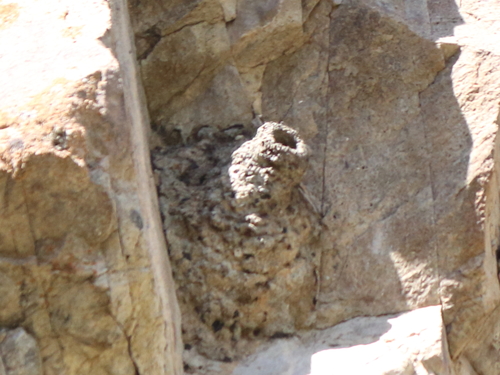 Eastern Rock Nuthatch
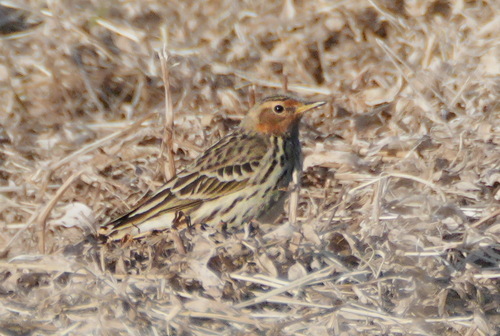 Pispola golarossa
In breve
The most reliable way to separate Eastern Rock Nuthatch from Red-throated Pipit is by overall structure and posture: nuthatch is a chunky, big-headed, short-tailed cliff specialist, while pipit is a slender, long-tailed ground bird. In flight or perched, nuthatch shows a bold black eyestripe and pale underparts, while pipit (outside breeding) is heavily streaked above and below, with a much finer bill and longer tail. Juvenile and non-breeding pipits lack the red throat, making confusion with nuthatch possible if only seeing pale underparts, but the nuthatch’s blue-grey upperparts and strong eyestripe are always distinctive. Habitat is also a strong clue: nuthatch clings to rocks, pipit walks on open ground.
Consigli di identificazione
- Structure and posture: Nuthatch is chunky, big-headed, and short-tailed, often seen clinging to rocks; pipit is slender, long-tailed, and walks on the ground. This is the fastest field clue.
- Bill shape: Nuthatch has a strong, straight, pointed bill; pipit’s bill is fine, slender, and more delicate.
- Eyestripe: Nuthatch always shows a bold black eyestripe, especially broad in overlap zones; pipit never has a true eyestripe, only fine facial markings.
- Upperparts color: Nuthatch is blue-grey above; pipit is brown and heavily streaked above, with pale mantle stripes.
- Underparts: Nuthatch is white on the breast, grading to pale orange-buff under the tail; pipit is white below but heavily streaked black on white, especially on the chest and flanks (all non-breeding and juvenile plumages).
- Breeding plumage: Adult pipit in breeding plumage has a brick-red face and throat, never matched by nuthatch. Outside breeding, pipit loses the red but remains streaked.
- Juvenile/immature plumage: Juvenile and non-breeding pipits lack red but are always more streaked above and below than any nuthatch.
- Flight pattern: Pipit has a strong, direct flight with a sharp 'psii' call; nuthatch flies short distances between rocks, rarely over open ground.
- Tail length: Pipit’s tail is long and often wagged; nuthatch’s tail is short and stiff, used for support against rocks.
- Habitat: Nuthatch is always on rocks, cliffs, or boulders; pipit is on open ground, meadows, or tundra, rarely on rocks.
- Behavior: Nuthatch climbs and clings to vertical surfaces; pipit walks or runs on the ground.
- Size impression: Nuthatch is bulkier and heavier, pipit is smaller and more delicate.
- Context: If seen in a rocky, arid landscape, nuthatch is likely; in grassy or open fields, pipit is likely.
- Pitfall: Non-breeding pipits lacking red throat can look pale below, but will always show more streaking and lack the nuthatch’s eyestripe and blue-grey upperparts.
- Vocalization: If you hear a sharp 'psii' call, it is pipit; nuthatch’s voice is not described here.
Taglia
Eastern Rock Nuthatch is distinctly larger and heavier than Red-throated Pipit. Nuthatch measures 15–16 cm in length and can weigh from 30–55 g depending on subspecies, making it a robust, thickset bird. Red-throated Pipit is a small pipit, noticeably more delicate and slender, with a much lighter build. In direct comparison, the nuthatch appears bulkier, with a proportionally larger head and shorter tail, while the pipit is slim, long-tailed, and light-billed.
Piumaggio
Juvenile and non-breeding Red-throated Pipits lack the red throat and instead show heavy, crisp streaking across the cap, back, flanks, rump, and chest, with pale mantle stripes and black marks on a white background below. This streaking is much more extensive than any nuthatch. Eastern Rock Nuthatch, all ages, has pale blue-grey upperparts, a bold black eyestripe, white breast, and underparts grading to pale orange-buff near the tail. The nuthatch never shows strong streaking above or below, and the eyestripe is always present and prominent, especially in overlap zones. In breeding plumage, pipit adults have a brick-red face and throat, which is never matched by nuthatch. In flight, pipit shows a typical pipit wing and tail pattern (not detailed in sources), while nuthatch’s wings and tail are short and broad, with no streaking.
Comportamento
Eastern Rock Nuthatch is almost always seen clinging to vertical rock faces, boulders, or cliff ledges, often moving headfirst downwards or sideways, using its strong feet and short tail for support. Red-throated Pipit is a ground-dweller, walking or running on open ground, meadows, or tundra, rarely perching on rocks and never climbing. In flight, pipit is direct and strong, often giving a sharp call, while nuthatch flies short distances between rocks and rarely crosses open ground.
Habitat
Eastern Rock Nuthatch is restricted to rocky, arid hillsides, cliffs, and outcrops in southwest and central Asia. It is almost never found away from rocks. Red-throated Pipit breeds in far northern tundra or open grassy areas and migrates through open fields, meadows, and sometimes marshy ground. It avoids rocky habitats favored by nuthatch. Thus, habitat is a strong separator: nuthatch on rocks, pipit on open ground.
Voce
Red-throated Pipit gives a characteristic sharp 'psii' call in flight, typical of pipits. No vocalization details are provided for Eastern Rock Nuthatch in these notes, so voice is only diagnostic if the pipit call is heard.
Eastern Rock Nuthatch · Pispola golarossa · I miei uccelli difficili