

Monachella orientale vs Monachella dorsonero
Oenanthe melanoleuca contro Oenanthe pleschanka
Fai un quiz con Monachella orientale e Monachella dorsonero
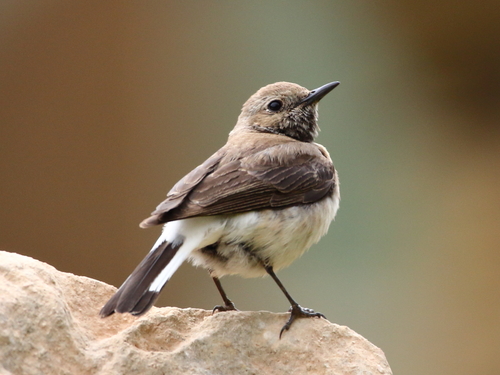 Monachella orientale
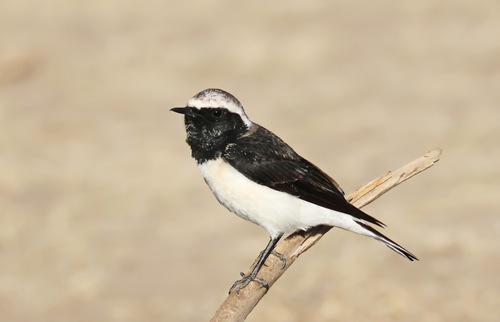 Monachella dorsonero
In breve
Il segno di campo più affidabile tra Monachella orientale e Monachella dorsonero è il motivo e l'estensione del nero sul viso e sulla gola nei maschi adulti, e il motivo della coda in tutte le livree. Il maschio adulto di Monachella orientale è sorprendentemente bianco e nero con una corona e parti superiori più chiare, e una maschera nera che arriva appena sopra la base del becco; gli individui con gola nera mostrano un nero più esteso e nettamente delimitato sulla gola e sul viso rispetto a Monachella dorsonero. I maschi di Monachella dorsonero hanno una corona e una nuca di colore marrone chiaro, una maschera nera più stretta e un motivo distintivo della coda con una 'T' nera invertita: il nero sulla punta della coda è più esteso, specialmente sulle piume esterne. Le femmine e gli immaturi sono più difficili da distinguere, ma Monachella orientale è più fredda e opaca nel complesso, mentre Monachella dorsonero è più marrone con una sfumatura sabbiosa sulla testa. In volo, entrambi mostrano molto bianco nella coda, ma la 'T' nera di Monachella dorsonero è diagnostica se vista bene. La struttura e le dimensioni sono molto simili e non sono separabili in modo affidabile sul campo.
Consigli di identificazione
- Motivo della coda (tutte le età): Monachella dorsonero mostra una 'T' nera invertita nella coda: le piume centrali sono nere con basi bianche, le piume esterne sono bianche con punte nere (le più esterne con più nero). Monachella orientale ha una coda per lo più bianca tranne che per la coppia centrale, con il bianco che spesso raggiunge la punta della membrana interna. Questo è il segno migliore in volo o su uccelli posati con code aperte.
- Corona e parti superiori del maschio adulto: I maschi di Monachella orientale hanno una corona, una fronte e un mantello bianchi o quasi bianchi, con poco o nessun buff; i maschi di Monachella dorsonero hanno una corona e una nuca di colore marrone chiaro, e il mantello/le scapolari sono nere con punte buff. Usa questo in primavera e all'inizio dell'estate.
- Maschera nera e gola: I maschi di Monachella orientale hanno una maschera nera che arriva appena sopra la base del becco, e gli uccelli con gola nera mostrano un nero più esteso, nettamente delimitato sul viso e sulla gola. La maschera nera di Monachella dorsonero è più stretta, non arriva così in alto sopra il becco, e il nero sulla gola è meno esteso e più sfumato.
- Tono generale di femmine/immaturi: Le femmine e gli immaturi di Monachella orientale sono di un grigio-marrone più freddo e opaco; le femmine di Monachella dorsonero sono più marroni, con una sfumatura sabbiosa sulla testa. Questo è sottile e meglio utilizzato in combinazione con il motivo della coda.
- Parti superiori dei giovanili: I giovanili di Monachella dorsonero sono marroni sopra con centri chiari vicino alle punte delle piume, dando un aspetto maculato; gli immaturi di Monachella orientale sono meno maculati, più uniformi grigio-marrone.
- Parti inferiori: I maschi di Monachella orientale hanno parti inferiori bianche con sfumature buff; i maschi di Monachella dorsonero hanno parti inferiori di colore crema-buff, specialmente sul ventre e sul petto inferiore. Questo è sottile e variabile.
- Cambiamenti stagionali: In autunno e inverno, Monachella orientale diventa più buff sulla testa, sul mantello e sulle parti inferiori, ma rimane più fredda e meno sabbiosa di Monachella dorsonero. Le tonalità buff di Monachella dorsonero diventano più pronunciate man mano che le punte delle piume si consumano.
- Rene e parte bassa della schiena: Entrambe le specie hanno parti basse della schiena bianche, ma le femmine di Monachella dorsonero mostrano meno bianco sul rene rispetto a Culbianco; questo non è un forte separatore tra questi due.
- Motivo delle ali: Entrambe hanno ali nere con punte/bordi chiari in livrea fresca; non sono separabili in modo affidabile sul campo.
- Becco, gambe e struttura: Entrambe sono slanciate, erette, con becchi e gambe simili; non utili per la separazione.
- Voce: Monachella dorsonero emette un richiamo aspro 'zack zack' e una canzone musicale variabile; la voce di Monachella orientale non è descritta qui, quindi non fare affidamento sulle vocalizzazioni.
- Habitat e distribuzione: Dove entrambe si trovano, l'habitat non è un separatore; controlla le mappe di distribuzione per le specie probabili ma non fare affidamento su questo nelle zone di sovrapposizione.
- Comportamento: Entrambe le specie si comportano in modo simile: erette, con movimenti della coda, si nutrono a terra e si posano su rocce; non diagnostico.
- Dimorfismo sessuale: Le livree di femmine e immaturi sono più impegnative; fai affidamento sul motivo della coda e sul tono generale piuttosto che sul motivo del viso/della gola.
- Trappole: Fai attenzione alla sovrapposizione con Monachella occidentale, che non è trattata qui; controlla sempre il motivo della coda e il contrasto viso/gola per i migliori risultati.
Taglia
Entrambe le specie sono piccoli, slanciati culbianchi con proporzioni simili. Monachella dorsonero è lunga circa 14–14.6 cm, e Monachella orientale è comparabile (misurazioni precise non fornite, ma entrambe sono tipici piccoli culbianchi). Le femmine di Monachella dorsonero sono leggermente più piccole dei maschi, ma questo non è un segno utile sul campo. Becco, gambe e aspetto generale sono molto simili e non diagnostici.
Piumaggio
Giovanili e uccelli di primo inverno: i giovanili di Monachella dorsonero sono marroni sopra con centri chiari vicino alle punte delle piume, dando un aspetto maculato; le femmine e gli immaturi di Monachella orientale sono di un grigio-marrone più freddo, meno maculati e opachi. In entrambi, il motivo della coda è fondamentale: Monachella dorsonero di tutte le età mostra una 'T' nera invertita: le piume centrali della coda sono nere con basi bianche, il resto è bianco con punte nere (le più esterne con più nero). Monachella orientale ha una coda per lo più bianca tranne che per la coppia centrale, e il bianco spesso si estende fino alla punta della membrana interna, rendendo la coda complessivamente più bianca.
Maschi adulti in riproduzione: Monachella orientale è netta bianca e nera, con una corona, un mantello e parti superiori bianche o quasi bianche, e una maschera nera che si estende appena sopra il becco; la gola può essere nera o bianca, ma gli uccelli con gola nera hanno un nero più esteso e nettamente delimitato. I maschi di Monachella dorsonero hanno una corona e una nuca di colore marrone chiaro, maschera e gola nere, ma la maschera è più stretta e non arriva così in alto sopra il becco; il mantello e le scapolari sono neri con punte buff, e le parti inferiori sono crema-buff.
Femmine: Monachella orientale è più fredda e opaca, con meno tonalità sabbiose o buff rispetto a Monachella dorsonero, che è più marrone e ha una sfumatura sabbiosa sulla testa. Entrambe hanno parti basse della schiena bianche, ma la femmina di Monachella dorsonero mostra meno bianco sul rene rispetto a Culbianco, e il motivo della coda rimane diagnostico.
Comportamento
Entrambe le specie sono culbianchi tipici: eretti, si nutrono a terra, muovono la coda e spesso si posano su rocce o arbusti bassi. I maschi di entrambe le specie cantano da posatoi prominenti o in volo. Nessuna differenza comportamentale è affidabilmente diagnostica sul campo.
Habitat
Monachella orientale nidifica nel sud-est dell'Europa e in Medio Oriente, preferendo habitat aperti, rocciosi o pietrosi con vegetazione scarsa. Monachella dorsonero nidifica più a est, dal sud-est dell'Europa attraverso l'Asia centrale fino alla Mongolia, e preferisce anche regioni aperte, pietrose e scarsamente vegetate. Entrambe possono trovarsi in habitat simili dove le loro distribuzioni si sovrappongono, quindi l'habitat non è un separatore affidabile.
Voce
Monachella dorsonero emette un richiamo aspro 'zack zack' e una canzone musicale a bassa tonalità, variabile, con note simili a quelle di un'allodola e fischi, spesso emesse da un posatoio o in volo. Le vocalizzazioni di Monachella orientale non sono descritte nelle note fornite, quindi la voce non è un separatore affidabile basato su queste informazioni.
Monachella orientale · Monachella dorsonero · I miei uccelli difficili