

Dark-throated Seedeater vs Thick-billed Saltator
Sporophila ruficollis contro Saltator maxillosus
Fai un quiz con Dark-throated Seedeater e Thick-billed Saltator
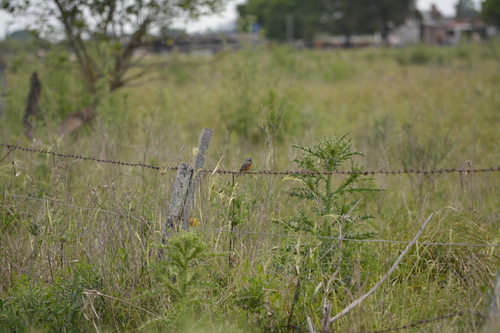 Dark-throated Seedeater
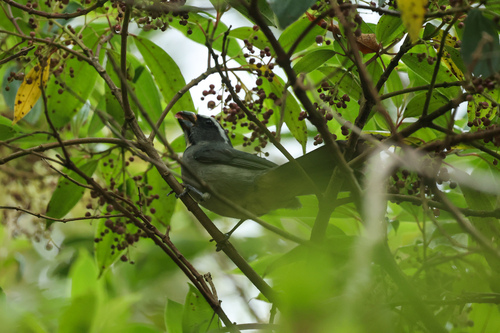 Thick-billed Saltator
In breve
Il segno di campo più affidabile tra Dark-throated Seedeater e Thick-billed Saltator è la dimensione complessiva e la struttura del becco: il Saltator è quasi due volte più lungo e ha un becco massiccio, spesso di base gialla, mentre il Seedeater è piccolo con un becco piccolo e arrotondato. Se intravedi un uccello piccolo con un ventre ruggine e una gola scura, specialmente in praterie, è il Seedeater; un uccello molto più grande con un sopracciglio bianco sorprendente e un enorme becco in foresta è il Saltator. I Seedeater immaturi e femminili possono essere confusi con altri uccelli bruni, ma non eguagliano mai la dimensione o il becco del Saltator. Controlla sempre il lungo sopracciglio bianco del Saltator e le parti inferiori ruggine e la macchia scura della gola nei maschi del Seedeater.
Consigli di identificazione
- Size is the quickest check: Saltator è quasi due volte più lungo di Seedeater. Se l'uccello sembra della dimensione di un tordo, è il Saltator; della dimensione di un passero, è il Seedeater.
- Bill structure: Saltator ha un becco massiccio, spesso e alto, spesso giallo alla base (specialmente nei maschi), mentre il becco del Seedeater è piccolo, arrotondato e scuro (grigio a nero nei maschi, corno a nerastro nelle femmine). Questo è visibile anche da lontano.
- White eyebrow (supercilium): Solo il maschio Saltator mostra un lungo e audace sopracciglio bianco che inizia alla base del becco. Il Seedeater non ha mai un sopracciglio bianco in nessuna livrea.
- Throat and underparts (adult males): Il maschio Seedeater ha una gola e un petto superiore marrone scuro-nero con ruggine sotto; il maschio Saltator ha una parte inferiore color crema o ruggine ma non ha mai una macchia scura sulla gola.
- Crown color: Il maschio Seedeater ha una corona e una nuca grigia, dando un aspetto da elmo; il maschio Saltator è grigio scuro sopra ma manca dell'effetto da elmo.
- Rufous/cinnamon tones: Solo il Seedeater (soprattutto i maschi) mostra toni ruggine o cannella scura sulla parte bassa della schiena, sul coda e sulle parti inferiori. Il Saltator è ruggine sotto ma non ha mai ruggine sopra.
- Primary patch: Entrambi i sessi e le età del Seedeater mostrano una piccola macchia biancastra alla base delle primarie (sull'ala piegata o in volo). Il Saltator non mostra mai questa caratteristica.
- Female/immature confusion: Le femmine e i giovani Seedeater sono di un marrone caldo con facce e parti inferiori color crema, privi di forti marcature facciali. La femmina Saltator ha un dorso verde, una faccia più verde e una gola color crema, e ha sempre un becco molto più spesso.
- Tail: La coda del Seedeater è nerastra con bordi grigi (maschio) o marrone scuro (femmina); la coda del Saltator non è descritta come distintiva ma è proporzionalmente più lunga e si adatta al suo corpo più grande.
- Habitat context: Il Seedeater si trova in praterie aperte o cespugli, il Saltator in margini forestali o foreste montane. L'habitat da solo può spesso separarli.
- Behavior: Il Seedeater è più probabile che venga visto basso nell'erba o sui fusti; il Saltator si posiziona più in alto ed è più evidente.
- Song: Se senti una frase forte di quattro note con la terza nota più forte, è il Saltator. Il canto del Seedeater non è descritto qui.
- Leg color: Entrambi hanno gambe scure, non un separatore.
- Iris color: Entrambi hanno iridi marroni scure, non un separatore.
- Seasonal presence: Il Seedeater si riproduce da dicembre a febbraio; il Saltator canta da agosto in poi, ma entrambi possono essere presenti tutto l'anno in alcune parti del loro areale.
Taglia
Dark-throated Seedeater è un uccello molto piccolo, lungo 10–11 cm e pesante 7–9,7 g, uno dei più piccoli del suo genere. Thick-billed Saltator è molto più grande, circa 19 cm, con un becco notevolmente robusto e alto. Questa differenza di dimensioni è drammatica sul campo: il Saltator è quasi due volte più lungo e appare molto più massiccio, mentre il Seedeater è delicato e della dimensione di un passero. Se vedi entrambi insieme, la confusione è improbabile, ma gli uccelli solitari possono essere giudicati erroneamente a distanza senza un riferimento di dimensione.
Piumaggio
- Juvenile/Immature/First-year: I giovani e le femmine di Dark-throated Seedeater sono di un marrone caldo sopra con facce e parti inferiori color crema, e una piccola macchia primaria biancastra sull'ala, ma mancano di forti marcature facciali. I Saltator immaturi sono verdastri sopra con un becco nero, e non mostrano mai i toni ruggine o la macchia primaria del Seedeater.
- Adult Males: Il maschio Seedeater ha una corona grigia con un volto, una gola e un petto superiore marrone scuro, e parti inferiori ruggine. Ha una piccola macchia bianca alla base delle primarie (visibile sull'ala piegata). Il maschio Saltator è grigio scuro sopra, con un lungo sopracciglio bianco, parti inferiori ruggine e un becco spesso di base gialla; nessun ventre ruggine o macchia scura sulla gola.
- Adult Females: La femmina Seedeater è di un marrone caldo con una faccia e parti inferiori color crema, e una piccola macchia d'ala pallida. La femmina Saltator ha un dorso verde, una faccia più verde, una gola color crema e un becco molto spesso, privo dei toni ruggine o cannella del Seedeater.
- Wings in Flight: Solo il Seedeater mostra una piccola macchia biancastra alla base delle primarie (tutte le età/sessi), mai presente nel Saltator.
Comportamento
Dark-throated Seedeater è tipicamente visto basso in praterie alte o cespugli, spesso posandosi su steli d'erba o arbusti bassi. È discreto e si muove con salti rapidi simili a quelli di un passero. Thick-billed Saltator è più robusto e spesso si posiziona più in alto nei margini forestali o nelle radure, a volte cantando da rami esposti. Si muove in modo più deliberato ed è meno probabile che venga visto a terra. Il comportamento alimentare e canoro del Saltator è più evidente, mentre il Seedeater è generalmente timido e rimane basso.
Habitat
Dark-throated Seedeater preferisce praterie alte e indisturbate, bordi erbosi e a volte aree cespugliose, raramente avventurandosi in foreste dense. È meno legato all'acqua rispetto ad alcune specie correlate. Thick-billed Saltator è un uccello della Foresta Atlantica montana, dei margini forestali e delle radure nel sud-est del Brasile e nelle aree adiacenti, raramente trovato in praterie aperte. Se trovi un piccolo uccello in erba aperta, è probabile che sia un Seedeater; un grande uccello in habitat forestale o di margine è probabile che sia un Saltator.
Voce
Il canto del Saltator è una serie di quattro forti e chiari richiami, con la terza nota la più forte, e canta da agosto in poi. Le vocalizzazioni del Seedeater non sono descritte nelle note fornite, quindi il canto non è un separatore affidabile qui a meno che tu non conosca il modello distintivo del Saltator.
Dark-throated Seedeater · Thick-billed Saltator · I miei uccelli difficili