

Piovanello comune vs Piovanello tridattilo
Calidris ferruginea contro Calidris alba
Fai un quiz con Piovanello comune e Piovanello tridattilo
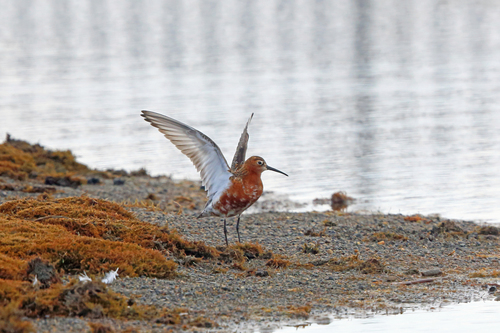 Piovanello comune
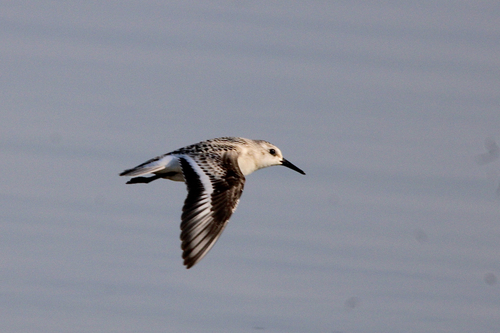 Piovanello tridattilo
In breve
Il segno distintivo più affidabile tra Piovanello comune e Piovanello tridattilo è il becco: il Piovanello comune mostra sempre un becco nero, lungo e ricurvo, mentre il becco del Piovanello tridattilo è più corto, dritto e robusto. In volo, entrambe le specie mostrano una forte banda alare bianca, ma il Piovanello comune ha una grande macchia bianca sulla coda che si estende fino alla parte bassa della schiena, che il Piovanello tridattilo non ha. Gli uccelli giovani e non in riproduzione possono essere particolarmente confusi, ma il Piovanello comune è più snello e ha zampe più lunghe, con un aspetto più elegante, mentre il Piovanello tridattilo è più tozzo e spesso appare quasi senza collo. Entrambi hanno zampe nere e becchi neri, ma le zampe del Piovanello tridattilo sono più spesse e manca di un dito posteriore. Le differenze nel piumaggio sono sottili negli uccelli non in riproduzione, ma il Piovanello comune mostra una proiezione primaria più lunga e un supercilio bianco distintivo, mentre il Piovanello tridattilo è complessivamente più chiaro con parti inferiori bianche più pulite.
Consigli di identificazione
- Forma e lunghezza del becco: Il Piovanello comune ha sempre un becco nero, lungo, snello e ricurvo, mentre il becco del Piovanello tridattilo è più corto, dritto e robusto. Questo è il segno distintivo più affidabile a qualsiasi età o stagione.
- Macchia bianca sulla coda (volo): Il Piovanello comune mostra una grande macchia bianca sulla coda che si estende fino alla parte bassa della schiena, visibile in volo da dietro. Il Piovanello tridattilo non ha questa caratteristica e ha una coda grigia uniforme.
- Banda alare (volo): Entrambe le specie mostrano una forte banda alare bianca, quindi questo non è diagnostico da solo. Usare in combinazione con la coda e la struttura.
- Proiezione primaria: Il Piovanello comune ha una proiezione primaria più lunga oltre le terziali, dando un aspetto più allungato quando è posato. Le primarie del Piovanello tridattilo sono più corte, contribuendo al suo aspetto compatto.
- Zampe: Entrambi hanno zampe nere, ma quelle del Piovanello tridattilo sono più spesse e manca di un dito posteriore (non facilmente visibile sul campo). Le zampe del Piovanello comune sono più lunghe e più fini.
- Supercilio: Il Piovanello comune ha un supercilio bianco più distintivo, specialmente nei piumaggi non in riproduzione e giovanili. Il viso del Piovanello tridattilo è più semplice, con meno contrasto.
- Piumaggio (non in riproduzione): Il Piovanello tridattilo è complessivamente più chiaro, con parti inferiori bianche molto pulite e parti superiori grigie chiare. Il Piovanello comune è leggermente più scuro sopra, con un aspetto maculato dai centri delle piume e alcune striature chiare sotto.
- Piumaggio (giovanile): I giovani Piovanello comune sono più color camoscio e mostrano una scaglie più uniformi sopra, con una coda più snella e una testa più striata. I giovani Piovanello tridattilo sono più chiari, con meno striature e un viso più bianco.
- Piumaggio (riproduzione): Il Piovanello comune è rosso mattone sotto e sul viso, con alcune striature. Il Piovanello tridattilo non mostra mai le parti inferiori completamente rosse del Piovanello comune; invece, mostra ruggine, nero e bianco sulle parti superiori e parti inferiori bianche.
- Struttura/aspetto: Il Piovanello comune è snello, con zampe lunghe ed elegante, spesso si nutre con un passo più deliberato. Il Piovanello tridattilo è compatto, con collo corto e spesso corre rapidamente lungo la costa.
- Habitat: Sulle spiagge sabbiose aperte, il Piovanello tridattilo è molto più probabile, specialmente in grandi stormi. Il Piovanello comune preferisce pianure fangose o vegetate ed è meno probabile vederlo sulla sabbia pura.
- Dimensione del gruppo: Il Piovanello tridattilo è molto gregario in inverno, spesso in grandi stormi compatti. Il Piovanello comune è più solitario o in gruppi sciolti.
- Comportamento alimentare: La corsa 'in bicicletta' del Piovanello tridattilo mentre insegue le onde in ritirata è distintiva. Il Piovanello comune si nutre in modo più metodico, sondando il fango o l'acqua bassa.
- Forma della coda: La coda del Piovanello comune è più lunga e snella; quella del Piovanello tridattilo è più corta e tozza, ma questo è sottile.
- Trappole: In luce fioca o a distanza, entrambi possono apparire simili nel piumaggio non in riproduzione. Cerca sempre di dare un buon sguardo al becco e alla coda in volo per conferma.
Taglia
Il Piovanello comune è leggermente più grande, misurando 18–23 cm di lunghezza con un'apertura alare di 38–46 cm e pesando 44–117 g [wikipedia]. Il Piovanello tridattilo è simile per dimensioni ma generalmente un po' più piccolo e tozzo, con una struttura più compatta [wikipedia]. Entrambe le specie sono piccoli trampolieri, ma il Piovanello comune dà un'impressione più lunga e snella, specialmente nelle zampe e nel becco.
Piumaggio
- Giovanile/Primo inverno: Entrambe le specie hanno parti superiori chiare e squamose, ma i giovani Piovanello comune sono più color camoscio e mostrano frange più fini e uniformi, con un supercilio bianco distintivo e una grande macchia bianca sulla coda visibile in volo. I giovani Piovanello tridattilo sono più chiari, con parti inferiori bianche più pulite e una forte banda alare bianca in volo, ma mancano della macchia bianca sulla coda.
- Non in riproduzione: Il Piovanello comune è grigio sopra e bianco sotto, con un supercilio bianco prominente e un aspetto leggermente maculato a causa dei centri delle piume più scuri. Il Piovanello tridattilo è ancora più chiaro, quasi bianco fantasma sotto e grigio chiaro sopra, con poche o nessuna striatura e un aspetto molto pulito. In volo, entrambi mostrano una banda alare bianca, ma solo il Piovanello comune ha la coda bianca che si estende lungo la schiena.
- Riproduzione: Gli adulti di Piovanello comune sono rosso mattone sotto e sul viso, con alcune striature e una coda bianca. Il piumaggio da riproduzione del Piovanello tridattilo è molto più variegato, con ruggine, nero e bianco sulle parti superiori e un viso e parti inferiori bianche. Il Piovanello tridattilo non mostra mai le parti inferiori completamente rosse del Piovanello comune.
Comportamento
Il Piovanello tridattilo è molto gregario in inverno, spesso formando stormi compatti e veloci sulle spiagge sabbiose, ed è famoso per la sua azione di corsa 'in bicicletta' mentre insegue le onde. Il Piovanello comune si trova più spesso singolarmente o in gruppi sciolti, nutrendosi metodicamente su pianure fangose e salmastre. Il Piovanello tridattilo è più probabile da vedere su spiagge sabbiose aperte, mentre il Piovanello comune preferisce le coste più fangose o vegetate. In volo, il Piovanello comune appare più allungato e grazioso, mentre il Piovanello tridattilo è compatto e diretto.
Habitat
Il Piovanello comune nidifica nelle pianure costiere paludose dell'Artico siberiano e sverna su pianure fangose e salmastre, specialmente in Africa e nell'Eurasia meridionale [wikipedia]. Il Piovanello tridattilo nidifica ancora più a nord nella tundra artica alta ed è più spesso visto su spiagge sabbiose in tutto il mondo in inverno, ma può anche trovarsi su pianure fangose e rive di laghi [wikipedia]. Se l'uccello si trova su una spiaggia sabbiosa oceanica, è più probabile che sia un Piovanello tridattilo; su pianure fangose o vegetate, è più probabile che sia un Piovanello comune.
Piovanello comune · Piovanello tridattilo · I miei uccelli difficili