

Crested Barbet vs Pied Barbet
Trachyphonus vaillantii contro Tricholaema leucomelas
Fai un quiz con Crested Barbet e Pied Barbet
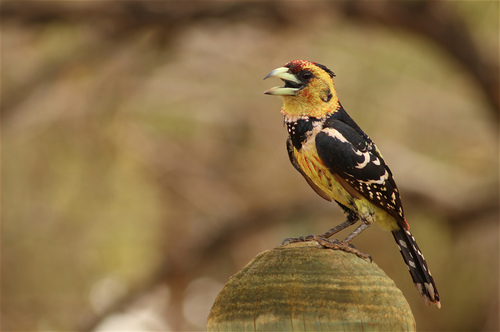 Crested Barbet
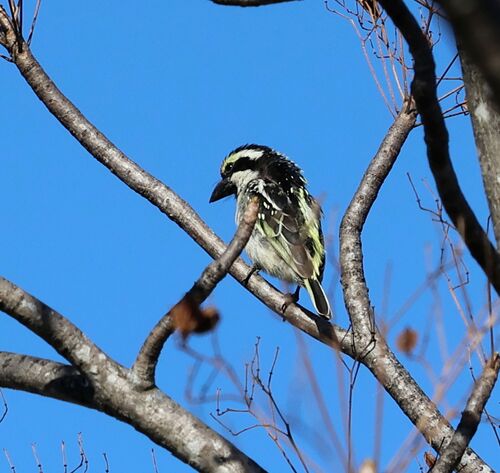 Pied Barbet
In breve
Il modo più affidabile per separare Crested Barbet da Pied Barbet è attraverso il colore generale e il motivo della testa: Crested Barbet è vividamente multicolore con un volto maculato di giallo e rosso e una piccola cresta nera, mentre Pied Barbet ha una testa striata di bianco e nero con una fronte rossa e un sopracciglio giallastro. I giovani Pied Barbet mancano della fronte rossa, il che può causare confusione, ma la densa maculatura di Crested Barbet, il ventre giallo e la palette di colori più ampia rimangono distintivi. In volo o posato, le ali maculate di bianco e nero di Crested Barbet e il bold band nero sul collo si distinguono, rispetto alle parti inferiori più riservate e striate e al bavero di Pied Barbet. È possibile una sovrapposizione degli habitat, ma Crested Barbet è più probabile in boschi più densi o giardini, mentre Pied Barbet preferisce aree più secche e aperte.
Consigli di identificazione
- Il motivo della testa è fondamentale: Crested Barbet mostra sempre una piccola cresta nera e un volto maculato di giallo e rosso, mentre Pied Barbet ha una testa striata di bianco e nero con una fronte rossa e un sopracciglio giallastro. Se la cresta è visibile, è diagnostica per Crested Barbet.
- Colore generale: Crested Barbet è molto più colorato, con giallo, rosso, nero e bianco presenti in macchie e maculature audaci. Pied Barbet è per lo più nero, bianco e giallo pallido, con una fronte rossa ma altrimenti molto meno colore.
- Collo e bavero: Crested Barbet ha una larga banda nera sul collo, mentre Pied Barbet ha un bavero nero sotto il mento. Il bavero di Pied Barbet è più nettamente definito, mentre la banda nera di Crested Barbet è più ampia e più integrata nel motivo maculato generale.
- Parti inferiori: Crested Barbet ha un ventre giallo con macchie rosse; Pied Barbet ha parti inferiori bianche o striate (più giallastre in alcune sottospecie). Il giovane Pied Barbet è particolarmente striato sotto, ma non sarà mai luminoso o maculato come Crested Barbet.
- Ali: Le ali di Crested Barbet sono nere con macchie bianche—cerca questo in volo o quando è posato con le ali ripiegate. Le ali di Pied Barbet non sono descritte come maculate e appaiono più uniformi.
- Confusione giovanile: Il giovane Pied Barbet manca della fronte rossa e ha parti inferiori striate, ma non mostrerà mai la cresta o l'intera gamma di colori di Crested Barbet. Se vedi un uccello più opaco e striato senza cresta, considera Pied Barbet, ma controlla altri segni.
- Struttura del becco: Crested Barbet ha un becco più spesso e robusto, che è ovvio da vicino. Il becco di Pied Barbet è leggermente più snello e meno imponente.
- Presenza della cresta: Solo Crested Barbet ha una cresta, anche se può essere appiattita a volte. Se vedi una cresta, anche una piccola, esclude Pied Barbet.
- Stile di volo: Crested Barbet è riluttante a volare e di solito compie voli brevi e deboli. Pied Barbet ha un volo veloce e diretto; se vedi un barbet sfrecciare attraverso un terreno aperto, è più probabile che sia Pied Barbet.
- Vocalizzazione: Un lungo richiamo trillante indica Crested Barbet. Se senti questo, cerca la cresta e il piumaggio maculato.
- Indizi sull'habitat: In boschi densi o giardini con vegetazione folta, è più probabile vedere Crested Barbet. In aree aperte, secche o semi-aride, è favorito Pied Barbet, specialmente se ci sono acacie aliene o alberi simili.
- Aggressività: Crested Barbet è notevolmente territoriale e può essere visto inseguire altri uccelli o addirittura attaccare piccoli mammiferi. Pied Barbet è meno aggressivo nel comportamento.
- Comportamento di posatura: Entrambe le specie si posano in aree aperte, ma Crested Barbet spesso chiama da un ramo prominente, mentre Pied Barbet può essere più attivo e irrequieto.
- Sessi simili: Entrambe le specie mostrano poco dimorfismo sessuale, quindi tutti questi segni si applicano sia ai maschi che alle femmine.
- Variazione delle sottospecie: Pied Barbet mostra alcune variazioni nel colore e nella striatura delle parti inferiori a seconda della regione, ma non si avvicina mai all'intensità di colore o alla patterning di Crested Barbet.
Taglia
Entrambe le specie sono piccoli barbets, ma le note non forniscono confronti diretti di dimensioni o massa. La struttura è più utile delle dimensioni: Crested Barbet appare più robusto e compatto, con un becco più spesso e un aspetto più cespuglioso, specialmente quando la cresta è sollevata. Pied Barbet è leggermente più snello e ha una testa e un becco meno ingombranti. Queste differenze possono essere sottili a distanza e sono meglio utilizzate in combinazione con il piumaggio e il motivo della testa.
Piumaggio
- Uccelli giovani/immaturi: Il giovane Pied Barbet manca del segno rosso sulla fronte e ha parti inferiori più striate, il che può farlo apparire più opaco e meno nettamente patternato rispetto agli adulti. Tuttavia, anche i giovani Crested Barbet mantengono il loro aspetto multicolore e maculato e la piccola cresta, quindi un giovane Pied Barbet non mostrerà mai la stessa esplosione di colore o la cresta nera di Crested Barbet.
- Adulti: Crested Barbet è inconfondibilmente colorato: testa e ventre gialli, macchie rosse sul volto e sul ventre, ali maculate di bianco e nero, una larga banda nera sul collo e una piccola cresta nera. Pied Barbet, al contrario, ha una palette molto più limitata: testa striata di bianco e nero, fronte rossa e coronetta anteriore, sopracciglio giallo pallido, bavero nero e parti inferiori bianche o striate a seconda della sottospecie. Le ali di Pied Barbet non sono descritte come maculate o audacemente patternate, e l'impressione generale è più riservata e meno variegata rispetto a Crested Barbet.
- Viste in volo: Non sono descritti segni distintivi sulle ali superiori o sul pattern di volo per nessuna delle due specie, ma la maculatura contrastante delle ali di Crested Barbet e il colore generale dovrebbero comunque essere visibili in volo, mentre Pied Barbet apparirà più semplice e monocromatico.
Comportamento
Crested Barbet è spesso visto rimbalzare a terra o chiamare da un ramo esposto, ma non è un forte volatore e tende a compiere solo voli brevi. È aggressivo verso altri uccelli e può essere piuttosto territoriale. Pied Barbet è anche di solito visto singolarmente o in coppie, ma è descritto come più irrequieto, con un volo veloce e diretto. Entrambe le specie nidificano in cavità e possono essere viste nei giardini, ma Crested Barbet è più probabile essere visto difendere il territorio o inseguire intrusi, mentre Pied Barbet è più probabile essere visto foraggiare attivamente o perforare buchi nel legno morto.
Habitat
Crested Barbet preferisce foreste, cespugli di bosco, giardini suburbani e corsi d'acqua—generalmente habitat più densi o più vegetati. Pied Barbet è più tipico della savana semi-arida, dei prati, del fynbos e delle aree agricole o urbane aperte, specialmente dove sono stati piantati alberi alieni. C'è una certa sovrapposizione nei giardini suburbani, ma se ti trovi in un'area secca e aperta con alberi sparsi, è più probabile che sia Pied Barbet; in cespugli o boschi più densi, è favorito Crested Barbet.
Voce
Crested Barbet è estremamente vocale, con un richiamo distintivo, lungo e trillante che può continuare per periodi prolungati. Le vocalizzazioni di Pied Barbet non sono descritte nelle note, quindi la voce è diagnostica solo se senti il caratteristico trill di Crested Barbet. Se senti un lungo trill continuo, è probabile che sia Crested Barbet.