

Crested Auklet vs Long-billed Murrelet
Aethia cristatella contro Brachyramphus perdix
Fai un quiz con Crested Auklet e Long-billed Murrelet
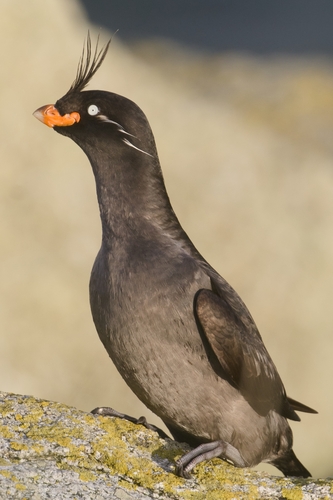 Crested Auklet
 Long-billed Murrelet
In breve
Il segno distintivo più affidabile per separare il Crested Auklet dal Long-billed Murrelet è la presenza di una prominente cresta nera curva in avanti e di un becco arancione brillante sul Crested Auklet, che non viene mai mostrato dal Long-billed Murrelet. In volo o a riposo, il Crested Auklet è un uccello compatto, scuro, grigio-nerastro con piume facciali bianche e un becco spesso e corto, mentre il Long-billed Murrelet appare più snello, con un becco lungo e sottile di colore nero e piumaggio squamoso contrastante di colore nero e bianco o bruno a seconda della stagione. I Crested Auklet giovanili e non in riproduzione perdono gran parte della loro ornamentazione ma rimangono complessivamente scuri, privi del netto contrasto bianco e nero dei murrelet. La forma del becco e il motivo facciale sono fondamentali in tutte le età e stagioni. Entrambe le specie possono verificarsi nel Pacifico settentrionale, ma il Long-billed Murrelet è molto più probabile da vedere come vagabondo nell'entroterra.
Consigli di identificazione
- La cresta nera curva in avanti del Crested Auklet è diagnostica in tutti gli adulti durante la stagione di riproduzione; nessun murrelet mostra alcuna cresta a qualsiasi età o stagione.
- Colore e forma del becco: il Crested Auklet ha un becco spesso, corto e di colore arancione brillante (con piastre accessorie negli adulti in riproduzione), mentre il Long-billed Murrelet ha sempre un becco lungo, sottile e nero. I Crested Auklet giovanili e invernali hanno un becco più opaco e piccolo, ma rimane corto e spesso.
- Piume facciali: il Crested Auklet mostra piume auricolari bianche dall'occhio all'orecchio negli adulti in riproduzione; assenti in tutti i murrelet e nei Crested Auklet giovanili/invernali.
- Piumaggio complessivo: il Crested Auklet è di un grigio scuro nerastro ovunque, privo del netto contrasto bianco e nero o bruno e squamoso del Long-billed Murrelet. Questo è vero per tutte le età e stagioni.
- Piumaggio non riproduttivo/invernale: il Long-billed Murrelet è bianco sotto e nero sopra, con un anello oculare bianco e senza collare (a differenza del Marbled Murrelet). Il Crested Auklet in inverno è ancora scuro nel complesso, con cresta e piastre del becco ridotte.
- Confusione giovanile: i Crested Auklet giovanili sono scuri e semplici con un becco bruno-giallastro opaco, privi di qualsiasi parte inferiore bianca o contrasto facciale. I Long-billed Murrelet giovanili assomigliano agli adulti nel piumaggio non riproduttivo, con un forte contrasto bianco e nero e un lungo becco nero.
- Profilo di volo: il Crested Auklet appare compatto, con collo corto e scuro in volo, con poco contrasto. Il Long-billed Murrelet è più snello, con ali appuntite e forte contrasto tra le parti superiori scure e le parti inferiori bianche in inverno.
- Dimensioni e aspetto: il Crested Auklet è più piccolo, più robusto e con un becco più corto; il Long-billed Murrelet è più lungo nel corpo e più snello, con un becco visibilmente lungo.
- Contesto dell'habitat: il Crested Auklet è strettamente marino e coloniale; il Long-billed Murrelet può essere trovato lontano nell'entroterra come vagabondo, spesso da solo o in coppie.
- Comportamento: il Crested Auklet è spesso visto in densi stormi, specialmente nelle colonie di riproduzione; il Long-billed Murrelet è più solitario o in piccoli gruppi.
- Odore: il Crested Auklet produce un odore distintivo simile agli agrumi (non un segno distintivo per la maggior parte degli osservatori di uccelli, ma unico tra gli auk).
- Vocalizzazioni: i complessi richiami a tromba e le risate del Crested Auklet si sentono nelle colonie; i richiami del Long-billed Murrelet sono meno ben descritti e non un segno distintivo pratico.
- Cambiamenti stagionali: il Crested Auklet perde cresta e piastre del becco in inverno, ma rimane scuro e compatto; il cambiamento stagionale del Long-billed Murrelet va da marrone squamoso (riproduzione) a netto bianco e nero (non riproduzione).
- Nessuna sovrapposizione negli ornamenti chiave: qualsiasi uccello con una cresta, un becco arancione o piume auricolari bianche è un Crested Auklet; qualsiasi uccello con un becco lungo, sottile e nero e parti inferiori bianche è un Long-billed Murrelet.
- Trappole comuni: i Crested Auklet immaturi possono sembrare semplici e scuri, ma non mostrano mai il forte contrasto bianco e nero o il lungo becco di un murrelet. I murrelet non mostrano mai una cresta o un becco arancione a qualsiasi età.
Taglia
Il Crested Auklet è generalmente più piccolo e robusto, misurando 18–27 cm di lunghezza e pesando 195–330 g [wikipedia]. Il Long-billed Murrelet è lungo circa 25 cm e circa il 20% più pesante del Marbled Murrelet, rendendolo leggermente più grande e più snello del Crested Auklet [wikipedia]. Sul campo, il Crested Auklet appare più compatto e con collo corto, mentre il Long-billed Murrelet è più lungo nel corpo con un becco proporzionalmente più lungo.
Piumaggio
I Crested Auklet giovanili e non in riproduzione sono di un grigio scuro nerastro complessivamente, privi delle parti inferiori bianche e del netto contrasto bianco e nero del Long-billed Murrelet in inverno. I Crested Auklet giovanili mancano della cresta e delle piume auricolari, e hanno un becco bruno-giallastro opaco, ma appaiono comunque semplici e scuri. Nel piumaggio di riproduzione, gli adulti Crested Auklet mostrano una cresta nera curva in avanti, piume auricolari bianche e un becco arancione brillante con piastre accessorie. Il Long-billed Murrelet nel piumaggio di riproduzione è marrone e squamoso con una gola pallida e parti inferiori centrali bianche (spesso nascoste quando nuota), e nel piumaggio non riproduttivo è nettamente nero sopra e bianco sotto, con un anello oculare bianco e senza cresta o piume facciali. Il becco del murrelet è sempre lungo, sottile e nero. Nessuna età o stagione del Long-billed Murrelet mostra alcuna cresta o becco arancione. In volo, il Crested Auklet rimane scuro e compatto, mentre il Long-billed Murrelet mostra più contrasto e ali appuntite.
Comportamento
I Crested Auklet sono altamente sociali, nidificando in dense colonie e spesso visti in grandi stormi sull'acqua. Sono noti per i loro elaborati rituali di corteggiamento che coinvolgono segnali sia visivi (cresta, piastre del becco) che olfattivi (odore di agrumi). I Long-billed Murrelet sono più solitari o si trovano in coppie, spesso visti da soli o in piccoli gruppi, e sono notabili per la loro tendenza a vagare lontano nell'entroterra come vagabondi. In volo, il Crested Auklet appare compatto e diretto, mentre il Long-billed Murrelet è più snello e veloce, con ali appuntite.
Habitat
Il Crested Auklet nidifica in immense colonie su isole remote nel Mare di Bering e nel Mare di Okhotsk, foraggiando al largo in acque profonde. Anche il Long-billed Murrelet nidifica nel Pacifico settentrionale, ma è unico tra gli auk per il fatto di nidificare lontano nell'entroterra in foreste di vecchia crescita, e trascorre l'inverno in mare intorno al Giappone settentrionale e alla Corea. Il Long-billed Murrelet è molto più probabile da trovare come vagabondo in laghi e fiumi interni, a volte a centinaia di chilometri dal mare, mentre il Crested Auklet è strettamente marino.
Voce
Il Crested Auklet ha una varietà di richiami, tra cui complessi richiami a tromba e risate reciproche durante i rituali di corteggiamento. Questi sono più spesso uditi nelle colonie di riproduzione e vengono utilizzati per il legame di coppia e il territorio. Le vocalizzazioni del Long-billed Murrelet non sono descritte in dettaglio nelle note fornite, ma il nome 'murrelet' potrebbe imitare il richiamo del Uria. Le vocalizzazioni non sono un segno distintivo primario per la separazione sul campo.
Crested Auklet · Long-billed Murrelet · I miei uccelli difficili