

Coqui Francolin vs Red-winged Francolin
Campocolinus coqui contro Scleroptila levaillantii
Fai un quiz con Coqui Francolin e Red-winged Francolin
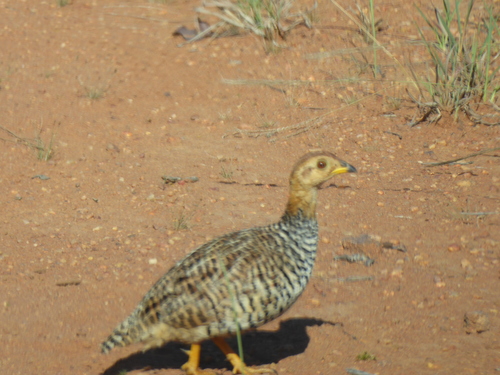 Coqui Francolin
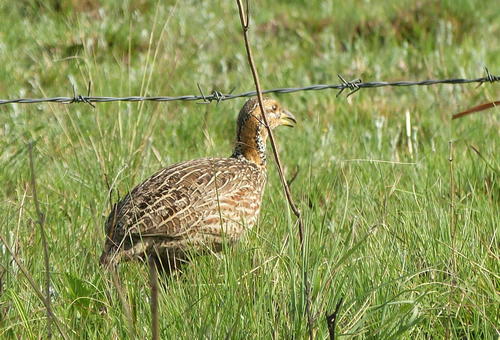 Red-winged Francolin
In breve
Il segno di campo più affidabile per separare il Coqui Francolin dal Red-winged Francolin è la presenza di pannelli rosso castano ricchi sulle ali superiori del Red-winged Francolin, particolarmente evidenti in volo e sugli uccelli in posa con le ali parzialmente aperte; il Coqui Francolin non presenta affatto questi pannelli rossi. Sia i Red-winged Francolins immaturi che adulti mostrano questa caratteristica. Entrambe le specie sono piccoli francolini terrestri con forme corporee simili, ma l'habitat e le sottili differenze nel piumaggio possono aiutare. Se vedi un uccello volare e intravedi un riflesso ruggine nelle ali, è un Red-winged Francolin; se le ali sono di un marrone uniforme, è un Coqui. Le differenze strutturali sono sottili e non affidabili sul campo.
Consigli di identificazione
- Pannello rosso sull'ala superiore: Il Red-winged Francolin di tutte le età mostra una ricca macchia rosso castano sulle copritrici delle ali superiori, visibile in volo o quando si allunga. Il Coqui Francolin non mostra mai questo—le sue ali sono di un marrone uniforme. Questo è il segno di campo più affidabile.
- Viste in volo: Se fai volare un uccello e vedi un lampo di ruggine o rosso nelle ali, è un Red-winged. Se le ali sono uniformemente marroni, è un Coqui.
- Uccelli in posa con le ali aperte: Cerca il pannello rosso sull'ala piegata o parzialmente aperta per il Red-winged Francolin. Il Coqui non mostrerà mai questo colore.
- Tono generale del piumaggio: Il Red-winged Francolin tende a sembrare più caldo, ricco e più ruggine sulle parti superiori e sui fianchi, mentre il Coqui è generalmente più semplice, di un marrone più freddo e più finemente barrato.
- Schema del dorso e delle parti inferiori: Entrambe le specie sono marcate in modo criptico, ma il Coqui è più finemente vermicolato e meno audacemente marcato rispetto al Red-winged, che può mostrare striature e barrature più ampie e ricche.
- Contesto dell'habitat: In prati umidi, in alta montagna o in prati montani, aspettati il Red-winged Francolin. In savane più secche o boschi aperti, il Coqui è più probabile. Usa questo solo come prova di supporto.
- Dimensioni e struttura: Entrambi sono simili in dimensioni e forma; non fare affidamento su questo sul campo.
- Becco e zampe: Non sono state notate differenze affidabili nel colore/forma del becco o delle zampe per l'uso sul campo.
- Sesso e età: Il pannello rosso dell'ala è presente in entrambi i sessi e in tutte le età per il Red-winged; non c'è età o sesso in cui il Coqui mostri ruggine nell'ala.
- Voce: Non sono state fornite differenze vocali diagnostiche nelle fonti; non usare la voce per la separazione qui.
- Fagiani misti: Entrambe le specie sono solitamente in coppie o piccoli gruppi, non mescolati insieme.
- Trappola—uccelli in muta: Anche in muta, il Red-winged Francolin dovrebbe mantenere almeno un po' di ruggine nell'ala; il Coqui non mostra mai questo.
- Trappola—confusione giovanile: I Red-winged Francolins giovanili mostrano ancora il pannello rosso dell'ala, quindi questo segno è affidabile in tutte le età.
- Trappola—illuminazione: In scarsa luce, il pannello ruggine può essere difficile da vedere; cerca di catturare l'uccello in volo o con le ali aperte per conferma.
- Suggerimento riassuntivo: Se vedi un piccolo francolin e non sei sicuro, concentrati sull'ala superiore in volo o quando si allunga—rosso uguale Red-winged, marrone uniforme uguale Coqui.
Taglia
Entrambe le specie sono piccoli francolini, e le loro dimensioni e proporzioni complessive sono simili a tal punto che la dimensione da sola non è un segno di campo affidabile sul campo. Senza un confronto diretto o una misurazione, è improbabile che tu riesca a separarli per dimensione con i binocoli.
Piumaggio
La principale differenza nel piumaggio è l'ala superiore: il Red-winged Francolin di tutte le età ha pannelli rosso castano prominenti sulle copritrici delle ali superiori, che sono particolarmente visibili in volo o quando l'uccello sta allungando le ali. Il Coqui Francolin non ha alcun ruggine o rosso nell'ala; la sua ala superiore è uniformemente marrone o maculata, corrispondente al resto delle parti superiori. Questo contrasto è valido sia per gli adulti che per gli immaturi. A terra, entrambe le specie sono pattern criptici con marrone, nero e buff, ma il Red-winged Francolin appare spesso più ricco e caldo nel tono complessivo, mentre il Coqui è più semplice e più finemente barrato. Non sono stati menzionati schemi specifici per l'ala superiore (come W neri o bordi posteriori) per nessuna delle due specie, quindi il pannello rosso è il miglior segno.
Comportamento
Entrambe le specie sono terrestri e tendono a volare esplosivamente quando disturbate, volando per una breve distanza prima di tornare a nascondersi. Il loro comportamento è tipico dei francolini: segreti, spesso visti solo quando volano, e di solito in coppie o piccoli gruppi. Non sono state notate differenze comportamentali significative che possano separarle affidabilmente sul campo.
Habitat
Il Red-winged Francolin si trova tipicamente in prati umidi, prati in alta montagna e aree montane, spesso a quote più elevate e in habitat più umidi rispetto al Coqui Francolin. Il Coqui Francolin preferisce savane più secche, boschi aperti e prati, talvolta in habitat più aridi o misti. Se ti trovi in un prato umido ad alta quota, è più probabile che tu incontri un Red-winged; in boschi-prati più secchi, più bassi o misti, è più probabile che tu incontri un Coqui. Tuttavia, c'è una certa sovrapposizione, quindi l'habitat dovrebbe essere usato con cautela.
Coqui Francolin · Red-winged Francolin · I miei uccelli difficili