

Connecticut Warbler vs Mourning Warbler
Oporornis agilis contro Geothlypis philadelphia
Fai un quiz con Connecticut Warbler e Mourning Warbler
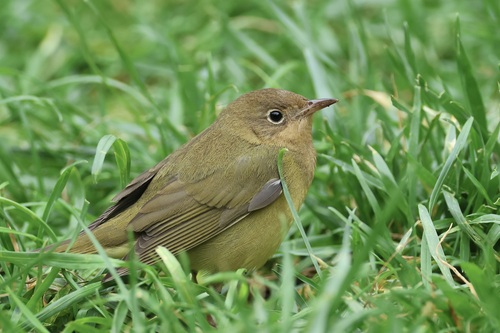 Connecticut Warbler
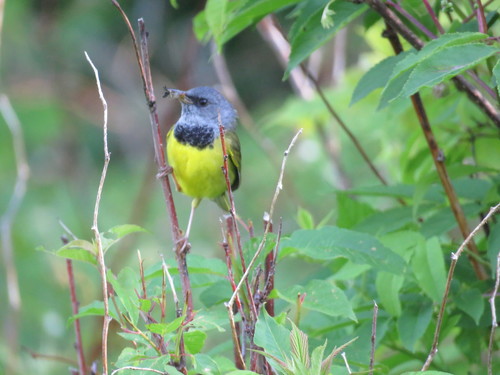 Mourning Warbler
In breve
Il segno distintivo più affidabile per separare il Connecticut Warbler dal Mourning Warbler in tutte le livree è l'anello oculare: il Connecticut Warbler mostra sempre un anello oculare audace e completo, mentre il Mourning Warbler non ha mai un anello oculare completo: le femmine e gli immaturi hanno un anello incompleto o rotto. Per gli immaturi, controlla anche il colore del petto: il Connecticut Warbler è più chiaro e bianco sotto, mentre il Mourning Warbler è più giallastro. I maschi adulti di entrambe le specie hanno cappucci grigi, ma solo i maschi del Mourning Warbler mostrano una macchia nera sulla gola e sul petto, e lore neri. Entrambi hanno parti inferiori gialle e parti superiori olivastre, ma prestare attenzione a questi dettagli facciali e della gola è fondamentale, specialmente in autunno o con uccelli giovani.
Consigli di identificazione
- Anello oculare (tutte le età): Il Connecticut Warbler ha sempre un anello oculare bianco audace e completo. Il Mourning Warbler non ha mai un anello oculare completo; le femmine e gli immaturi mostrano solo un anello rotto o incompleto. Questo è il segno distintivo più affidabile in tutte le stagioni e età.
- Colore del petto e della gola negli immaturi: L'immaturo Connecticut Warbler ha un petto e una gola più chiari e bianchi, mentre l'immaturo Mourning Warbler è più giallastro o con sfumature olivastre sotto. Usa questo insieme all'anello oculare, specialmente in autunno.
- Gola e cappuccio del maschio adulto: I maschi del Mourning Warbler hanno un cappuccio grigio con una macchia nera sulla gola e sul petto e lore neri. I maschi del Connecticut Warbler hanno un cappuccio grigio semplice senza nero sulla gola e un volto pallido e non marcato.
- Schema facciale femminile/immaturo: Le femmine e gli immaturi di Connecticut Warbler sono marroni con un anello oculare completo e una gola bianca. Le femmine e gli immaturi di Mourning Warbler hanno una testa grigio-marrone, un anello oculare incompleto e una gola giallo-grigia con una sfumatura marrone o olivastra sul petto.
- Becco e zampe: Entrambi hanno becchi sottili e appuntiti e zampe rosa; queste caratteristiche non sono utili per la separazione.
- Parti superiori: Entrambi sono di colore verde oliva sopra, ma il Connecticut Warbler può apparire leggermente più chiaro nel complesso, specialmente negli immaturi.
- Parti inferiori: Entrambi mostrano parti inferiori gialle, ma il Connecticut Warbler è più chiaro, specialmente sul petto e sulla gola, mentre il Mourning Warbler è più uniformemente giallo o giallo-olivastro.
- Struttura della coda e delle ali: Non si notano forti differenze nella forma della coda o nella formula delle ali; entrambi hanno proporzioni tipiche di un warbler.
- Comportamento: Il Connecticut Warbler cammina spesso a terra e muove la coda, mentre il Mourning Warbler cerca cibo in basso in vegetazione densa ed è meno probabile che venga visto camminare a terra.
- Preferenza dell'habitat: Durante la stagione di nidificazione, il Mourning Warbler preferisce cespugli densi e in rigenerazione; il Connecticut Warbler è più probabile che si trovi in foreste aperte, boreali o miste con sottobosco meno denso.
- Cambiamenti stagionali: La macchia nera sulla gola del maschio Mourning Warbler svanisce in autunno, rendendoli più simili al Connecticut Warbler, ma la differenza dell'anello oculare rimane affidabile.
- Confusione con altre specie: Entrambi possono essere confusi con il MacGillivray's e il Nashville Warbler, ma tra questi due, l'anello oculare e il colore della gola sono i segni più utili.
- Contesto di gruppo: Il Connecticut Warbler è più solitario, mentre il Mourning Warbler può unirsi a stormi misti o trovarsi in piccoli gruppi durante la migrazione.
- Dimensione: Il Connecticut Warbler è leggermente più grande e pesante, ma questo è raramente evidente sul campo a meno che entrambi non siano visti insieme.
- Viste in volo: Se si ottiene solo una breve vista in volo, concentrati sul volto: un anello oculare forte e completo indica il Connecticut Warbler; un anello oculare rotto o debole suggerisce il Mourning Warbler.
Taglia
Entrambe le specie sono simili in dimensioni e struttura complessive, ma il Connecticut Warbler è leggermente più grande e pesante in media. Il Connecticut Warbler misura 13–15 cm di lunghezza con un'apertura alare di 22–23 cm, e gli adulti possono pesare fino a 15 g o anche 25 g prima della migrazione. Il Mourning Warbler è un po' più piccolo, con una lunghezza che varia da 10 a 15 cm, un'apertura alare di 18 cm e una massa media di circa 11,9 g. Sul campo, questa differenza di dimensioni è sottile e raramente diagnostica a meno che entrambi non siano visti insieme.
Piumaggio
- Livrea immatura/giovanile: La caratteristica più diagnostica è l'anello oculare: il Connecticut Warbler (tutte le età) mostra un forte anello oculare bianco completo, mentre il Mourning Warbler (immaturo/femminile) ha solo un anello rotto o incompleto. Gli immaturi di Connecticut Warbler hanno anche una gola e un petto più chiari e bianchi, in contrasto con le parti inferiori giallastre e più olivastre degli immaturi di Mourning Warbler.
- Maschi adulti: Entrambi hanno cappucci grigi, ma i maschi del Mourning Warbler hanno una macchia nera sulla gola e sul petto e lore neri, mentre i maschi del Connecticut Warbler non hanno nero sulla gola e hanno un cappuccio grigio più semplice. Il cappuccio e la macchia nera del Mourning Warbler svaniscono in autunno, diventando meno distintivi, ma la mancanza di un anello oculare completo rimane una differenza chiave.
- Femmine: Le femmine di Connecticut Warbler sono più marroni con un anello oculare completo e una gola bianca, mentre le femmine di Mourning Warbler sono grigio-marroni sulla testa, hanno un anello oculare incompleto e una gola giallo-grigia con una sfumatura marrone o olivastra sul petto.
- Parti superiori e inferiori: Entrambi sono di colore oliva sopra e giallo sotto, ma il Connecticut Warbler tende a essere più chiaro e più sbiadito sotto, specialmente negli immaturi.
Comportamento
Il Connecticut Warbler è più solitario e spesso cerca cibo a terra, camminando e muovendo la coda in un modo che ricorda i trogoni o i pettini. Il Mourning Warbler è più probabile che cerchi cibo in basso in vegetazione densa, lungo i rami, e occasionalmente cattura insetti in volo. Entrambe le specie si nutrono di insetti e alcuni frutti, ma il camminare a terra e il muovere la coda del Connecticut Warbler sono comportamenti più distintivi. Il Mourning Warbler è anche più probabile che venga trovato in piccoli gruppi o stormi misti durante la migrazione.
Habitat
Il Connecticut Warbler preferisce foreste più aperte, spesso boreali o miste, e si trova spesso a terra o in vegetazione bassa. Il Mourning Warbler favorisce cespugli densi di seconda crescita, radure in rigenerazione e habitat arbustivi, specialmente in aree disturbate da disboscamenti o tempeste. Anche se entrambi possono sovrapporsi durante la migrazione, il Mourning Warbler è più strettamente legato a habitat densi e in rigenerazione, mentre il Connecticut Warbler è più probabile che si trovi in aree aperte e meno cespugliose.
Connecticut Warbler · Mourning Warbler · I miei uccelli difficili