

Common Tody-Flycatcher vs Yellow-bellied Tyrannulet
Todirostrum cinereum contro Ornithion semiflavum
Fai un quiz con Common Tody-Flycatcher e Yellow-bellied Tyrannulet
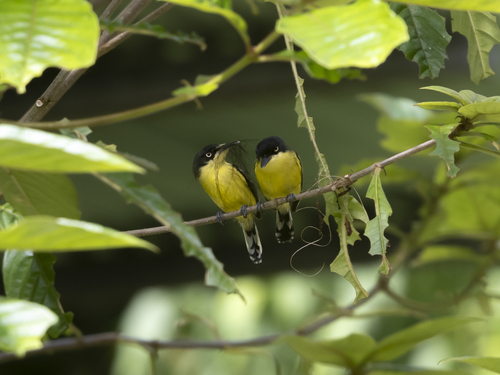 Common Tody-Flycatcher
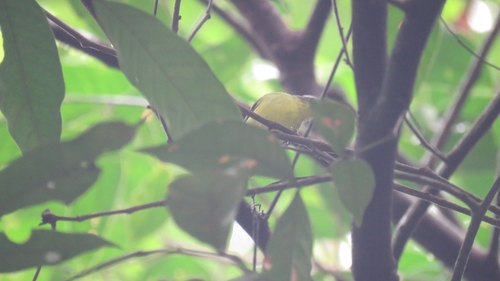 Yellow-bellied Tyrannulet
In breve
Il segno distintivo più affidabile per separare il Common Tody-Flycatcher dal Yellow-bellied Tyrannulet è il sorprendente schema della testa: il Tody-Flycatcher mostra una corona anteriore e lore neri lucidi (maschi) o una testa grigia (femmine), mentre il Yellow-bellied Tyrannulet ha una fronte, lore e supercilio bianchi pallidi che contrastano con una corona grigio ardesia e un volto oliva. Entrambe le specie sono piccoli flycatchers con pancia gialla, ma il Tody-Flycatcher ha un becco visibilmente più grande, piatto e dritto, e un modello di ali nero e giallo più contrastante con due barre distinte sulle ali. Nei giovani, il Tody-Flycatcher mostra una sfumatura buffa sulle barre delle ali e una corona più scura, mentre i giovani Tyrannulet hanno una corona marrone e un giallo più pallido sotto. La struttura e il modello della testa sono fondamentali, specialmente negli uccelli posati.
Consigli di identificazione
- Head Pattern (All Ages): Cerca la corona anteriore e lore neri lucidi del Tody-Flycatcher (maschi) o la testa grigia (femmine). Il Tyrannulet mostra sempre una fronte, lore e supercilio bianchi contro una corona grigio ardesia e un volto oliva, creando un effetto 'maschera' pallido.
- Bill Shape: Il Tody-Flycatcher ha un becco lungo, piatto e dritto (tutte le età), che spesso appare sovradimensionato per il suo corpo minuto. Il becco del Tyrannulet è più corto, appuntito e arcuato sulla mascella, mai così piatto o largo.
- Wing Bars: Il Tody-Flycatcher (tutte le età) mostra due barre gialle distinte sulle ali nere, con bordi gialli sulle penne di volo. Il Tyrannulet non ha barre forti sulle ali, con ali oliva scure e solo bordi pallidi deboli.
- Tail Pattern: Il Tody-Flycatcher ha una coda nera con punte bianche sulle piume esterne, visibili quando è aperta. La coda del Tyrannulet è uniformemente oliva scura, priva di punte bianche.
- Juvenile Plumage: I giovani Tody-Flycatcher hanno una corona e guance grigie scure, barre gialle con sfumature buffe e un'iride scura. I giovani Tyrannulet hanno una corona marrone e parti superiori, giallo più pallido sotto e nessuna barra forte sulle ali.
- Underparts: Entrambi hanno pance gialle brillanti, ma il Tyrannulet mostra spesso striature olive deboli sul petto e sui fianchi, mentre il Tody-Flycatcher è pulito giallo sotto.
- Back Color: Il Tody-Flycatcher ha un dorso superiore grigio ardesia che sfuma in oliva scuro, mentre il Tyrannulet è di un oliva brillante sopra.
- Eye Color: I Tody-Flycatcher adulti hanno un'iride giallastra o bianca, mentre l'iride del Tyrannulet è marrone (tutte le età).
- Leg Color: Entrambi hanno zampe grigie, non un separatore utile.
- Sex Differences: Solo il Tody-Flycatcher è sessualmente dimorfico nel colore della testa e nel becco (le femmine hanno una mandibola più chiara e una testa più grigia); i sessi del Tyrannulet sono identici.
- Behavior: Il Tody-Flycatcher è spesso visto attivamente saltellare, con la coda sollevata e che ondeggia. Il Tyrannulet è meno animato e manca di questo comportamento.
- Vocalizations: Se senti trilli secchi 'trrr-trrr' o note rapide 'tic', è il Tody-Flycatcher. La voce del Tyrannulet non è distintiva in queste note.
- Geographic Range: Se in Sud America al di fuori dell'America Centrale, è quasi certamente il Tody-Flycatcher. In America Centrale, entrambi sono presenti, quindi fai affidamento sul piumaggio e sulla struttura.
- Perched vs. In-Flight: Le barre delle ali e il modello della coda del Tody-Flycatcher sono visibili sia posati che in volo; l'assenza di barre sulle ali e la coda uniforme del Tyrannulet sono costanti.
- Pitfalls: Fai attenzione ai Tody-Flycatcher opachi o giovani, che possono mostrare meno contrasto ma hanno comunque le differenze strutturali nel becco e nelle barre delle ali. Il Tyrannulet non mostra mai una testa nera o lucida, barre forti sulle ali o punte bianche sulla coda.
Taglia
Entrambe le specie sono estremamente piccoli flycatchers, ma il Common Tody-Flycatcher è leggermente più lungo (8.8–10.2 cm) e può essere più leggero (4–8 g), mentre il Yellow-bellied Tyrannulet è 8–9 cm e 7–8 g. In pratica, l'overlap di dimensioni è considerevole, ma il Tody-Flycatcher può apparire più compatto e con una testa grande, con un becco proporzionalmente più lungo e piatto. Il Tyrannulet è più proporzionato, con un becco appuntito.
Piumaggio
- Juveniles: I giovani Tody-Flycatcher hanno una corona e guance grigie scure, barre gialle con sfumature buffe e parti inferiori gialle più pallide. I giovani Tyrannulet mostrano una corona e parti superiori marroni, con giallo più pallido sotto, ma mancano delle barre forti sulle ali e hanno meno contrasto nel volto.
- Adults: I maschi Tody-Flycatcher hanno una corona anteriore e lore neri lucidi, una corona posteriore e nuca grigio ardesia, e un dorso oliva scuro. Le loro ali sono nere con bordi gialli e due barre gialle audaci. Le femmine sono simili ma con una testa più grigia e una mandibola più chiara. Gli adulti Tyrannulet hanno una corona grigio ardesia, ma una fronte, lore e supercilio bianchi, con un dorso oliva brillante e ali e coda oliva scure. Le loro parti inferiori sono gialle brillanti con striature olive deboli sul petto e sui fianchi, e mancano di barre forti sulle ali. Entrambi i sessi sembrano simili nel Tyrannulet.
- Tail: Il Tody-Flycatcher ha una coda nera con punte bianche sulle piume esterne, mentre la coda del Tyrannulet è oliva scura in tutto.
Comportamento
Il Tody-Flycatcher è molto attivo e spesso visto saltellare lateralmente lungo i rami, con la coda sollevata e che ondeggia, foraggiando principalmente in basso in vegetazione densa ma a volte più in alto. Spesso foraggia in coppie o piccoli gruppi, raramente in stormi misti. Il comportamento del Tyrannulet è meno descritto nelle note, ma è generalmente meno appariscente e manca del comportamento di ondeggiamento della coda del Tody-Flycatcher. Entrambe le specie sono raccoglitrici, ma il movimento costante del Tody-Flycatcher e la coda sollevata sono distintivi.
Habitat
Entrambe le specie si sovrappongono in America Centrale e nel sud del Messico, ma il Tody-Flycatcher si estende molto più a sud in quasi tutta l'America del Sud (eccetto Cile e Uruguay), mentre il Tyrannulet è ristretto all'America Centrale. Entrambi utilizzano i bordi delle foreste e la crescita secondaria, ma il Tody-Flycatcher è più diffuso e può essere trovato in una gamma più ampia di habitat.
Voce
Il Tody-Flycatcher emette una serie di trilli secchi e bassi ('trrr-trrr'), varie note alte 'tic', e una frase molto alta 'weet-widiwi', ripetendo spesso note 'tic' rapidamente all'alba. I colpi di becco sono udibili durante la cattura delle prede. La voce del Tyrannulet non è descritta nelle note, quindi le vocalizzazioni non sono un separatore affidabile a meno che non si sentano i trilli distintivi o i colpi di becco del Tody-Flycatcher.
Common Tody-Flycatcher · Yellow-bellied Tyrannulet · I miei uccelli difficili