

Titirijí Común vs Mosquerito Ventriamarillo
Todirostrum cinereum frente a Ornithion semiflavum
Juega un quiz con Titirijí Común y Mosquerito Ventriamarillo
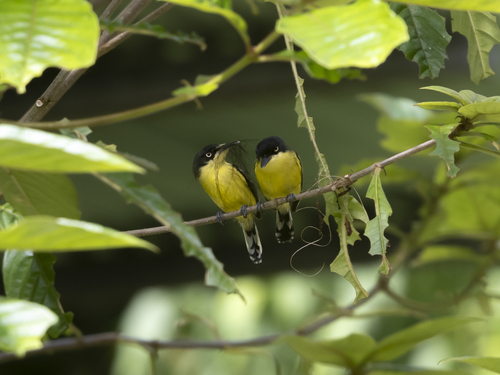 Titirijí Común
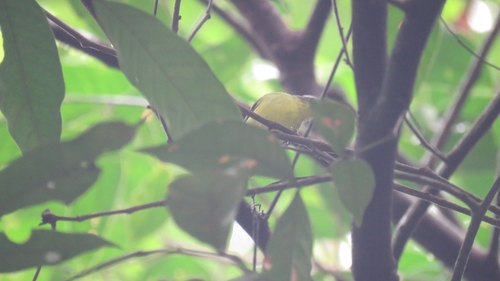 Mosquerito Ventriamarillo
En breve
La marca de campo más confiable para separar el Titirijí Común del Mosquerito Ventriamarillo es el llamativo patrón de la cabeza: el Titirijí Común muestra una frente y lore negros brillantes (machos) o una cabeza grisácea (hembras), mientras que el Mosquerito Ventriamarillo tiene una frente, lore y supercilio blancos pálidos que contrastan con una corona gris pizarra y una cara oliva. Ambas especies son pequeños mosqueros ventriamarillos, pero el Titirijí Común tiene un pico notablemente más grande, plano y recto, y un patrón de alas negro y amarillo más contrastante con dos barras alares distintas. En los juveniles, el Titirijí Común muestra un tinte amarillento en las barras alares y una corona más oscura, mientras que los juveniles del Mosquerito tienen una corona marrón y un color amarillo más pálido por debajo. La estructura y el patrón de la cabeza son clave, especialmente en aves posadas.
Consejos de identificación
- Patrón de la Cabeza (Todas las Edades): Busca la frente y lore negros brillantes del Titirijí Común (machos) o la cabeza grisácea (hembras). El Mosquerito siempre muestra una frente, lore y supercilio blancos contra una corona gris pizarra y una cara oliva, creando un efecto de 'máscara' pálido.
- Forma del Pico: El Titirijí Común tiene un pico largo, plano y recto (todas las edades), que a menudo parece sobredimensionado para su pequeño cuerpo. El pico del Mosquerito es más corto, puntiagudo y arqueado en el maxilar, nunca tan plano o ancho.
- Barras Alares: El Titirijí Común (todas las edades) muestra dos barras alares amarillas distintas en alas negras, con bordes amarillos en las plumas de vuelo. El Mosquerito carece de barras alares fuertes, con alas oliva oscuras y solo bordes pálidos tenues.
- Patrón de la Cola: El Titirijí Común tiene una cola negra con puntas blancas en las plumas exteriores, visibles cuando se despliega. La cola del Mosquerito es uniformemente oliva oscura, careciendo de puntas blancas.
- Plumaje Juvenil: Los juveniles del Titirijí Común tienen una corona y mejillas gris oscuro, barras alares amarillas con tinte amarillento, y un iris oscuro. Los juveniles del Mosquerito tienen una corona marrón y partes superiores, un amarillo más pálido por debajo, y no tienen barras alares fuertes.
- Partes Inferiores: Ambos tienen vientres amarillos brillantes, pero el Mosquerito a menudo muestra tenues estrías olivas en el pecho y flancos, mientras que el Titirijí Común es de un amarillo limpio por debajo.
- Color de la Espalda: El Titirijí Común tiene una espalda superior gris pizarra que gradualmente se vuelve oliva oscura, mientras que el Mosquerito es de un oliva brillante por encima en todo momento.
- Color de los Ojos: Los Titirijí Común adultos tienen un iris amarillento a blanco, mientras que el iris del Mosquerito es marrón (todas las edades).
- Color de las Piernas: Ambos tienen piernas grisáceas, lo que no es un separador útil.
- Diferencias de Sexo: Solo el Titirijí Común es sexualmente dimórfico en el color de la cabeza y el pico (las hembras tienen un maxilar más pálido y una cabeza más gris); los sexos del Mosquerito son idénticos.
- Comportamiento: El Titirijí Común a menudo se ve activo saltando, con la cola levantada y moviéndose. El Mosquerito es menos animado y carece de este comportamiento.
- Vocalizaciones: Si escuchas trinos secos 'trrr-trrr' o notas rápidas 'tic', es el Titirijí Común. La voz del Mosquerito no es distintiva en estas notas.
- Rango Geográfico: Si estás en Sudamérica fuera de Centroamérica, es casi seguro que es el Titirijí Común. En Centroamérica, ambos ocurren, así que confía en el plumaje y la estructura.
- Posado vs. En Vuelo: Las barras alares y el patrón de la cola del Titirijí Común son visibles tanto posadas como en vuelo; la falta de barras alares y la cola uniforme del Mosquerito son consistentes.
- Trampas: Ten cuidado con los Titirijí Común apagados o juveniles, que pueden mostrar menos contraste pero aún tienen las diferencias estructurales del pico y las barras alares. El Mosquerito nunca muestra una cabeza negra o brillante, barras alares fuertes, o puntas blancas en la cola.
Tamaño
Ambas especies son mosqueros extremadamente pequeños, pero el Titirijí Común es ligeramente más largo (8.8–10.2 cm) y puede ser más ligero (4–8 g), mientras que el Mosquerito Ventriamarillo mide 8–9 cm y pesa 7–8 g. En la práctica, la superposición de tamaño es considerable, pero el Titirijí Común puede parecer más compacto y con una cabeza más grande, con un pico proporcionalmente más largo y plano. El Mosquerito es más proporcionalmente uniforme, con un pico puntiagudo.
Plumaje
- Juveniles: Los juveniles del Titirijí Común tienen una corona y mejillas gris oscuro, barras alares amarillas con tinte amarillento, y partes inferiores más pálidas. Los juveniles del Mosquerito muestran una corona y partes superiores marrones, con un amarillo más pálido por debajo, pero carecen de las barras alares fuertes y tienen menos contraste en la cara.
- Adultos: Los machos del Titirijí Común tienen una frente y lore negros brillantes, una corona y nuca gris pizarra, y una espalda oliva oscura. Sus alas son negras con bordes amarillos y dos barras alares amarillas audaces. Las hembras son similares pero con una cabeza más gris y un maxilar más pálido. Los adultos del Mosquerito tienen una corona gris pizarra, pero una frente, lore y supercilio blancos, con una espalda oliva brillante y alas y cola oliva oscura. Sus partes inferiores son amarillas brillantes con tenues estrías olivas en el pecho y flancos, y carecen de barras alares fuertes. Ambos sexos son similares en el Mosquerito.
- Cola: El Titirijí Común tiene una cola negra con puntas blancas en las plumas exteriores, mientras que la cola del Mosquerito es oliva oscura en todo.
Comportamiento
El Titirijí Común es muy activo y a menudo se le ve saltando de lado a lo largo de las ramas, con la cola levantada y moviéndose, buscando alimento principalmente bajo en vegetación densa pero a veces más alto. A menudo busca alimento en parejas o pequeños grupos, rara vez en bandadas mixtas. El comportamiento del Mosquerito está menos descrito en las notas, pero generalmente es menos conspicuo y carece del movimiento de cola del Titirijí Común. Ambas especies son recolectoras, pero el movimiento constante del Titirijí Común y su cola levantada son distintivos.
Hábitat
Ambas especies se superponen en Centroamérica y el sur de México, pero el Titirijí Común se extiende mucho más al sur en casi toda Sudamérica (excepto Chile y Uruguay), mientras que el Mosquerito está restringido a Centroamérica. Ambas utilizan bordes de bosques y crecimiento secundario, pero el Titirijí Común es más extendido y se puede encontrar en una gama más amplia de hábitats.
Voz
El Titirijí Común emite una serie de trinos bajos y secos ('trrr-trrr'), varias notas altas 'tic', y una frase muy alta 'weet-widiwi', a menudo repitiendo notas 'tic' rápidamente al amanecer. Los chasquidos del pico son audibles durante la captura de presas. La voz del Mosquerito no está descrita en las notas, por lo que las vocalizaciones no son un separador confiable a menos que se escuchen los trinos distintivos o los chasquidos del pico del Titirijí Común.
Titirijí Común · Mosquerito Ventriamarillo · Mis aves difíciles