
Common Hawk-Cuckoo vs Lesser Cuckoo
Hierococcyx varius contro Cuculus poliocephalus
Fai un quiz con Common Hawk-Cuckoo e Lesser Cuckoo
 Common Hawk-Cuckoo
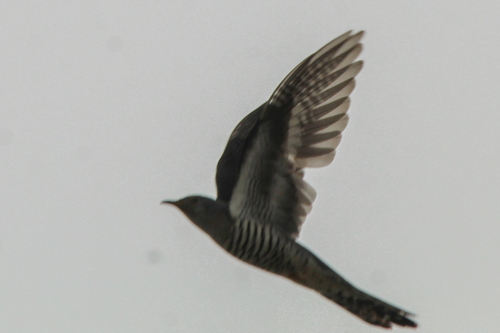 Lesser Cuckoo
In breve
Il modo più affidabile per separare il Common Hawk-Cuckoo dal Lesser Cuckoo è attraverso la loro struttura e il piumaggio: il Common Hawk-Cuckoo è decisamente più grande, più robusto e ha una coda larga e barrata e un anello oculare giallo sorprendente, mentre il Lesser Cuckoo è più piccolo, più snello e manca dell'aspetto simile a un falco. Il Common Hawk-Cuckoo giovane mostra marcature a chevron audaci sul ventre e un petto striato, che il Lesser Cuckoo non ha. In volo, lo stile di battito e planata del Common Hawk-Cuckoo e la somiglianza con un piccolo accipiter sono indizi forti, specialmente quando combinati con reazioni di allerta da parte di altri uccelli. La voce è anche un separatore importante: il richiamo ripetuto e crescente 'brainfever' del Common Hawk-Cuckoo è inconfondibile, mentre il Lesser Cuckoo emette un canto molto diverso, più melodioso.
Consigli di identificazione
- Dimensione e robustezza: Il Common Hawk-Cuckoo è molto più grande e robusto del Lesser Cuckoo; se l'uccello appare delle dimensioni di un piccione o notevolmente robusto, favorire il Hawk-Cuckoo.
- Schema della coda: Cerca una coda larga e fortemente barrata nel Common Hawk-Cuckoo (tutte le età); la coda del Lesser Cuckoo è più snella e meno marcata.
- Anello oculare giallo: Un prominente anello oculare giallo è un segno distintivo chiave del Common Hawk-Cuckoo (adulti e immaturi); il Lesser Cuckoo manca di questa caratteristica.
- Marcature delle parti inferiori (immaturi): Il Common Hawk-Cuckoo giovane mostra audaci chevron marroni sul ventre e un petto striato, con un mento pallido; i giovani del Lesser Cuckoo non mostrano questa combinazione.
- Petto e ventre (adulti): L'adulto Common Hawk-Cuckoo ha barrature trasversali marroni sulle parti inferiori biancastre; il Lesser Cuckoo è più semplice sotto.
- Stile di volo: Il Common Hawk-Cuckoo utilizza un volo a battito e planata, somigliando molto a un piccolo accipiter (come lo Shikra); il volo del Lesser Cuckoo è più tipico dei cuculi, meno simile a un falco.
- Comportamento in perching: Dopo l'atterraggio, il Common Hawk-Cuckoo spesso scuote la coda da un lato all'altro; questo comportamento è meno tipico del Lesser Cuckoo.
- Risposta di allerta: Se piccoli uccelli o scoiattoli stanno attaccando o dando segnali di allerta, sospetta il Common Hawk-Cuckoo, poiché il suo aspetto simile a un falco provoca queste reazioni.
- Vocalizzazioni: Il richiamo ripetuto e crescente 'brainfever' è diagnostico per il Common Hawk-Cuckoo; il canto del Lesser Cuckoo è più melodioso e meno ripetitivo.
- Habitat e stagione: Nell'India peninsulare, il Common Hawk-Cuckoo è la specie attesa; il Lesser Cuckoo è più probabile nelle Himalaya o come migrante nello Sri Lanka.
- Associazione con gli ospiti: Se visto vicino a stormi di babbler (Turdoides), specialmente durante la stagione riproduttiva, il Common Hawk-Cuckoo è più probabile.
- Differenze sessuali: Entrambe le specie sono sessualmente monomorfiche nel piumaggio, quindi non fare affidamento sul sesso per la separazione.
- Cautela per sovrapposizione: Nelle aree di sovrapposizione dell'areale (ad es., Sri Lanka, Himalaya), utilizza una combinazione di dimensione, schema della coda, anello oculare e voce per un'identificazione sicura.
- Rischio di confusione: Entrambi possono essere confusi con altri cuculi o con piccoli falchi (specialmente lo Shikra); controlla sempre la combinazione di aspetto simile a un falco, anello oculare giallo e schema delle parti inferiori per il Common Hawk-Cuckoo.
- Quando hai dubbi: Se l'uccello è piccolo, semplice e manca di un anello oculare giallo o di una forte barratura, è più probabile che sia un Lesser Cuckoo, specialmente al di fuori dell'areale principale del Common Hawk-Cuckoo.
Taglia
Il Common Hawk-Cuckoo è delle dimensioni di un piccione (ca. 34 cm), rendendolo decisamente più grande e robusto del Lesser Cuckoo, che è una specie più piccola e più snella. La differenza di dimensione è evidente sia in perching che in volo, con il Common Hawk-Cuckoo che mostra un corpo più robusto e una coda più lunga e larga. Il Lesser Cuckoo appare più delicato e compatto in confronto. Entrambi i sessi del Common Hawk-Cuckoo sono simili in dimensione, anche se i maschi possono essere leggermente più grandi.
Piumaggio
- Uccelli giovani/immaturi: I giovani del Common Hawk-Cuckoo hanno un petto striato e grandi marcature a chevron marroni sul ventre, così come un mento pallido. Queste marcature sono audaci e diagnostiche per gli uccelli giovani. I giovani del Lesser Cuckoo non mostrano questa combinazione di audaci chevron e striature; le loro parti inferiori sono generalmente meno marcate.
- Adulti: Gli adulti del Common Hawk-Cuckoo sono grigio cenere sopra e bianchi sotto con barrature trasversali marroni, e una coda larga e fortemente barrata. L'anello oculare giallo è prominente. Gli adulti del Lesser Cuckoo sono generalmente più semplici, privi delle barrature simili a un falco e del forte anello oculare giallo. Entrambe le specie hanno una colorazione simile delle parti superiori, ma le barrature delle parti inferiori e il modello della coda sono più pronunciati nel Common Hawk-Cuckoo.
- Viste in volo: La coda larga e barrata del Common Hawk-Cuckoo e l'aspetto generale simile a un falco sono evidenti in volo, mentre il Lesser Cuckoo appare più snello e meno simile a un accipiter.
Comportamento
Il Common Hawk-Cuckoo è famoso per il suo comportamento simile a un falco: utilizza uno stile di volo a battito e planata, spesso scuote la coda da un lato all'altro dopo l'atterraggio e frequentemente provoca segnali di allerta da parte di piccoli uccelli e scoiattoli, che lo scambiano per un rapace. Il Lesser Cuckoo non imita il comportamento del falco nella stessa misura ed è meno probabile che provochi tali risposte di allerta. Il Common Hawk-Cuckoo è anche più probabile da vedere posato in modo evidente, specialmente durante la stagione riproduttiva quando chiama.
Habitat
Entrambe le specie possono verificarsi in habitat boschivi e cespugliosi simili, ma il Common Hawk-Cuckoo è un residente diffuso nel subcontinente indiano, mentre il Lesser Cuckoo è un migrante, che nidifica in Asia orientale e nelle Himalaya e sverna in Africa e Sri Lanka. Durante la stagione riproduttiva, il Common Hawk-Cuckoo è strettamente associato alla presenza di ospiti babbler (Turdoides spp.), mentre il Lesser Cuckoo è meno legato a un ospite o tipo di habitat specifico. È possibile una sovrapposizione nelle Himalaya e nello Sri Lanka, ma il Common Hawk-Cuckoo è più probabile nel centro e nel sud dell'India.
Voce
Il richiamo del Common Hawk-Cuckoo è una frase forte, ripetuta e di tre note 'brainfever', che aumenta di tono e termina bruscamente, spesso emessa in modo persistente durante il giorno e anche di notte. Questo richiamo è molto distintivo e lo separa facilmente dal Lesser Cuckoo, che ha un canto più melodioso e meno insistente. La femmina del Common Hawk-Cuckoo emette una serie di note graffianti, che sono anche diverse dalle vocalizzazioni del Lesser Cuckoo.
Common Hawk-Cuckoo · Lesser Cuckoo · I miei uccelli difficili