

Common Ground Dove vs White-tipped Dove
Columbina passerina contro Leptotila verreauxi
Fai un quiz con Common Ground Dove e White-tipped Dove
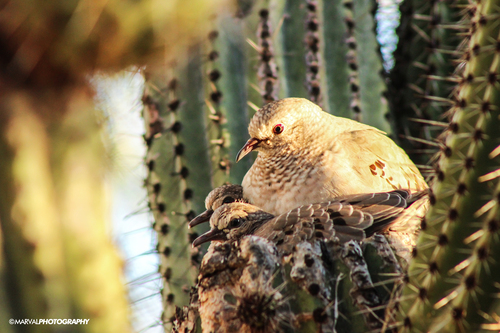 Common Ground Dove
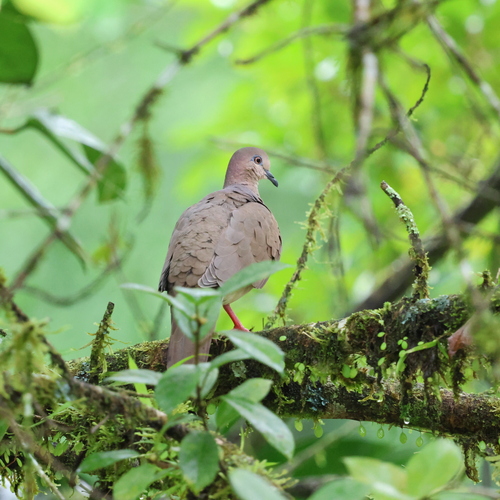 White-tipped Dove
In breve
The most reliable field mark to separate Common Ground Dove from White-tipped Dove is size: Common Ground Dove is exceptionally tiny, barely half the length and a fraction of the mass of the hefty White-tipped Dove. In flight, look for the Common Ground Dove’s short tail and chestnut wing flashes, versus the White-tipped Dove’s broad white tail tips and rufous underwings. Perched, Common Ground Dove shows a yellow-based bill with a black tip and scaly head and breast, while White-tipped Dove is much plainer-faced with a black bill and a red or blue eye-ring. Both species forage on the ground, but the difference in bulk and structure is striking at any distance.
Consigli di identificazione
- Size is the most immediate clue: Common Ground Dove is tiny (sparrow-sized), while White-tipped Dove is large and bulky (nearly pigeon-sized). This difference is obvious even at a distance or in mixed flocks.
- Tail length and shape: Common Ground Dove has a very short tail, barely projecting beyond the wings when perched. White-tipped Dove has a long, broad tail with a conspicuous white tip (especially visible in flight from below).
- Flight pattern and wing marks: In flight, look for chestnut primaries and wing borders on Common Ground Dove (all ages); White-tipped Dove lacks this, instead showing rufous underwing coverts and a broad white tail tip.
- Head and breast pattern: Common Ground Dove shows a scaly pattern on the head and upper breast, unique among doves in its range. White-tipped Dove’s head and breast are smooth and plain.
- Bill color: Common Ground Dove has a yellow-based bill with a black tip; White-tipped Dove’s bill is all black.
- Eye-ring color: White-tipped Dove has a prominent red or blue eye-ring (depending on region), while Common Ground Dove lacks a strong eye-ring.
- Facial color: Common Ground Dove has pink feathers around the bill; White-tipped Dove’s face is pale grey or whitish without pink tones.
- Sexual dimorphism: Male Common Ground Doves have slate-gray crowns and pink-gray bellies; females are grayer and more evenly colored. White-tipped Dove shows little sexual dimorphism in the field.
- Plumage pattern: Common Ground Dove’s upperparts and wings are brown with black spots; White-tipped Dove is plain grey-brown above with no strong patterning.
- Habitat preference: If the bird is in open, dry, weedy ground, Common Ground Dove is more likely. In dense woodland or forest edge, especially in the tropics, White-tipped Dove is favored.
- Behavior: Common Ground Dove is often seen in small groups, walking or running on the ground, and is relatively tame. White-tipped Dove is solitary or in pairs, more wary, and flushes with loud wing claps.
- Vocalizations: Listen for the soft, rising whoops of Common Ground Dove versus the deep, hollow two-note hoot of White-tipped Dove.
- Tail color in flight: Common Ground Dove’s tail matches the back and is short; White-tipped Dove’s tail is broad with a white tip, best seen from below.
- Underwing color: White-tipped Dove shows rufous underwing coverts in flight; Common Ground Dove’s underwing is not distinctive except for the chestnut primaries.
- Regional variation: Be aware of local subspecies differences (e.g., paler or darker forms), but these do not override the main structural and plumage differences between the two species.
Taglia
Common Ground Dove is North America's smallest dove, measuring only 15–18 cm in length and weighing 26–40 g. In contrast, White-tipped Dove is much larger at about 28 cm and 155 g—nearly four times heavier. The difference is obvious even without direct comparison: Common Ground Dove appears petite, short-tailed, and compact, while White-tipped Dove is big-bodied, long-tailed, and robust. If you see a dove that looks sparrow-sized, it is almost certainly a Common Ground Dove; anything pigeon-sized or larger is a White-tipped Dove.
Piumaggio
- In flight:
- Common Ground Dove (all ages): Shows chestnut primaries and wing borders, visible only in flight, and a very short tail matching the back color. The upperwing coverts and flight feathers are brown with black spots.
- White-tipped Dove (adult): Shows broad white tips to the tail, best seen from below or in flight, and rufous underwing coverts. Upperparts and wings are plain grey-brown without strong patterning.
- Perched:
- Common Ground Dove: Head and upper breast have a scaly appearance; bill is yellow with a black tip; males have slate-gray crowns and pink-gray bellies, while females are grayer and more evenly colored. Tail is very short.
- White-tipped Dove: Head and underparts are smooth, with a pale grey or whitish forehead and throat, grey-brown upperparts, and whitish to pinkish underparts. Bill is black, eye-ring is red or blue, and tail is long and broad with a white tip. No scaly pattern on the head or breast.
Comportamento
Both species forage on the ground, but Common Ground Dove is often seen walking or running in open, weedy areas, sometimes in small groups. It is confiding and may allow close approach. White-tipped Dove is more solitary or in pairs, typically wary and quick to flush. Its flight is fast and direct with loud wing claps, typical of larger pigeons. Common Ground Dove’s flight is low and weak, matching its small size and short tail.
Habitat
Common Ground Dove prefers open, dry habitats such as fields, scrub, and edges of woodlands, especially in the southern U.S., Caribbean, and Central America. White-tipped Dove is more a bird of woodlands, forest edges, and dense thickets throughout the Neotropics. While both may be found at forest edges, White-tipped Dove is rarely in open, exposed areas where Common Ground Dove is comfortable.
Voce
Common Ground Dove gives a series of soft, rising whoops, repeated and distinct from any other dove in its range. White-tipped Dove’s call is a deep, hollow two-note hoot: an introductory note followed by a longer, more resonant ooo-wooooo. The difference in pitch and structure is clear if both are heard.
Common Ground Dove · White-tipped Dove · I miei uccelli difficili