

Chestnut-bellied Sandgrouse vs Grandule del Senegal
Pterocles exustus contro Pterocles senegallus
Fai un quiz con Chestnut-bellied Sandgrouse e Grandule del Senegal
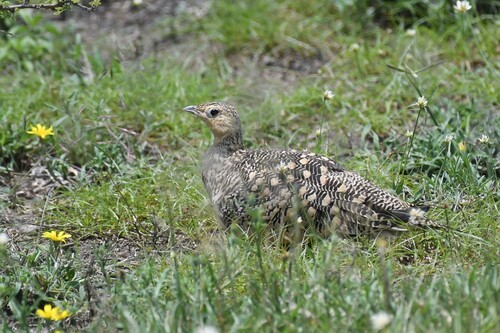 Chestnut-bellied Sandgrouse
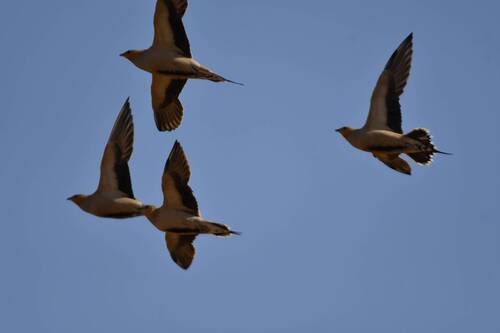 Grandule del Senegal
In breve
Il segno distintivo più affidabile per separare il Chestnut-bellied Sandgrouse dal Grandule del Senegal è il motivo della parte inferiore e del ventre in volo: il Chestnut-bellied mostra un ventre ricco di castagno o cioccolato con un centro nero ben definito (soprattutto nei maschi), mentre il Grandule del Senegal ha un ventre più chiaro con una striscia scura distintiva e macchie estese sul corpo. Negli uccelli in posa, cerca il petto e il ventre castano o cioccolato del Chestnut-bellied rispetto al piumaggio complessivamente macchiato e grigio-marrone del Grandule. Entrambe le specie hanno penne centrali della coda allungate, ma quelle del Grandule sono meno pronunciate. Le femmine di entrambe possono essere confuse, ma il Grandule mostra sempre macchie più estese e un tono complessivamente più opaco e grigio. In volo, il Grandule del Senegal mostra primarie chiare con bordi scuri, mentre il Chestnut-bellied è più uniforme sopra. Usa questi contrasti, specialmente in stormi o nei punti d'acqua, per evitare comuni confusione.
Consigli di identificazione
- Belly pattern in flight (all ages): Il Chestnut-bellied Sandgrouse mostra un ventre ricco di castagno o cioccolato con un centro nero ben definito nei maschi; le femmine hanno parti inferiori barrate. Il Grandule del Senegal ha un ventre chiaro con una striscia scura distintiva ed è altrimenti pesantemente macchiato—questo è visibile anche a distanza.
- Upperwing pattern (adults/immatures): Nel Grandule del Senegal, cerca primarie chiare con un bordo scuro; l'ala superiore del Chestnut-bellied è più uniforme di buff o buff ocra, priva del forte contrasto.
- Breast and throat color (adults): I maschi del Chestnut-bellied hanno un petto di buff vinoso con una stretta banda bianco-nera; i maschi del Grandule hanno un petto grigio, gola arancione e un collare grigio chiaro. Le femmine di entrambe sono più opache, ma il Grandule ha sempre una macchia di gola arancione.
- Upperparts (all ages): Il Chestnut-bellied è più uniforme sabbioso o isabellino sopra, con alcune striature o barrature nelle femmine. Il Grandule è sempre densamente macchiato e grigio-rosato sopra, con piccole marcature scure in tutto.
- Tail shape: Entrambi hanno penne centrali della coda allungate, ma quelle del Grandule sono meno pronunciate—utile se viste bene su uccelli in posa.
- Head and face (males): Il Grandule ha una piccola nuca rosso-marrone con un collare grigio chiaro che si estende fino al becco, mentre i maschi del Chestnut-bellied hanno un volto e una gola giallo-ocra opachi, a volte con una sfumatura arancione-buff.
- Female pattern: Le femmine del Chestnut-bellied sono striate e barrate, specialmente sulle parti inferiori, ma le femmine del Grandule sono più estensivamente macchiate e mancano della forte barratura.
- Flight jizz: Entrambe le specie volano veloci e dirette, ma il Grandule mostra spesso più contrasto sull'ala superiore e una striscia di ventre scura più evidente.
- Perched jizz: Entrambi appaiono con gambe corte e compatti, ma il Chestnut-bellied può sembrare più uniforme e meno decorato a riposo.
- Voice: Se senti un richiamo musicale 'queeto-queeto' o 'queet-queet-queet', è il Grandule del Senegal. Il Chestnut-bellied è più silenzioso o meno distintivo vocalmente.
- Habitat context: Se l'area è estremamente desolata e deserto aperto, è più probabile che sia il Grandule; il Chestnut-bellied tollera una gamma più ampia di habitat aridi.
- Subspecies variation: Il Chestnut-bellied ha diverse sottospecie con toni variabili (da più grigi a più oliva o buff), ma nessuna è così densamente macchiata come il Grandule del Senegal.
- Waterhole behavior: Entrambe le specie visitano i punti d'acqua, ma se vedi un maschio che si bagna le penne del ventre e senti richiami forti, è probabile che sia il Grandule.
- Pitfalls: Le femmine e gli immaturi di entrambe possono essere confusi, ma l'aspetto complessivamente macchiato del Grandule e il contrasto ventre chiaro/scuro sono affidabili. Le femmine del Chestnut-bellied sono più barrate rispetto a quelle macchiate.
- When marks fail: In scarsa illuminazione o a grande distanza, fai affidamento sul motivo del ventre in volo e sulla macchiatura complessiva delle parti superiori come i tuoi migliori indizi.
Taglia
Il Chestnut-bellied Sandgrouse è un sandgrouse di piccole e medie dimensioni con una massa corporea di circa 210g [wikidata]. Il Grandule del Senegal è simile in dimensioni, raggiungendo circa 33 cm di lunghezza [wikipedia], ma non è disponibile alcuna cifra diretta sulla massa. Sul campo, la dimensione non è un forte separatore tra questi due; entrambi appaiono compatti con gambe corte e code allungate, sebbene il Grandule possa sembrare leggermente più lungo a causa della sua coda e delle proporzioni complessive.
Piumaggio
Gli uccelli giovani e immaturi sono raramente descritti in dettaglio, ma per gli adulti e gli immaturi più grandi, la differenza chiave è il motivo della parte inferiore e del ventre in volo: i maschi del Chestnut-bellied Sandgrouse hanno un petto di buff vinoso, una stretta banda bianco-nera e un centro del ventre di cioccolato o nero, mentre le femmine mostrano una forte barratura sotto. Il Grandule del Senegal, in entrambi i sessi, ha un petto grigio più chiaro, gola arancione e una striscia scura sul ventre, con il resto delle parti inferiori e superiori densamente macchiate e maculate. Sull'ala superiore, il Grandule mostra primarie chiare con un bordo scuro, una caratteristica non presente nel Chestnut-bellied, che ha ali più uniformi di buff o buff ocra. Le parti superiori del Chestnut-bellied sono più uniformi sabbiose o isabelline, mentre il Grandule è visibilmente macchiato e grigio-rosato. La femmina del Chestnut-bellied è striata e barrata sopra, ma non così densamente macchiata come il Grandule. Entrambi hanno penne centrali della coda allungate, ma quelle del Grandule sono meno estreme.
Comportamento
Entrambe le specie sono terricole, diffidenti e gregarie al di fuori della stagione riproduttiva, tipicamente viste in stormi nei punti d'acqua o a nutrirsi su terreni aperti. Il Grandule del Senegal è noto per il suo volo rapido e diretto con un battito d'ali veloce e visite quotidiane ai punti d'acqua, dove i maschi si bagnano le penne del ventre per trasportare acqua ai pulcini—un comportamento non specificamente notato per il Chestnut-bellied. Entrambe le specie allungano il collo quando sono all'erta e si congelano quando sono minacciate, facendo affidamento sul camuffamento. Il Grandule del Senegal è particolarmente noto per i suoi richiami musicali in volo e alta vigilanza.
Habitat
Entrambe le specie si trovano in regioni aride e semi-aride del nord e dell'est Africa, del Medio Oriente e fino in Asia. Il Chestnut-bellied Sandgrouse ha un'area di distribuzione più ampia, inclusi parti dell'India e dell'Africa centrale, e può essere sedentario o nomade a seconda delle condizioni. Il Grandule del Senegal è più strettamente associato a habitat desertici e semi-desertici, spesso nelle aree più secche con vegetazione scarsa. L'overlap è comune, ma il Grandule è più probabile nelle zone più desolate e aperte, mentre il Chestnut-bellied può essere trovato in habitat leggermente meno estremi.
Voce
Il Grandule del Senegal è distintivo in volo per i suoi richiami musicali, ripetuti 'queeto-queeto' o 'queet-queet-queet', specialmente quando i maschi tornano dai punti d'acqua. Le vocalizzazioni del Chestnut-bellied Sandgrouse sono meno descritte nelle fonti, quindi la voce è un utile separatore se si sente il richiamo del Grandule.
Chestnut-bellied Sandgrouse · Grandule del Senegal · I miei uccelli difficili