

Chatham Islands Parakeet vs Rosella orientale
Cyanoramphus forbesi contro Platycercus eximius
Fai un quiz con Chatham Islands Parakeet e Rosella orientale
 Chatham Islands Parakeet
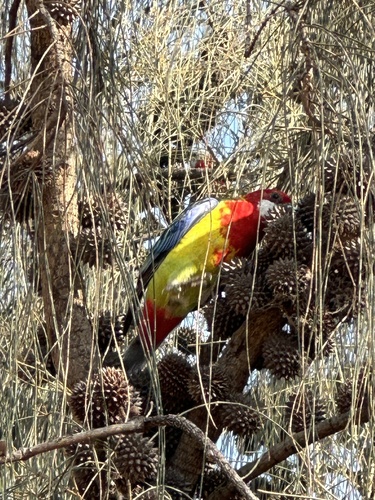 Rosella orientale
In breve
Il segno distintivo più affidabile che separa il Chatham Islands Parakeet dal Rosella orientale è il motivo della testa e del viso: il Parakeet di Forbes (Chatham Islands Parakeet) mostra una corona anteriore giallo dorato e una banda rossa sulla fronte, con lore verdi e occhi arancio-rossi, mentre il Rosella orientale ha una testa rossa brillante e macchie bianche sulle guance. In volo o a riposo, il piumaggio audace e multicolore del Rosella orientale con un dorso nero e giallo a scallop e ali blu è inconfondibile rispetto al verde più uniforme del Parakeet di Forbes. I giovani Rosella orientali sono più opachi ma mostrano comunque la macchia bianca sulla guancia e la striscia sottoala, caratteristiche mai presenti nel Parakeet di Forbes. Anche la struttura e la dimensione differiscono: il Rosella orientale è più grande e robusto, con una coda più ampia e un becco più pesante. L'habitat è un forte indizio in Nuova Zelanda: il Parakeet di Forbes è ristretto alle Chatham Islands, mentre il Rosella orientale è stabilito solo in alcune parti delle isole principali.
Consigli di identificazione
- Head pattern: Il Parakeet di Forbes mostra sempre una corona anteriore giallo dorato con una banda rossa sulla fronte (che non raggiunge gli occhi) e lore verdi. Il Rosella orientale ha una testa rossa brillante e un petto superiore con una grande macchia bianca pulita—mai vista nel Parakeet di Forbes.
- Cheek color: La macchia bianca sulla guancia è diagnostica per il Rosella orientale di tutte le età e sessi. Il Parakeet di Forbes ha sempre lore verdi e nessun bianco sul viso.
- Underwing stripe: Le femmine e i giovani Rosella orientali hanno una striscia sottoala chiara visibile in volo o quando allungano le ali. Il Parakeet di Forbes non mostra mai una striscia sottoala a nessuna età.
- Back pattern: Il dorso del Rosella orientale è nero con margini giallastri o verdastri a scallop, dando un aspetto squamoso. Il dorso del Parakeet di Forbes è verde uniforme senza scallop.
- Body color: Il Parakeet di Forbes è per lo più verde brillante con un po' di rosso sui lati del dorso e primarie esterne blu-viola. Il Rosella orientale è un patchwork di rosso, giallo, verde, blu e nero, con un dorso chiaro o bluastro a seconda della sottospecie.
- Wing color: In volo, il Rosella orientale mostra ali blu e penne laterali della coda, in contrasto con il corpo verde e la testa rossa. Il Parakeet di Forbes ha ali verdi con solo le primarie esterne e le copritrici blu-viola.
- Tail: La coda del Rosella orientale è più ampia e verde scuro, mentre la coda del Parakeet di Forbes è lunga e più snella.
- Bill size and color: Il Rosella orientale ha un becco più robusto e bianco; il becco del Parakeet di Forbes è più piccolo e più delicato, con le femmine che hanno i becchi più piccoli.
- Eye color: Il Parakeet di Forbes ha occhi arancio-rossi, mentre le iridi del Rosella orientale sono marroni. Questo è sottile ma può aiutare a distanza ravvicinata.
- Sexual dimorphism: Entrambe le specie mostrano solo lievi differenze tra i sessi, ma le femmine di rosella sono più opache e hanno la striscia sottoala; la femmina del Parakeet di Forbes è solo leggermente più piccola e opaca.
- Juvenile confusion: I giovani Rosella orientali sono più opachi ma mostrano ancora guance bianche e striscia sottoala. Il giovane Parakeet di Forbes assomiglia a un adulto più opaco, senza macchia bianca sulla guancia o striscia sottoala.
- Habitat: Il Parakeet di Forbes si trova solo nelle Chatham Islands, in foreste dense o cespugli. Il Rosella orientale si trova in habitat aperti sulle isole principali della Nuova Zelanda.
- Behavior: I rosella sono spesso visti nutrirsi a terra o appollaiati in spazi aperti, mentre il Parakeet di Forbes è più riservato e rimane coperto.
- Flight style: Il volo del Rosella orientale è forte e diretto, mostrando spesso ali blu e guance bianche. Il volo del Parakeet di Forbes è più agile e meno appariscente.
- Location clue: Se stai osservando uccelli nelle Chatham Islands, qualsiasi parakeet è probabilmente il Parakeet di Forbes. Sulle isole principali, un pappagallo multicolore con una testa rossa e guance bianche è il Rosella orientale.
Taglia
Il Rosella orientale è il più grande e pesante dei due, raggiungendo circa 30 cm di lunghezza, mentre il Parakeet di Forbes è di dimensioni medie per un parakeet ma notevolmente più piccolo e snello di un rosella. Il rosella ha una corporatura più robusta, una coda più ampia e un becco più robusto, mentre il Parakeet di Forbes è più snello nel complesso. La femmina del Parakeet di Forbes è leggermente più piccola del maschio, ma entrambi i sessi sono comunque più piccoli di qualsiasi Rosella orientale. Queste differenze di dimensioni sono più evidenti quando entrambe le specie sono viste insieme, ma possono essere sottili a distanza o con uccelli solitari.
Piumaggio
- Juvenile/Early Age: I giovani Rosella orientali sono più opachi degli adulti ma mostrano comunque la macchia bianca sulla guancia e una striscia sottoala diagnostica, che non è mai presente nel Parakeet di Forbes a nessuna età. I giovani Parakeet di Forbes assomigliano agli adulti, con lore verdi e una corona anteriore gialla, senza alcun bianco sul viso o sottoala.
- Adult: Il Parakeet di Forbes è verde brillante nel complesso con una corona anteriore giallo dorato e una stretta banda rossa sulla fronte (che non raggiunge gli occhi), lore verdi e un po' di rosso sui lati del dorso. Le primarie esterne e le copritrici delle ali sono blu-viola, ma le ali sono altrimenti verdi. Gli adulti del Rosella orientale sono molto più colorati: una testa rossa brillante e un petto superiore, macchie bianche sulle guance, un petto inferiore giallo che sfuma in verde pallido sul ventre, piume nere sulla schiena con margini gialli o verdastri (aspetto a scallop), ali blu e una coda verde scura. Il colore del dorso varia a seconda della sottospecie ma è sempre più chiaro o bluastro, mai rosso o giallo. Le femmine di rosella sono più opache ma mantengono lo stesso motivo; le femmine del Parakeet di Forbes sono solo leggermente più opache e più piccole dei maschi.
- Flight: In volo, le ali blu del Rosella orientale e le guance bianche sono evidenti, e la striscia sottoala è visibile nelle femmine e nei giovani. Il Parakeet di Forbes in volo mostra un'ala per lo più verde con primarie esterne blu-viola, senza alcun pannello bianco o blu audace o strisce sottoala.
Comportamento
I Rosella orientali sono spesso visti nutrirsi a terra o in aree aperte, e il loro volo è forte e diretto con battiti d'ali rapidi, mostrando spesso le loro ali blu e guance bianche. Possono posarsi in modo appariscente sugli alberi o sui fili. Il Parakeet di Forbes è più riservato, di solito rimane in vegetazione densa, ed è meno probabile che venga visto in aree aperte. Il loro volo è agile ma meno appariscente, e spesso rimangono parzialmente nascosti quando si posano.
Habitat
Il Parakeet di Forbes è strettamente endemico alle Chatham Islands e non si trova sulle isole principali della Nuova Zelanda, preferendo habitat di foreste dense e cespugli. Il Rosella orientale, d'altra parte, è stabilito nell'Isola del Nord (soprattutto nella metà settentrionale, Taranaki, Waikato, Hutt Valley) e in alcune aree intorno a Dunedin nell'Isola del Sud, preferendo boschi aperti, parchi, giardini e terreni agricoli. Se vedi un parakeet nelle Chatham Islands, è quasi certamente il Parakeet di Forbes; sulle isole principali, un pappagallo multicolore con una testa rossa e guance bianche è il Rosella orientale.
Chatham Islands Parakeet · Rosella orientale · I miei uccelli difficili