

Buff-banded Rail vs Australasian Swamphen
Gallirallus philippensis contro Porphyrio melanotus
Fai un quiz con Buff-banded Rail e Australasian Swamphen
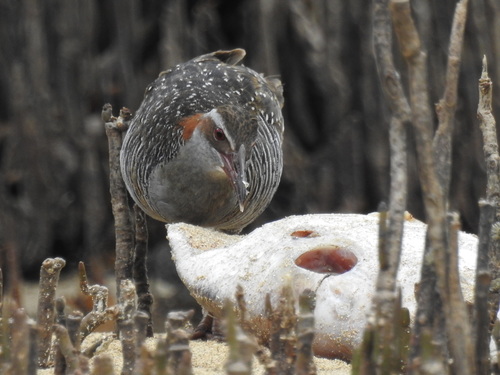 Buff-banded Rail
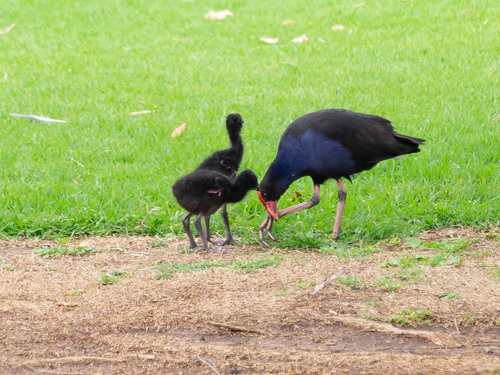 Australasian Swamphen
In breve
Il modo più affidabile per separare il Buff-banded Rail dall'Australasian Swamphen è attraverso la struttura generale e il piumaggio: il Buff-banded Rail è un rail compatto di dimensioni medie con parti superiori marroni, marcature nere e bianche audaci sotto, un sopracciglio bianco e una distintiva banda di petto color buff, mentre l'Australasian Swamphen è molto più grande, con un corpo blu-viola sorprendente, un becco rosso brillante e uno scudo frontale, e lunghe gambe rosse. In volo o a terra, la dimensione e la colorazione vivida dello Swamphen sono inconfondibili accanto al rail più criptico e dalle tonalità terrose. I rail Buff-banded sia giovanili che adulti mostrano entrambi le stesse basi di parti inferiori a bande e una nuca castana, mentre gli Swamphen di tutte le età mancano di questi schemi. Gli Swamphen sono spesso visti in zone umide aperte o pascoli, camminando eretti, mentre i Buff-banded Rails si nascondono in coperture dense e sono molto più timidi.
Consigli di identificazione
- Size and structure: Lo Swamphen è molto più grande e massiccio, con un collo e gambe più lunghi, e una postura più eretta. Il Buff-banded Rail è compatto, con gambe più corte e una postura accovacciata. La dimensione da sola è spesso sufficiente a distanza.
- Bill and frontal shield: Lo Swamphen ha un becco spesso e rosso brillante e uno scudo frontale rosso prominente sopra il becco. Il Buff-banded Rail ha un becco più modesto, marrone, senza scudo.
- Leg color: Le gambe dello Swamphen sono lunghe e rosse brillanti, molto visibili quando cammina. Le gambe del Buff-banded Rail sono più opache e più corte.
- Plumage color: Lo Swamphen è blu profondo fino a viola in tutto con nessuna marcatura, strisce o bande. Il Buff-banded Rail ha parti superiori marroni, un sopracciglio bianco, una nuca castana, una banda di petto color buff e parti inferiori a barre nere e bianche.
- Facial pattern: Il Buff-banded Rail mostra un chiaro sopracciglio bianco e una banda castana dal becco attorno alla nuca. Il volto dello Swamphen è blu semplice con uno scudo rosso.
- Breast band: Solo il Buff-banded Rail ha una banda color buff attraverso il petto; le parti inferiori dello Swamphen sono blu senza marcature.
- Underpart barring: Il Buff-banded Rail ha marcature nere e bianche fini sui fianchi e sull'addome, presenti in tutte le età. Lo Swamphen è semplice sotto.
- Flight appearance: Lo Swamphen è pesante e lento in volo, con le gambe che penzolano e ali blu; il Buff-banded Rail vola basso e veloce, con ali marroni e senza gambe penzolanti. La dimensione e il colore dello Swamphen sono evidenti in volo.
- Behavior: Lo Swamphen è audace, spesso in gruppi, si nutre in aree aperte. Il Buff-banded Rail è solitario o in coppie, si nasconde in coperture dense.
- Habitat: I rail si attaccano a vegetazione densa e umida; gli Swamphen sono spesso in pascoli aperti, paludi e persino terreni agricoli.
- Tail: Lo Swamphen spesso muove la coda, mostrando copritail bianchi (non presenti nel Buff-banded Rail).
- Juvenile confusion: I giovani Buff-banded Rails mostrano ancora gli stessi schemi di bande e barre di base degli adulti; i giovani Swamphen sono più opachi ma mai a barre o a bande.
- Voice: Non descritto qui, ma lo Swamphen è generalmente più rumoroso e più vocale in gruppi; il Buff-banded Rail è più silenzioso e più segreto.
- Context: Se vedi un uccello all'aperto, specialmente in gruppo, e specialmente con colori blu e rossi brillanti, è uno Swamphen. Se è solo, in copertura e con un motivo criptico, è probabilmente un Buff-banded Rail.
- Range overlap: Entrambe le specie si trovano in Australia, Nuova Zelanda e Nuova Guinea, quindi il contesto e i segni sul campo sono essenziali per la separazione.
Taglia
Il Buff-banded Rail è un rail di dimensioni medie, misurando 25–33 cm di lunghezza e pesando 172–185 g per gli adulti [wikipedia][avonet]. Al contrario, l'Australasian Swamphen è significativamente più grande e massiccio, con un corpo molto più robusto, gambe più lunghe e una costruzione più pesante (misure esatte non fornite qui, ma visivamente molto più grande sul campo) [wikipedia]. Le lunghe gambe e il collo dello Swamphen gli conferiscono una postura più eretta, quasi gallinacea, mentre il rail è più compatto e accovacciato. Anche a distanza, il divario di dimensione è ovvio quando entrambe le specie sono viste insieme.
Piumaggio
I rail Buff-banded sia giovanili che adulti mostrano entrambi parti superiori marroni, un sopracciglio bianco, una nuca castana e una banda di petto color buff audace, con parti inferiori finemente barrate in nero e bianco [wikipedia]. Questi schemi a bande e barre sono presenti fin dalla giovane età e persistono nell'età adulta. Al contrario, l'Australasian Swamphen di tutte le età è blu profondo fino a viola in tutto, senza marcature o bande, e presenta un becco rosso brillante e uno scudo frontale, oltre a gambe rosse forti [wikipedia]. Gli Swamphen mancano di strisce facciali o bande di petto. Il piumaggio criptico, striato e a bande del rail contrasta nettamente con la colorazione solida e lucida dello Swamphen. In volo, il Buff-banded Rail mostra ali marroni senza forte contrasto, mentre le ali dello Swamphen sono anch'esse scure, ma la dimensione, il colore e le gambe penzolanti dell'uccello sono distintivi. Non sono descritti segni specifici per l'ala superiore di età per nessuna delle due specie, ma le marcature delle parti inferiori e il motivo facciale del rail sono sempre presenti, mentre lo Swamphen è sempre blu-viola semplice con evidenti riflessi rossi.
Comportamento
Il Buff-banded Rail è tipicamente timido e segreto, muovendosi rapidamente attraverso la vegetazione densa e raramente avventurandosi lontano dalla copertura. Può diventare domestico su isole prive di predatori, ma di solito è difficile da avvicinare [wikipedia]. Al contrario, l'Australasian Swamphen è audace e sociale, spesso visto camminare all'aperto, nutrirsi in gruppi e mostrando poca paura degli esseri umani. Gli Swamphen camminano eretti con lunghe falcate, a volte muovendo le loro code per mostrare copritail bianchi (non presenti nel Buff-banded Rail). Gli Swamphen partecipano anche a comportamenti sociali e di riproduzione complessi, inclusi nidi comuni, che non si vedono nel Buff-banded Rail.
Habitat
Il Buff-banded Rail preferisce vegetazione densa e bassa in habitat umidi o paludosi, come canneti, paludi erbose o coperture spesse vicino all'acqua [wikipedia]. È raramente visto all'aperto, tranne che su isole dove i predatori sono assenti. L'Australasian Swamphen, d'altra parte, è altamente adattabile e occupa una vasta gamma di habitat umidi, da paludi e acquitrini a pascoli, margini stradali e terreni agricoli [wikipedia]. Gli Swamphen sono spesso visti lontano dall'acqua, nutrendosi in aree erbose aperte, mentre i Buff-banded Rails si attaccano alla copertura e sono molto meno appariscenti.
Buff-banded Rail · Australasian Swamphen · I miei uccelli difficili