

Brown-throated Parakeet vs Blue-gray Tanager
Eupsittula pertinax contro Thraupis episcopus
Fai un quiz con Brown-throated Parakeet e Blue-gray Tanager
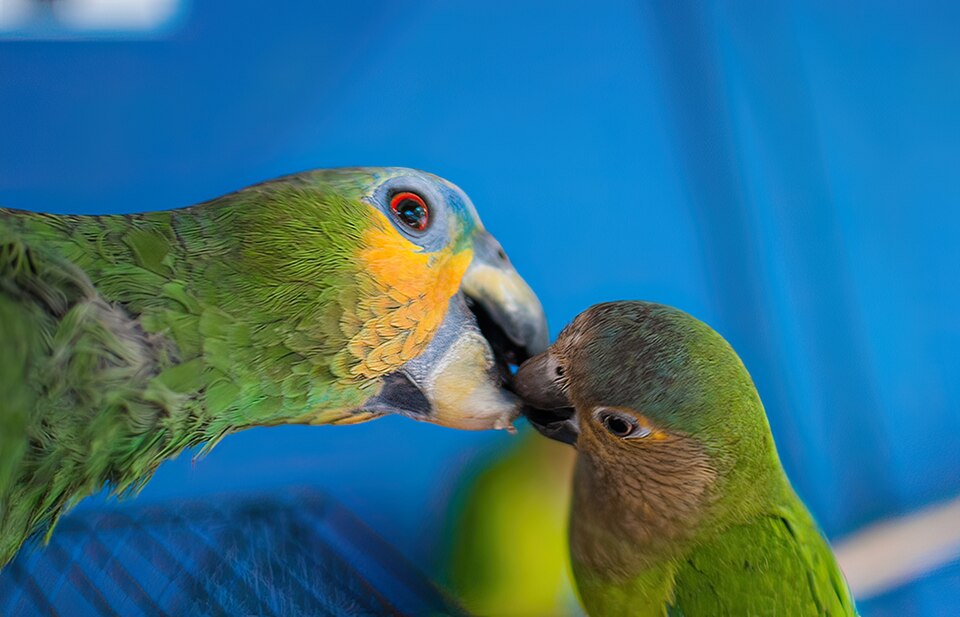 Brown-throated Parakeet
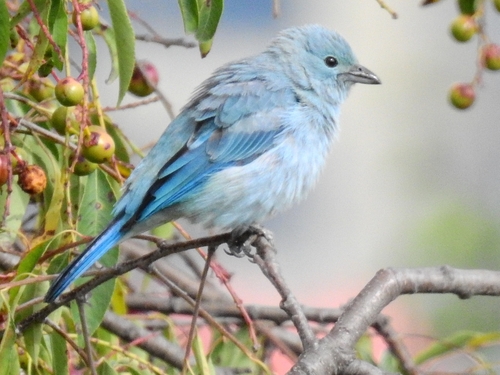 Blue-gray Tanager
In breve
Il segno distintivo più affidabile tra il Brown-throated Parakeet e il Blue-gray Tanager è il colore generale: il pappagallo è per lo più verde con un volto giallo e una macchia arancione sul ventre, mentre il tangara è di un blu-grigio pallido uniforme con ali blu più scure e una macchia blu contrastante sulla spalla. I pappagalli immaturi mancano di molto giallo, ma mostrano comunque toni verdi e una struttura simile a quella dei pappagalli, a differenza di qualsiasi tangara. La forma del becco è anche un forte separatore: il pappagallo ha un becco lungo e ricurvo tipico dei pappagalli, mentre il becco del tangara è corto e spesso. In volo o posato, la lunga coda del pappagallo e le ali con bordi blu contrastano con la coda più corta e la forma più compatta e simile a quella dei passeriformi del tangara. La voce e il comportamento differiscono fortemente, ma il colore e la struttura sono di solito sufficienti per una separazione sicura.
Consigli di identificazione
- Overall color: Il Brown-throated Parakeet è per lo più verde con un volto giallo (adulti) e una macchia arancione sul ventre, mentre il Blue-gray Tanager è di un blu-grigio pallido con ali blu più scure e una macchia blu sulla spalla. I pappagalli immaturi sono più opachi ma rimangono verdognoli; i tangara sono sempre di tonalità blu.
- Bill shape: Il pappagallo ha un becco lungo e ricurvo tipico dei pappagalli; il becco del tangara è corto, spesso e conico, mai ricurvo. Questo è visibile anche da lontano.
- Tail length and shape: La coda del pappagallo è lunga e appuntita, estendendosi ben oltre le ali; la coda del tangara è più corta e più squadrata.
- Wing and flight pattern: Il pappagallo in volo mostra ali e coda con bordi blu, con un profilo di volo lungo e dritto; il volo del tangara è più ondulato, con ali compatte e senza bordi blu sulla coda.
- Face pattern: I pappagalli adulti hanno un volto e un mento giallo brillante (meno negli immaturi); i tangara hanno un volto uniforme di un blu-grigio pallido senza giallo o arancione.
- Belly color: Il ventre del pappagallo è verde prato con una macchia arancione (adulti); il ventre del tangara è blu-grigio pallido, mai verde o arancione.
- Shoulder patch: Il Blue-gray Tanager ha una macchia blu contrastante sulla spalla (l'ombra varia a seconda della sottospecie); la spalla del pappagallo è verde, fondendosi con il resto delle parti superiori.
- Size and bulk: Il pappagallo è molto più pesante e lungo (84 g, 23–28 cm) rispetto al tangara (30–40 g, 16–18 cm); questo è spesso ovvio sul campo.
- Perching posture: Il pappagallo si posiziona eretto, spesso in gruppi; il tangara si posiziona più orizzontalmente e appare più snello.
- Vocalizations: Il pappagallo è forte, aspro e stridulo; il tangara è morbido, musicale e cinguettante. Se senti un richiamo simile a quello di un pappagallo, non è un tangara.
- Group behavior: I pappagalli sono spesso in stormi rumorosi; i tangara sono in coppie o piccoli gruppi più silenziosi.
- Habitat overlap: Entrambi possono verificarsi in aree aperte o urbane, quindi non fare affidamento solo sull'habitat per l'identificazione.
- Immature confusion: I giovani pappagalli mancano di molto giallo ma rimangono verdognoli e strutturalmente simili ai pappagalli; i giovani tangara sono di un blu-grigio opaco, mai verdi o con volto giallo.
- No sexual dimorphism: Entrambe le specie hanno un piumaggio simile nei maschi e nelle femmine, quindi il sesso non aiuta nell'identificazione.
- No distinctive wing panels or edges in immatures: La separazione si basa sul colore generale e sulla struttura, non su schemi di ali specifici per età.
Taglia
Il Brown-throated Parakeet è notevolmente più grande e massiccio rispetto al Blue-gray Tanager. Il pappagallo pesa circa 84 g e misura 23–28 cm di lunghezza, mentre il tangara è molto più leggero a 30–40 g e più corto a 16–18 cm. La coda più lunga e la struttura più pesante del pappagallo sono evidenti in un confronto diretto, e le sue proporzioni simili a quelle dei pappagalli (coda lunga, testa grande, corpo robusto) contrastano con la forma più snella e tipica dei passeriformi del tangara.
Piumaggio
- Immature birds: I giovani Brown-throated Parakeets hanno molto poco giallo sul volto, ma mostrano comunque per lo più parti superiori verdi e una versione più opaca del modello di colore degli adulti. I giovani Blue-gray Tanager sono più opachi degli adulti ma rimangono blu-grigi complessivamente, mai verdognoli o con volto giallo. Non è descritto alcun pannello distintivo delle ali o modello di bordo per nessuna delle due specie a qualsiasi età, quindi la separazione si basa sul colore generale e sulla struttura.
- Adults: Gli adulti del Brown-throated Parakeet (nominate) hanno un volto e un mento giallo, parti superiori verdi, petto oliva opaco, ventre verde prato con una macchia arancione e ali e coda con bordi blu. Gli adulti del Blue-gray Tanager sono di un blu pallido sulla testa e sulle parti inferiori, con parti superiori blu più scure e una macchia blu sulla spalla (l'ombra varia a seconda della sottospecie). Il tangara non mostra mai toni gialli, arancioni o verdi, e il pappagallo non appare mai complessivamente blu o blu-grigio. I sessi sono simili in entrambe le specie.
Comportamento
I Brown-throated Parakeets sono altamente vocali, sociali e spesso visti in stormi rumorosi, volando con battiti d'ali forti e diretti e lunghe code che si trascinano dietro. Si posano eretti, spesso in gruppi, e possono essere visti nutrirsi di frutta o semi. I Blue-grey Tanagers sono anche sociali ma meno rumorosi, muovendosi in coppie o piccoli gruppi, spesso foraggiando silenziosamente tra il fogliame. Il loro volo è più ondulato e meno diretto, e si posano più orizzontalmente, tipico dei tangara e di altri passeriformi.
Habitat
Entrambe le specie possono verificarsi in habitat aperti o di margine, ma il contesto può aiutare: i Brown-throated Parakeets si trovano dalla Costa Rica e Panama attraverso il nord del Sud America e le isole vicine, spesso in boschi aperti, savane e aree coltivate. I Blue-grey Tanagers hanno un'area di distribuzione più ampia dal Messico al nord del Sud America, inclusa la regione amazzonica, e sono comuni in giardini, parchi e margini forestali. È possibile un sovrapposizione, specialmente in aree disturbate o urbane, quindi l'habitat da solo non è diagnostico.
Voce
Il Brown-throated Parakeet è forte e aspro, con strida acute e richiami graffianti 'scraart scraart', oltre a chiacchiere rapide e note bisillabiche. I loro richiami variano a seconda della posizione ma sono sempre simili a quelli dei pappagalli. Il Blue-gray Tanager emette una canzone morbida e squittente con note di richiamo 'tseee' e 'tsuup', molto più gentile e musicale rispetto alla voce rumorosa del pappagallo. Le vocalizzazioni sono di solito distintive se ascoltate bene.
Brown-throated Parakeet · Blue-gray Tanager · I miei uccelli difficili