

Brown-chested Jungle Flycatcher vs Gray-chested Jungle Flycatcher
Cyornis brunneatus contro Cyornis umbratilis
Fai un quiz con Brown-chested Jungle Flycatcher e Gray-chested Jungle Flycatcher
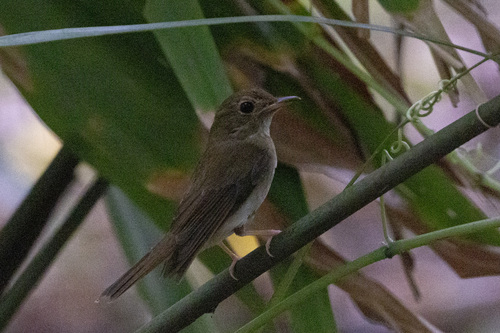 Brown-chested Jungle Flycatcher
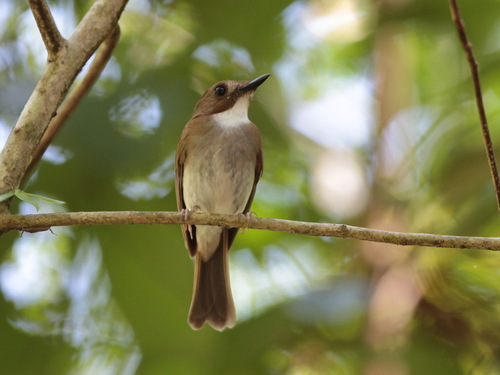 Gray-chested Jungle Flycatcher
In breve
The most reliable way to separate Brown-chested Jungle Flycatcher from Grey-chested Jungle Flycatcher is by chest coloration: Brown-chested shows a distinctly brown-toned chest, while Grey-chested has a noticeably greyer chest. Both species are very similar in size and overall shape, so subtle differences in plumage are key. Their ranges overlap only in the Malay Peninsula, but elsewhere, location can help. In the field, focus on chest color and any subtle differences in habitat preference, as structural and size cues are not useful for separation.
Consigli di identificazione
- Chest color is the key field mark: Brown-chested Jungle Flycatcher shows a warm brown chest, while Grey-chested Jungle Flycatcher has a greyish chest. This difference is present in adults and likely in immatures as well.
- No useful size or structure cues: Both species are nearly identical in mass and overall proportions, so do not rely on size or jizz.
- No distinctive wing or tail pattern: There are no known differences in wing or tail markings for any age or season; do not expect helpful flight marks.
- Habitat can help, but beware overlap: In mangrove forests, especially in the Malay Peninsula, Brown-chested is more likely; in swamps, Grey-chested is more likely. In other forest types, both can occur, so use plumage.
- Geographic range is a strong clue: In South China, only Brown-chested occurs (as a breeder); in Brunei and Indonesia, only Grey-chested is present. In Thailand and the Malay Peninsula, both are possible, so use other marks.
- Seasonal context: Brown-chested is a migrant, so if seen in South China outside the breeding season, reconsider ID. Grey-chested is resident.
- Vocalizations are not described: Do not rely on song or call for separation based on current sources.
- Both sexes similar: No information suggests sexual dimorphism in either species, so male/female differences are not helpful.
- Beware poor light: In shaded forest, the brown or grey chest tones may be hard to judge; try to view the bird in good light.
- Avoid over-interpreting habitat: Both species use lowland moist forest, so habitat alone is rarely diagnostic unless in pure mangrove (Brown-chested) or swamp (Grey-chested).
Taglia
Both species are virtually identical in size, with Brown-chested Jungle Flycatcher averaging 18.0g and Grey-chested Jungle Flycatcher 18.2g [wikidata]. No meaningful difference in mass or structure is noted, so size is not a useful field mark.
Piumaggio
Plumage differences center on the color of the chest. Adult Brown-chested Jungle Flycatcher has a warm brown wash across the chest, contrasting with a paler belly, while Grey-chested Jungle Flycatcher shows a more uniform greyish chest and underparts. There is no information on distinctive juvenile or immature wing patterns for either species, so rely on chest color for all ages. Both species otherwise have similar flycatcher patterns, with no mention of strong wing bars, panels, or tail pattern differences.
Comportamento
Behavioral differences are not described in the available sources. Both species are typical Cyornis flycatchers, likely to sally for insects from low perches in dense forest, but this is not diagnostic between the two.
Habitat
Both species inhabit subtropical or tropical moist lowland forests, but Brown-chested Jungle Flycatcher also uses mangrove forests, while Grey-chested Jungle Flycatcher is found in swamps as well [wikipedia]. In the Malay Peninsula, both may occur together, but elsewhere, Brown-chested is a migrant (breeding in South China, wintering in the Malay Peninsula), while Grey-chested is resident in Brunei, Indonesia, Malaysia, and Thailand. If seen in South China, it is Brown-chested; in Brunei or Indonesia, it is Grey-chested. In the Malay Peninsula, check habitat: mangroves may favor Brown-chested, swamps may favor Grey-chested, but overlap is possible.
Brown-chested Jungle Flycatcher · Gray-chested Jungle Flycatcher · I miei uccelli difficili