

Broad-billed Hummingbird vs Violet-crowned Hummingbird
Cynanthus latirostris contro Ramosomyia violiceps
Fai un quiz con Broad-billed Hummingbird e Violet-crowned Hummingbird
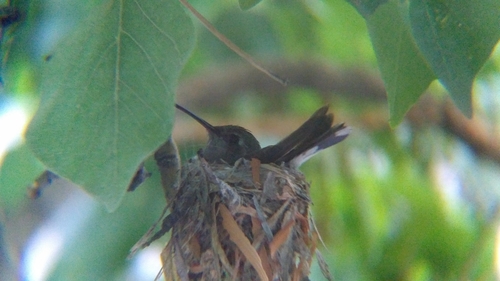 Broad-billed Hummingbird
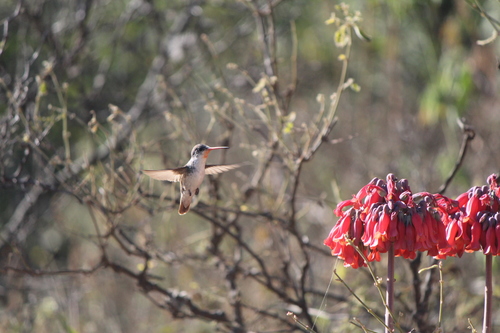 Violet-crowned Hummingbird
In breve
Il segno distintivo più affidabile per separare il Broad-billed Hummingbird dal Violet-crowned Hummingbird è la testa e la gola: i maschi del Broad-billed mostrano una gola blu metallica e una corona verde, mentre i Violet-crowned di entrambi i sessi hanno una corona violetto-blu (o turchese) e una gola e parti inferiori di un bianco puro. Entrambe le specie hanno un becco rosso con una punta nera, ma quello del Broad-billed è più corto e più luminoso. In volo o posati, i maschi del Broad-billed mostrano una coda scura e larga e parti inferiori verdi, mentre il Violet-crowned mostra sempre un ventre bianco e una coda color rame o verde-bronzo. I giovani Broad-billed assomigliano alle femmine adulte ma mancano della coda con punta bianca e del gorget blu, mentre i giovani Violet-crowned non sono descritti come distinti. Dimensioni e struttura si sovrappongono, ma il Violet-crowned è leggermente più grande e pesante.
Consigli di identificazione
- Colore della testa e della gola (Maschi adulti): I maschi del Broad-billed hanno una gola blu metallica (gorget) e una corona verde; i Violet-crowned di entrambi i sessi hanno una corona violetto-blu o turchese vivida e una gola e parti inferiori di un bianco puro. Questo è il segno migliore in buona luce.
- Parti inferiori: Il Violet-crowned mostra sempre parti inferiori bianche pure dalla gola all'undertail, con solo una leggera sfumatura oliva sui fianchi; il Broad-billed è verde sotto (maschio) o pallido con verde sopra (femmina), mai bianco puro.
- Colore della corona: Il Violet-crowned ha una corona violetto-blu o turchese brillante (entrambi i sessi), che è ovvia in buona luce e contrasta con la corona verde del Broad-billed.
- Schema della coda: I maschi del Broad-billed hanno una coda larga e blu scuro; le femmine hanno piume della coda con punta bianca. Il Violet-crowned ha una coda color rame bronzo o verde-bronzo, mai blu scuro, e senza punte bianche.
- Becco: Entrambi hanno un becco rosso con una punta nera, ma quello del Broad-billed è più corto e di un rosso più brillante, specialmente nei maschi. Il becco del Violet-crowned può apparire più lungo e meno intensamente rosso.
- Striscia oculare: Le femmine e i giovani del Broad-billed mostrano una striscia oculare bianca dietro l'occhio; il Violet-crowned non ha una striscia oculare prominente.
- Segni giovanili/immaturi: I giovani Broad-billed assomigliano alle femmine adulte ma mancano della coda con punta bianca e del gorget blu; i giovani Violet-crowned non sono descritti come distinti ma dovrebbero mostrare le parti inferiori bianche e la corona colorata.
- Dimorfismo sessuale: Il Broad-billed è fortemente dimorfico: maschi e femmine sembrano abbastanza diversi. Il Violet-crowned è solo leggermente dimorfico; entrambi i sessi sembrano molto simili, con le femmine solo più opache.
- Colore della schiena: Il Broad-billed è verde metallico sopra; il Violet-crowned è di un grigio-bruno opaco a verde-bruno sopra, privo della lucentezza metallica.
- Dimensioni: Il Violet-crowned è leggermente più grande e pesante, ma questo è sottile e non sempre affidabile sul campo.
- Forma della coda: La coda del Broad-billed è più larga e più squadrata; la coda del Violet-crowned è più affusolata e color bronzo.
- Postura posata: Entrambi si posano in modo simile, ma le parti inferiori bianche del Violet-crowned e la corona colorata sono spesso ovvie anche quando sono seduti.
- Vista in volo: In volo, cerca il lampo delle parti inferiori bianche (Violet-crowned) rispetto a quelle verdi o pallide (Broad-billed). Anche il colore e la forma della coda possono essere visibili.
- Habitat: Entrambi utilizzano habitat simili; non fare affidamento solo sulla posizione o sul contesto per la separazione.
- Trappole: I giovani Broad-billed possono mancare di caratteristiche maschili ovvie e possono essere confusi con le femmine del Violet-crowned, ma quest'ultimo mostrerà sempre una corona colorata e parti inferiori bianche pure.
Taglia
Il Violet-crowned Hummingbird è leggermente più grande e pesante: 10–11,5 cm di lunghezza e 5,1–5,8 g di peso, rispetto agli 8–10 cm e 3–4 g del Broad-billed Hummingbird. Entrambi hanno un'apertura alare simile (circa 13 cm per il Broad-billed), ma il Violet-crowned appare un po' più robusto e lungo nel complesso. Sul campo, questa differenza è sottile e non sempre affidabile per una rapida separazione.
Piumaggio
- Giovani/Immaturi: I giovani Broad-billed Hummingbirds assomigliano alle femmine adulte (verdi sopra, pallidi sotto, striscia oculare bianca), ma i maschi giovani mancano del gorget blu del maschio adulto e non hanno la coda con punta bianca delle femmine adulte. I giovani Violet-crowned Hummingbirds non sono descritti in modo distintivo ma probabilmente assomigliano agli adulti, poiché entrambi i sessi sono simili.
- Maschi adulti: I maschi del Broad-billed hanno un corpo verde metallico, gorget blu e coda larga blu scuro. I maschi del Violet-crowned hanno una corona violetto-blu o turchese vivida, schiena grigio-bruna opaca a verde-bruna, coda color rame o verde-bronzo e parti inferiori bianche pure dalla gola all'undertail.
- Femmine adulte: Le femmine del Broad-billed sono verdi metalliche sopra, pallide sotto, con una striscia oculare bianca e piume della coda con punta bianca. Le femmine del Violet-crowned sono quasi identiche ai maschi ma più opache, mostrando comunque la corona violetto/turchese e le parti inferiori bianche pure.
- Becco: Entrambe le specie hanno un becco rosso con una punta nera, ma quello del Broad-billed è più corto e di un rosso più brillante, specialmente nei maschi.
Comportamento
Entrambe le specie sono colibrì attivi e diurni. I Broad-billed Hummingbirds sono descritti come particolarmente attivi durante il giorno, ma non ci sono differenze comportamentali diagnostiche notate tra queste due specie nelle fonti fornite. Entrambi possono essere visti nutrirsi in tipi simili di fiori e sostare o posarsi in habitat aperti.
Habitat
Entrambe le specie si trovano in Messico e nel sud-ovest degli Stati Uniti, spesso in habitat simili come canyon, boschi ripariali e giardini. Non c'è una forte separazione degli habitat sul campo all'interno del loro intervallo sovrapposto, quindi l'habitat da solo non è un separatore affidabile.
Broad-billed Hummingbird · Violet-crowned Hummingbird · I miei uccelli difficili