

Blue-gray Tanager vs Paradise Tanager
Thraupis episcopus contro Tangara chilensis
Fai un quiz con Blue-gray Tanager e Paradise Tanager
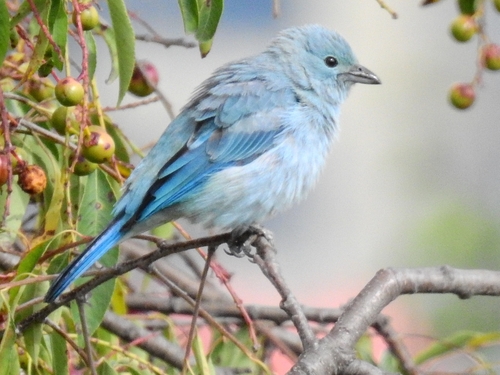 Blue-gray Tanager
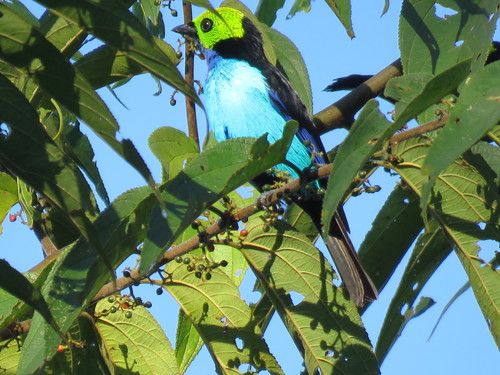 Paradise Tanager
In breve
Il modo più affidabile per separare il Blue-gray Tanager dal Paradise Tanager è attraverso il modello di colore generale: il Blue-gray Tanager è un uccello di un blu chiaro e blu-grigio abbastanza uniforme con una macchia sulla spalla contrastante, mentre il Paradise Tanager è un mix sorprendente di parti superiori nere, parti inferiori blu cielo e una testa verde brillante, con un sottocoda giallo o rosso vivace. Il Blue-gray Tanager è più grande e più pesante, con un becco più spesso, e manca della schiena nera e della testa verde del Paradise Tanager. I Blue-grey Tanagers immaturi sono più opachi ma non mostrano mai i blocchi di colore audaci del Paradise Tanager. Se vedi un tanager con una schiena nera e una testa verde, è Paradise; se l'uccello è per lo più blu-grigio con una spalla blu, è il Blue-gray Tanager.
Consigli di identificazione
- Colore della testa: Il Paradise Tanager ha sempre una testa verde brillante; il Blue-gray Tanager ha una testa blu chiaro o blu-grigio. Nessun Blue-gray Tanager mostra verde sulla testa a qualsiasi età.
- Colore della schiena: La schiena del Paradise Tanager è solidamente nera, in netto contrasto con la testa verde e le parti inferiori blu. Il Blue-gray Tanager ha parti superiori blu o blu-grigio, mai nere.
- Parti inferiori: Entrambi hanno parti inferiori blu, ma quelle del Paradise Tanager sono di un blu cielo più brillante, nettamente distinte dalla schiena nera e dalla testa verde. Le parti inferiori del Blue-gray Tanager sono più chiare, più uniformi con la testa.
- Macchia sulla spalla: Il Blue-gray Tanager mostra una macchia sulla spalla distinta (il colore varia a seconda della sottospecie: lavanda, blu, bianco o blu scuro), che può risaltare in volo o posato. Il Paradise Tanager non ha alcuna macchia sulla spalla contrastante.
- Colore del sottocoda: Il Paradise Tanager ha un sottocoda giallo vivace e rosso o completamente rosso (a seconda della sottospecie), una caratteristica mai mostrata dal Blue-gray Tanager.
- Struttura del becco: Il Blue-gray Tanager ha un becco notevolmente più spesso e tozzo; il becco del Paradise Tanager è più fine e delicato.
- Piumaggio giovanile/immaturo: I giovani Blue-grey Tanagers sono più opachi ma ancora blu-grigio, non mostrando mai nero, verde o i colori vivaci del sottocoda del Paradise Tanager. I Paradise Tanagers immaturi mantengono il modello nero e verde.
- Dimensioni e forma: Il Blue-gray Tanager è più grande e più pesante (16–18 cm, 30–40 g) rispetto al Paradise Tanager (13.5–15 cm, 21 g), e può apparire più robusto sul campo.
- Habitat: Negli habitat urbani, aperti o di margine, il Blue-gray Tanager è molto più probabile. Il Paradise Tanager è strettamente un uccello della canopia forestale nella regione amazzonica.
- Comportamento: Il Paradise Tanager è più probabile che venga visto in alto nella canopia, spesso con stormi misti; il Blue-gray Tanager è più versatile in altezza e habitat.
- Vocalizzazioni: Ascolta il cinguettio stridulo e le chiamate 'tseee/tsuup' del Blue-gray Tanager; il Paradise Tanager non condivide questo stile vocale.
- Variazione delle sottospecie: Il colore della macchia sulla spalla del Blue-gray Tanager varia a seconda della regione, ma non si avvicina mai alla combinazione nero-verde-rosso/giallo del Paradise Tanager.
- Viste in volo: In volo, il Blue-gray Tanager può mostrare la macchia sulla spalla come un lampo di colore, ma mai il sottocoda audace o la schiena nera del Paradise Tanager.
- Sessi: Entrambe le specie sono sessualmente simili, quindi il sesso non è un segno utile sul campo.
- Trappole: I Blue-grey Tanagers immaturi possono apparire sbiaditi, ma anche in quel caso, la mancanza di nero e verde sulla testa/schiena e l'assenza di un sottocoda brillante escluderanno il Paradise Tanager.
Taglia
Il Blue-gray Tanager è nettamente più grande e più pesante del Paradise Tanager. Il Blue-gray Tanager misura 16–18 cm di lunghezza e pesa 30–40 g, mentre il Paradise Tanager è più piccolo a 13.5–15 cm e solo 21 g. Sul campo, il Blue-gray Tanager appare spesso più robusto e massiccio, con un becco più spesso, rispetto al più delicato e compatto Paradise Tanager.
Piumaggio
I Blue-grey Tanagers giovanili e immaturi sono versioni più opache dell'adulto, con toni blu meno vivaci, ma mancano comunque di qualsiasi nero o verde sulla testa o sulla schiena. Gli adulti hanno una testa e parti inferiori blu chiaro, parti superiori blu più scure e una macchia sulla spalla che varia di tonalità (lavanda, blu, bianco o blu scuro a seconda della sottospecie). Il Paradise Tanager, indipendentemente dall'età, è molto più vivacemente colorato: gli adulti hanno una testa verde chiara, parti superiori nere, parti inferiori blu cielo e un sottocoda giallo e rosso o completamente rosso (a seconda della sottospecie). La schiena nera e la testa verde sono uniche per il Paradise Tanager e non appaiono mai nel Blue-gray Tanager. Nessuna età del Blue-gray Tanager mostra la combinazione nero-verde del Paradise, e nessun Paradise Tanager è mai per lo più blu-grigio. Entrambe le specie hanno un colore simile di becco e zampe (scuro/nerastro), ma il becco del Blue-gray Tanager è più spesso.
Comportamento
Entrambe le specie sono attive, sociali e spesso viste in coppie o piccoli gruppi, ma il Paradise Tanager tende a muoversi più in alto nella canopia ed è più probabile che si unisca a stormi misti di specie nella foresta umida. Il Blue-gray Tanager è più adattabile, spesso visto in boschi aperti, giardini e aree urbane, a volte più in basso nella vegetazione. In volo, il Blue-gray Tanager può apparire più pesante e diretto, mentre il Paradise Tanager è più veloce e agile.
Habitat
Il Blue-gray Tanager è diffuso e adattabile, trovato dal Messico al nord del Sud America in una varietà di habitat tra cui boschi aperti, giardini e persino parchi urbani. Il Paradise Tanager è ristretto alle foreste tropicali e subtropicali umide della regione amazzonica, di solito nella canopia o al margine della foresta. Se ti trovi in un habitat disturbato o urbano, il Blue-gray Tanager è molto più probabile; se sei nel profondo della foresta pluviale amazzonica, il Paradise Tanager è la specie attesa.
Voce
Il Blue-gray Tanager emette un canto stridulo con note di chiamata 'tseee' e 'tsuup'. Non c'è una descrizione dettagliata della voce del Paradise Tanager nelle note, ma non è noto per le stesse frasi stridule e cinguettanti. Se senti le chiamate caratteristiche del Blue-gray Tanager, supporta quella identificazione.
Blue-gray Tanager · Paradise Tanager · I miei uccelli difficili