

Blue-billed Teal vs Cape Shoveler
Spatula hottentota contro Spatula smithii
Fai un quiz con Blue-billed Teal e Cape Shoveler
 Blue-billed Teal
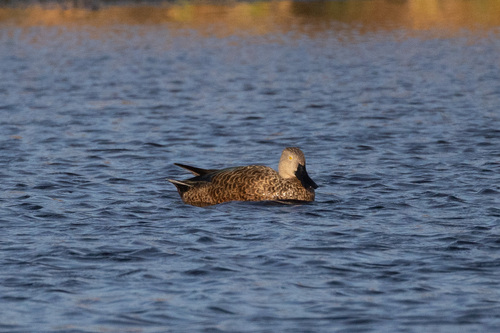 Cape Shoveler
In breve
Il modo più affidabile per separare il Blue-billed Teal dal Cape Shoveler è la dimensione e la forma del becco: il Cape Shoveler è molto più grande e ha un becco largo e a pala, mentre il Blue-billed Teal è piccolo con un becco bluastro, proporzionalmente corto e stretto. In volo o sull'acqua, il Blue-billed Teal mostra una struttura compatta e uno speculum verde con bordi bianchi e neri, mentre il Cape Shoveler è più robusto, con un'ala anteriore blu pallido e uno speculum verde separato da un bordo bianco. I maschi adulti di Blue-billed Teal hanno un petto distintamente macchiato e una corona scura con un volto chiaro, mentre gli adulti di Cape Shoveler sono più uniformemente macchiati di marrone-grigio. I giovani e le femmine di entrambi possono essere difficili da distinguere, ma le differenze di dimensione e becco rimangono evidenti. Entrambe le specie possono verificarsi insieme nel sud dell'Africa, ma il Cape Shoveler è più localizzato e gregario.
Consigli di identificazione
- Size is the first check: Il Cape Shoveler è molto più grande e robusto del Blue-billed Teal. Se vedi due anatre simili insieme, quella più piccola è quasi certamente il Blue-billed Teal.
- Bill shape is crucial: Il Cape Shoveler ha un becco largo, lungo e spatolato che sembra sovradimensionato per la sua testa. Il Blue-billed Teal ha un becco bluastro, proporzionalmente corto e stretto con una punta nerastra. Questo è evidente sia negli uccelli in perching che in quelli che nuotano.
- Wing pattern in flight or at rest: Il Blue-billed Teal (tutte le età) mostra uno speculum verde bordato dietro da nero e poi da una barra bianca. Il Cape Shoveler ha un'ala anteriore blu pallido (copritrici) e uno speculum verde separato da un bordo bianco; le femmine hanno un'ala anteriore grigia. Questo è meglio visto in volo o quando gli uccelli si pettinano.
- Adult male Blue-billed Teal: Cerca una corona marrone scuro, un volto chiaro e un petto e un collo fortemente macchiati. Il volto è decisamente più chiaro della corona, con una macchia nerastra vicino all'orecchio.
- Cape Shoveler adult plumage: Uniformemente macchiato di grigio-marrone, con i maschi che hanno una testa più chiara rispetto alle femmine. Nessun forte contrasto tra corona e volto.
- Leg and eye color: Il Blue-billed Teal ha zampe grigio-bluastre e occhi marroni; il Cape Shoveler ha zampe arancioni opache e, nei maschi, occhi gialli. Questi sono sottili ma possono aiutare a distanza ravvicinata.
- Juvenile/female confusion: Le femmine e i giovani di entrambe le specie sono più opachi e meno distinti, ma le dimensioni e la forma del becco rimangono affidabili. I giovani Blue-billed Teal sono più piccoli e meno macchiati degli adulti, ma non si avvicinano mai alla massa o alla dimensione del becco del Cape Shoveler.
- Feeding behavior: Se vedi un'anatra che muove il becco da un lato all'altro sulla superficie dell'acqua, è probabile che sia un Cape Shoveler. Il Blue-billed Teal si nutre in modo più convenzionale.
- Group size: Grandi stormi su acque aperte sono più probabilmente Cape Shoveler. Il Blue-billed Teal è più spesso in coppie o piccoli gruppi.
- Habitat overlap: Entrambe possono verificarsi nelle zone umide del sud Africa, ma il Blue-billed Teal è più diffuso e può essere trovato in una gamma più ampia di tipi di zone umide.
- Voice: I richiami sono raramente utili, ma un 'burping' meccanico da un'anatra piccola è il Blue-billed Teal; un 'rarr' o 'cawick' silenzioso o un quack da un'anatra grande è il Cape Shoveler.
- Sex differences: Il maschio Cape Shoveler ha una testa più chiara e occhi gialli, ma entrambi i sessi sono simili. Il maschio Blue-billed Teal è più fortemente marcato rispetto alla femmina o al giovane.
- In mixed flocks: Controlla sempre per l'anatra piccola e compatta con un becco corto tra i shovelers—questo sarà il Blue-billed Teal.
- When in doubt: Dimensione e forma del becco sono le più affidabili, anche a distanza o in scarsa illuminazione.
- Common pitfalls: Non fare affidamento solo sul modello del piumaggio, specialmente in uccelli in eclipse o giovani—struttura e dimensione sono molto più affidabili per queste due specie.
Taglia
Il Cape Shoveler è sostanzialmente più grande: 51–53 cm di lunghezza contro 33–35 cm per il Blue-billed Teal ([wikipedia]). Il shoveler ha anche un becco molto più largo e lungo. Il Blue-billed Teal è un'anatra piccola e delicata, che pesa 53–288 g, mentre il Cape Shoveler è molto più pesante (peso esatto non fornito, ma descritto costantemente come grande e robusto). L'apertura alare è anche maggiore nel Cape Shoveler (non specificata, ma implicata dalla dimensione complessiva). Queste differenze di dimensione sono evidenti sul campo, anche a distanza o in stormi misti.
Piumaggio
I giovani e le femmine di Blue-billed Teal sono più opachi e meno macchiati rispetto ai maschi adulti, ma mostrano comunque un piccolo e ordinato modello con una struttura compatta. L'ala superiore in tutte le età di Blue-billed Teal è nerastra con uno speculum verde, bordato dietro da barre nere strette e poi bianche. Il Cape Shoveler, in tutte le piumature, mostra un'ala anteriore blu pallido (copritrici) e uno speculum verde separato da un bordo bianco; le femmine hanno un'ala anteriore grigia invece di blu. Il maschio adulto di Blue-billed Teal ha una corona marrone scuro, un volto chiaro e un petto fortemente macchiato, mentre il Cape Shoveler è più uniformemente macchiato di grigio-marrone con una testa più chiara nei maschi. Entrambi i sessi di Cape Shoveler hanno zampe arancioni opache e occhi gialli (maschio), mentre il Blue-billed Teal ha zampe grigio-bluastre e occhi marroni. I giovani Blue-billed Teal sono più opachi e meno distintamente marcati degli adulti, ma sono comunque più piccoli e con un becco più corto rispetto a qualsiasi Cape Shoveler.
Comportamento
Il Cape Shoveler è spesso visto in grandi stormi gregari al di fuori della stagione di riproduzione, nutrendosi muovendo il suo ampio becco da un lato all'altro per filtrare il cibo dall'acqua. Il Blue-billed Teal è più probabile che venga visto in coppie o piccoli gruppi ed è generalmente meno appariscente. Entrambe le specie si nutrono in modo superficiale, ma la tecnica di alimentazione del shoveler è più distintiva a causa del suo becco specializzato. Il Blue-billed Teal è relativamente poco dimostrativo nel comportamento di corteggiamento, con sottili display di corteggiamento.
Habitat
Entrambe le specie utilizzano zone umide aperte, paludi e prati umidi, ma il Cape Shoveler preferisce acque aperte con una vegetazione emergente e è più probabile che venga visto in grandi stormi su zone umide aperte. Il Blue-billed Teal è diffuso in una varietà di habitat umidi attraverso l'Africa sub-sahariana e il Madagascar, spesso in numeri più piccoli e talvolta in zone umide più vegetate o isolate. L'overlap è possibile nel sud Africa, ma il Cape Shoveler è più localizzato e meno diffuso.
Voce
Il Cape Shoveler è generalmente silenzioso, ma i maschi emettono richiami 'rarr' e 'cawick', mentre le femmine hanno un quack. I maschi di Blue-billed Teal possono produrre un morbido richiamo meccanico 'burping' durante il display, ma entrambe le specie non sono particolarmente vocali e i richiami sono raramente diagnostici a distanza.