

Black-winged Petrel vs Buller's Shearwater
Pterodroma nigripennis contro Ardenna bulleri
Fai un quiz con Black-winged Petrel e Buller's Shearwater
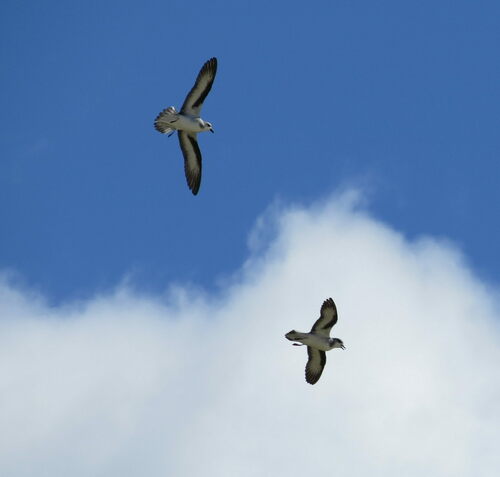 Black-winged Petrel
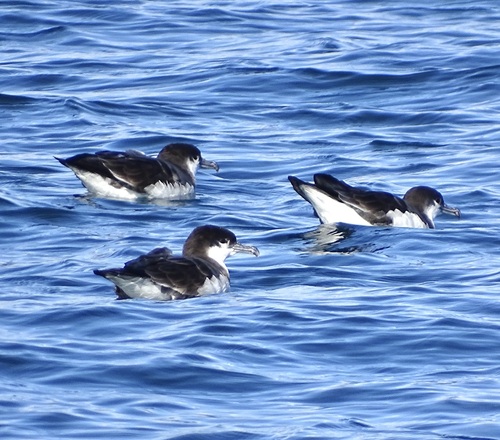 Buller's Shearwater
In breve
Il segno di campo più affidabile per separare il Black-winged Petrel dal Buller's Shearwater è il modello delle ali superiori in volo: il Buller's Shearwater di tutte le età mostra una audace 'M' nera spezzata sulle ali superiori, mentre il Black-winged Petrel ha un'ala esterna scura più uniforme con un'ala interna chiara, priva della forma 'M'. Il Buller's è anche molto più grande e massiccio, con una coda a forma di cuneo, rispetto alla costruzione più piccola e snella del petrel e alla coda quadrata. Entrambe le specie hanno parti inferiori bianche e facce chiare, ma la dimensione e il modello distintivo delle ali superiori del Buller's Shearwater sono inconfondibili in mare. La struttura, la forma della coda e lo stile di volo aiutano anche in viste difficili.
Consigli di identificazione
- Modello delle ali superiori in volo (tutte le età): Il Buller's Shearwater mostra una audace 'M' nera spezzata sulle ali superiori, con un pannello chiaro tra le primarie scure e una striscia scura dai terziali ai copritrici. Questa 'M' è visibile in tutte le livree ed è unica tra i grandi shearwater. Il Black-winged Petrel manca di questo modello, mostrando invece un'ala esterna scura più uniforme e un'ala interna chiara, senza alcuna 'M' o forte contrasto.
- Dimensione e struttura: Il Buller's è molto più grande e pesante, con un'apertura alare ampia e un corpo robusto. Il Black-winged Petrel è piccolo, snello e più delicato nella costruzione. Se visti insieme, la differenza di dimensione è drammatica.
- Forma della coda: Il Buller's Shearwater ha una coda a forma di cuneo, scura, mentre il Black-winged Petrel ha una coda quadrata con barre nere e bianche. Questo può essere visto in buone viste, specialmente quando si inclina o atterra.
- Modello della testa: Entrambe le specie hanno facce chiare, ma il Buller's ha grigio che si estende fino all'occhio e guance molto bianche, che possono apparire brillanti in luce intensa. Il Black-winged Petrel ha un cappuccio e una nuca grigio chiaro, guance bianche e un collare grigio scuro—cerca il collare per aiutarti a separarlo.
- Parti inferiori: Entrambi sono bianchi sotto, quindi questo non è utile per la separazione.
- Stile di volo: Il Buller's utilizza planate stabili e potenti e battiti d'ala superficiali, riflettendo la sua dimensione. Il Black-winged Petrel è più galleggiante e agile, con colpi rapidi e cambi veloci.
- Becco: Entrambi hanno becchi scuri, ma il Buller's è proporzionalmente più lungo e pesante, corrispondente alla sua testa più grande. Questo è sottile a distanza.
- Trappole di livrea: Il modello 'M' del Buller's potrebbe essere scambiato per un petrel gadfly, ma la dimensione è molto maggiore. L'ala esterna scura del Black-winged Petrel può sembrare uno shearwater a colpo d'occhio, ma manca della 'M' ed è molto più piccola.
- Separazione dei giovanili: Il giovanile Buller's Shearwater mostra già il modello dell'ala adulta, quindi la 'M' è sempre presente. La livrea immatura del Black-winged Petrel non è descritta come differente dall'adulto.
- Contesto e distribuzione: Il Buller's è più probabile vicino alle Americhe, specialmente al largo della costa occidentale degli Stati Uniti in tarda estate/autunno; il Black-winged Petrel è più centrale nel Pacifico. Usa la posizione per supportare, non sostituire, i segni di campo.
- Barre sulla coda: Cerca barre nere e bianche sulla coda del Black-winged Petrel in buone viste; la coda del Buller's è uniformemente scura e a forma di cuneo.
- Contrasto delle guance: Entrambi possono mostrare guance bianche, ma quelle del Buller's sono particolarmente brillanti e messe in risalto dal grigio che si estende fino all'occhio.
- Fagotti misti: Entrambi possono unirsi a gruppi di alimentazione misti, ma il Buller's è più probabile che segua le navi.
- Viste in perching/nesting: Sulla terra, il Buller's nidifica in pendii boscosi o crepe rocciose; il Black-winged Petrel preferisce terreni sabbiosi su pendii erbosi, ma questi sono raramente visti dai birdwatcher.
- Quando hai dubbi: Concentrati sul modello delle ali superiori e sulla dimensione complessiva—questi sono le differenze più affidabili e visibili in mare.
Taglia
Il Buller's Shearwater è quasi due volte più pesante del Black-winged Petrel (326 g contro 167 g) ed è molto più lungo (46–47 cm contro 29 cm) con un'apertura alare più ampia (97–99 cm contro 67 cm) [wikidata, wikipedia]. Sul campo, il Buller's appare come un grande shearwater con ali ampie, mentre il Black-winged Petrel è un piccolo petrel snello con ali lunghe e strette. Se visti insieme, il divario di dimensione è ovvio; il Buller's è più massiccio e potente in volo, mentre il Black-winged Petrel appare delicato e agile.
Piumaggio
Il modello delle ali superiori in volo è la chiave della differenza per tutte le età: il Buller's Shearwater mostra una audace 'M' nera spezzata sulle ali superiori, con primarie scure e una striscia scura dai terziali ai copritrici, separati da un pannello grigio chiaro che può apparire quasi bianco in luce intensa. Questa 'M' è unica tra i grandi shearwater e imita alcuni petrel gadfly più piccoli, ma è molto più audace e ampia di qualsiasi cosa sul Black-winged Petrel. Il Black-winged Petrel, al contrario, ha ali interne grigio chiaro e ali esterne grigio scuro-nerastre, ma manca di qualsiasi 'M' o forte contrasto—il scuro è per lo più confinato al bordo esterno. Entrambi hanno parti inferiori bianche. Sulla testa, entrambe le specie mostrano facce chiare, ma il Buller's ha il grigio delle parti superiori che si estende fino al livello degli occhi, con guance bianche che possono apparire brillanti. Il Black-winged Petrel ha un cappuccio e una nuca grigio chiaro, guance bianche e un collare grigio scuro. Le code differiscono: quella del Buller's è a forma di cuneo e scura, mentre quella del Black-winged Petrel è quadrata e barrata di nero e bianco. Il giovanile Buller's Shearwater mostra già il modello 'M' dell'adulto, quindi questo segno è affidabile per tutte le età; la livrea immatura del Black-winged Petrel non è descritta come differente dall'adulto in queste fonti.
Comportamento
Il Buller's Shearwater vola tipicamente con planate stabili e potenti e battiti d'ala superficiali, utilizzando la sua dimensione e le lunghe ali per un volo dinamico. Il Black-winged Petrel è più galleggiante e agile, spesso utilizzando battiti d'ala rapidi e tremolanti e rapidi cambi di direzione. In mare, il Buller's può seguire le navi o unirsi a gruppi di alimentazione misti, mentre il Black-winged Petrel è più probabile che venga visto da solo o in piccoli gruppi, scivolando basso sulle onde. Sulla terra, entrambi nidificano in tane, ma il Buller's preferisce pendii boscosi e crepe rocciose, mentre il Black-winged Petrel scava tunnel in terreni sabbiosi su pendii erbosi.
Habitat
Entrambe le specie sono pelagiche e trascorrono la maggior parte della loro vita lontano in mare, venendo a terra solo per riprodursi. Il Buller's Shearwater nidifica principalmente sulle Isole Poor Knights al largo della Nuova Zelanda settentrionale e si distribuisce ampiamente attraverso il Pacifico, spesso visto al largo della costa occidentale delle Americhe in tarda estate e autunno. Il Black-winged Petrel nidifica su isole sparse del Pacifico dall'Australia orientale alla Polinesia francese ed è più comune tra il Perù e le Hawaii al di fuori della stagione di nidificazione. L'overlap in mare è possibile, ma il Buller's è generalmente più costiero vicino alle Americhe, mentre il Black-winged Petrel è più centrale nel Pacifico. Entrambi possono essere visti in gruppi misti di uccelli marini, ma il contesto e la posizione possono aiutare se la vista è scarsa.
Black-winged Petrel · Buller's Shearwater · I miei uccelli difficili