
Black-throated Bobwhite vs Spotted Wood-Quail
Colinus nigrogularis contro Odontophorus guttatus
Fai un quiz con Black-throated Bobwhite e Spotted Wood-Quail
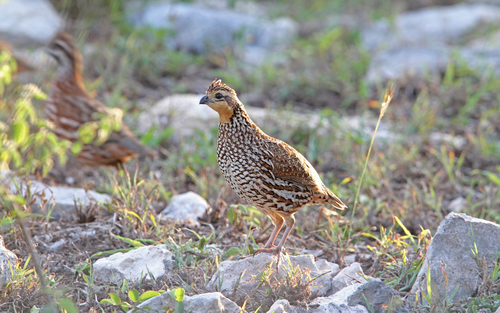 Black-throated Bobwhite
 Spotted Wood-Quail
In breve
Il segno distintivo più affidabile tra Black-throated Bobwhite e Spotted Wood-Quail è la gola nera nettamente definita e il viso bordato di bianco del maschio bobwhite, rispetto alla gola a strisce nere e bianche più diffusa e alla cresta arancione del wood-quail. Gli Spotted Wood-Quail immaturi hanno macchie più piccole e color crema sotto e una gola scura (non nera), il che può causare confusione con i bobwhite femmina o giovanili, ma la dimensione maggiore del wood-quail, le macchie bianche più audaci sulle parti inferiori e il comportamento di foraggiamento di gruppo sono indizi forti. L'habitat è anche un separatore importante: il Black-throated Bobwhite predilige le praterie di pianura e le aree cespugliose, mentre lo Spotted Wood-Quail è una specie di foresta montana. Se vedi un quaglia compatto con una gola nera e marcature facciali bianche nette in un paese aperto, è quasi certamente un bobwhite; un uccello più grande, con cresta arancione e macchie bianche in una foresta montana è un wood-quail.
Consigli di identificazione
- Controlla la cresta arancione: Solo lo Spotted Wood-Quail ha una cresta arancione prominente, sollevata quando è eccitato. Il Black-throated Bobwhite non mostra mai questa caratteristica, indipendentemente dall'età o dal sesso.
- Guarda la gola: Il Black-throated Bobwhite maschio adulto ha una gola nera nettamente definita bordata di bianco; la femmina ha una gola color crema. Lo Spotted Wood-Quail (entrambi i sessi) ha una gola nera striata di bianco, ma non è mai così nettamente bordata come nel maschio bobwhite. I wood-quail immaturi hanno una gola scura, non nera.
- Esamina le parti inferiori: Lo Spotted Wood-Quail mostra sempre audaci macchie bianche su parti inferiori olivastre o rugginose (adulti), o macchie più piccole e color crema (immaturi). Il Black-throated Bobwhite ha parti inferiori bianche con scalloping nero (maschio) o bianche barrate di ruggine e nero (femmina), mai grandi macchie bianche.
- Schema facciale: Il Black-throated Bobwhite maschio ha una fronte bianca, una corona nera e una striscia nera sugli occhi, creando un viso ad alto contrasto e sorprendente. Lo Spotted Wood-Quail ha una fronte marrone scuro e manca di un tale schema facciale netto.
- Parti superiori: Le parti superiori del bobwhite sono marrone rossiccio con macchie e barrature bianche; le parti superiori del wood-quail sono marrone scuro con macchie nere e rugginose, apparendo più uniformi e meno decorate da lontano.
- Dimensione e forma: Lo Spotted Wood-Quail è molto più grande e pesante (25 cm, 300 g) rispetto al Black-throated Bobwhite (20 cm). Sul campo, il wood-quail appare più robusto, specialmente in gruppi. Usa cautela con uccelli solitari o viste scarse.
- Comportamento di gruppo: I wood-quail si trovano quasi sempre in gruppi di 4-10, muovendosi insieme e molto diffidenti. I bobwhite sono più spesso visti singolarmente o in coppie.
- Contesto dell'habitat: Se ti trovi in una foresta montana sopra i 1000 m, specialmente in densi bambù o cespugli, aspettati lo Spotted Wood-Quail. In praterie aperte di pianura, cespugli o mangrovie, aspettati il Black-throated Bobwhite.
- Risposta al volo: Lo Spotted Wood-Quail tipicamente fugge a piedi ma può esplodere in un breve volo veloce verso il riparo se spaventato. Anche il bobwhite è un uccello terrestre ma è meno legato a coperture dense.
- Confusione giovanile: I wood-quail immaturi hanno macchie più piccole e color crema sotto e una gola scura, che possono sembrare superficialmente simili a femmine o giovanili bobwhite. Tuttavia, la dimensione maggiore del wood-quail e il comportamento di gruppo rimangono buoni indizi.
- Vocalizzazioni: Se senti un chiaro duetto fischiato (‘coowit CAWwit coowit COO’), è lo Spotted Wood-Quail. Le chiamate del bobwhite non sono descritte qui, quindi usa questo solo per un'identificazione positiva del wood-quail.
- Differenze sessuali: La femmina bobwhite è più chiara sotto con una gola color crema e parti inferiori più barrate; la femmina wood-quail è simile al maschio ma con una cresta più opaca.
- Nessuna sovrapposizione di aree nella maggior parte dei siti: Anche se entrambe le specie si trovano in Messico e America Centrale, le loro preferenze di habitat raramente si sovrappongono. Usa la posizione e l'elevazione come prove di supporto forti.
- Nessuna audace macchia bianca nel bobwhite: Se vedi audaci macchie bianche sulle parti inferiori, non è mai un Black-throated Bobwhite.
- Nessuna cresta arancione nel bobwhite: Qualsiasi accenno di una cresta arancione esclude completamente il bobwhite.
Taglia
Il Black-throated Bobwhite è più piccolo e più compatto, circa 20 cm di lunghezza [wikipedia]. Lo Spotted Wood-Quail è notevolmente più grande a 25 cm e molto più pesante (300 g) [wikipedia]. Sul campo, la massa e il corpo più lungo del wood-quail sono evidenti, specialmente quando visti insieme o con oggetti familiari per scala. L'aspetto più piccolo e arrotondato del bobwhite è un buon indizio, ma fai attenzione agli uccelli solitari dove la dimensione è difficile da giudicare.
Piumaggio
- Giovanile/Immaturi: Gli Spotted Wood-Quail immaturi hanno macchie bianche più piccole e color crema sotto e una gola scura (non nera), mancando delle audaci macchie bianche e delle striature nere e bianche della gola degli adulti [wikipedia]. Le femmine e i Black-throated Bobwhite immaturi mostrano una gola color crema e parti inferiori bianche barrate di ruggine e nero, ma mai le audaci macchie bianche del wood-quail.
- Maschio adulto: I maschi Black-throated Bobwhite hanno una gola nera nettamente definita bordata di bianco, una fronte bianca e una corona nera e striscia sugli occhi. Le loro parti superiori sono marrone rossiccio con macchie bianche, e le parti inferiori sono bianche scallopate bordate di nero, con un ventre inferiore color cannella [wikipedia]. Gli adulti Spotted Wood-Quail (entrambi i sessi) hanno una fronte marrone scuro, cresta arancione e guance/gola nere striate di bianco. Le parti inferiori sono olivastre o rugginose, sempre audacemente macchiate di bianco.
- Femmina adulta: Le femmine bobwhite hanno una gola color crema, un collo e un mantello neri e più chiari macchiati, e parti inferiori bianche barrate di ruggine e nero. Le femmine wood-quail assomigliano ai maschi ma con una cresta più opaca.
- Differenza chiave: Solo lo Spotted Wood-Quail mostra audaci macchie bianche sulle parti inferiori e una cresta arancione. Solo il maschio Black-throated Bobwhite ha una gola nera nettamente bordata e marcature facciali bianche.
Comportamento
Lo Spotted Wood-Quail si trova tipicamente in gruppi di 4-10, foraggiando insieme a terra e spesso molto timido, fuggendo a piedi o con un'improvvisa esplosione di volo se spaventato [wikipedia]. Sono più visibili all'alba lungo i sentieri forestali. Il Black-throated Bobwhite è anche un uccello terrestre ma è più probabile che venga visto singolarmente o in coppie, ed è meno legato a coperture dense. Entrambe le specie grattano per semi e insetti, ma il comportamento di gruppo del wood-quail e la tendenza a scomparire nel fitto sottobosco montano sono distintivi.
Habitat
L'habitat è un separatore importante. Il Black-throated Bobwhite si trova in habitat di pianura: terreni cespugliosi secchi, praterie stagionalmente umide, mangrovie costiere e aree aperte degradate da Belize a Nicaragua [wikipedia]. Lo Spotted Wood-Quail è ristretto a foreste montane e cespugli densi, di solito sopra i 1000 m dal sud del Messico al Panama occidentale [wikipedia]. Se ti trovi in pianure aperte, quasi mai è un wood-quail; in fitte foreste montane, quasi mai è un bobwhite.
Voce
Lo Spotted Wood-Quail emette un chiaro duetto fischiato: ‘coowit CAWwit coowit COO’, e le chiamate di contatto sono chiari cinguettii e pigolii [wikipedia]. Le vocalizzazioni del Black-throated Bobwhite non sono descritte nelle note fornite, quindi la voce è solo diagnostica se senti il duetto distintivo del wood-quail.
Black-throated Bobwhite · Spotted Wood-Quail · I miei uccelli difficili