

Dendrocigna beccorosso vs Oca collorosso
Dendrocygna autumnalis contro Branta ruficollis
Fai un quiz con Dendrocigna beccorosso e Oca collorosso
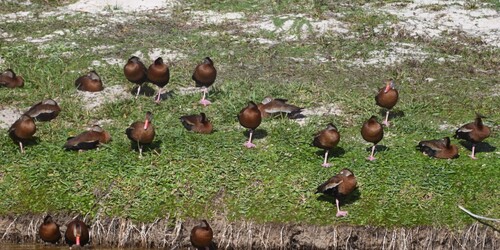 Dendrocigna beccorosso
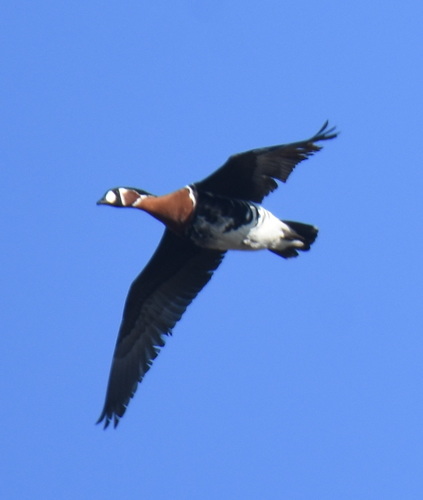 Oca collorosso
In breve
Il segno distintivo più affidabile tra Dendrocigna beccorosso e Oca collorosso è la vivace macchia bianca sulle ali del beccorosso, che è evidente in volo per tutte le età e assente nell'oca. Negli uccelli in posa o in nuoto, concentrati sul colore del becco e sul motivo del viso: Dendrocigna beccorosso ha un lungo becco rosa e un viso grigio chiaro, mentre l'Oca collorosso mostra un becco corto e scuro e un viso tricolore sorprendente con macchie bianche e rufous. I beccorosso giovani hanno un becco grigio e meno contrasto ma mostrano comunque la barra bianca sulle ali in volo, mentre l'oca ha sempre un motivo audace. Anche la struttura e la dimensione differiscono, con l'oca che è più robusta e con un collo più corto. Usa questi segni in combinazione, specialmente quando osservi stormi o uccelli distanti.
Consigli di identificazione
- Macchia bianca sulle ali in volo (tutte le età): Dendrocigna beccorosso mostra sempre una vivace macchia bianca sulla parte superiore dell'ala (secondarie) in volo, in contrasto con le primarie nere; l'Oca collorosso non mostra mai questo, avendo invece ali scure con blocchi bianchi e rufous nel corpo.
- Colore e forma del becco: Il beccorosso ha un lungo becco rosa brillante (grigio nei giovani); l'oca ha un becco corto e scuro. Il colore del becco è visibile anche da lontano ed è un separatore rapido quando gli uccelli sono in nuoto o in posa.
- Motivo del viso: L'Oca collorosso ha un viso tricolore sorprendente: guance rufous profonde, strisce bianche e corona nera; il beccorosso ha un viso e un collo grigio chiaro con un sottile anello oculare bianco, privo di qualsiasi striscia facciale rufous o bianca audace.
- Pancia e coda: Il beccorosso ha una pancia e una coda nere con un corpo marrone castagna; l'oca ha un petto rufous e fianchi neri fuligginosi, con macchie bianche sui lati.
- Contrasto del piumaggio nei giovani: I beccorosso giovani hanno un becco grigio e meno contrasto sulla pancia ma mantengono la macchia bianca sulle ali; le oche giovani hanno ancora un motivo audace, con colore del viso e del petto presenti.
- Differenze strutturali: Il beccorosso ha un collo lungo, gambe lunghe e una corporatura snella; l'oca è compatta, con un collo spesso e un petto profondo. In volo, il beccorosso appare allungato e sciolto, l'oca compatta e diretta.
- Comportamento di posa: I beccorosso spesso si posano sugli alberi o sui pali; le oche raramente si posano e sono per lo più terrestri o acquatiche.
- Struttura del branco: Le oche sono solitamente in stormi stretti e nervosi; i beccorosso sono in gruppi più sciolti o coppie.
- Contesto dell'habitat: I beccorosso si trovano in zone umide calde con alberi; le oche sono eurasiatiche, si trovano in tundra, steppa o campi agricoli. In Nord America, un'Oca collorosso è estremamente rara e probabilmente un'evasione.
- Vocalizzazioni: Il beccorosso emette fischi alti e chiari; l'oca starnazza e sibila. Le chiamate sono distintive quando vengono udite.
- Macchie bianche sui fianchi/lati: L'oca mostra audaci macchie bianche sui lati e strisce facciali; il beccorosso può mostrare fianchi pallidi ma mai lo stesso motivo bianco squadrato.
- Dimorfismo sessuale: Entrambe le specie sono simili tra i sessi, ma i maschi dell'oca sono leggermente più grandi; questo è raramente diagnostico sul campo.
- Confusione con altre specie: La macchia bianca sulle ali del beccorosso è unica tra i beccorosso; il motivo del viso dell'oca è unico tra le oche. Se vedi una macchia bianca sulle ali in volo, non è un'Oca collorosso.
- Uccelli distanti: A lunga distanza, il petto rosso dell'oca può apparire scuro, ma il motivo del viso rimane diagnostico; il viso pallido del beccorosso e il becco rosa sono ancora visibili con buona luce.
- Contesto stagionale: Il beccorosso è residente o localmente dispersivo nelle Americhe; l'Oca collorosso è migratoria in Eurasia. I record fuori dalla gamma dovrebbero essere scrutinati per la provenienza.
Taglia
L'Oca collorosso è sostanzialmente più pesante (massa media ~1235g) e leggermente più lunga (53–56 cm) rispetto a Dendrocigna beccorosso (~831g, 47–56 cm), ma la differenza nella forma del corpo è più evidente della lunghezza da sola. L'oca è compatta, con un collo spesso e un petto profondo, mentre il beccorosso è più snello, con un collo e gambe lunghi. L'apertura alare è anche maggiore nell'oca (fino a 135 cm contro 94 cm per il beccorosso), facendola apparire con ali più ampie in volo. Queste differenze sono più evidenti quando entrambe le specie sono viste insieme o con anatre familiari per scala.
Piumaggio
Per tutte le età, Dendrocigna beccorosso mostra una vivace macchia bianca sulle ali (formata dalle secondarie) in volo, in contrasto con le primarie nere e le copritrici marroni; questo è unico tra i beccorosso e completamente assente nell'Oca collorosso. I beccorosso giovani hanno un becco grigio e meno contrasto sulla pancia, ma mantengono comunque la macchia bianca sulle ali. A terra, il piumaggio del beccorosso è per lo più marrone castagna con una pancia e una coda nere, un viso e un collo grigio chiaro e un sottile anello oculare bianco. L'Oca collorosso, al contrario, ha un motivo sorprendente in tutte le età: ha un petto e guance rufous profondi, nettamente bordati da strisce bianche sul viso e sul collo, e altrimenti parti superiori e fianchi neri fuligginosi con macchie bianche sui lati. Il rosso dell'oca può apparire scuro a distanza, ma il motivo del viso tricolore è diagnostico da vicino. Il beccorosso non mostra mai il viso audace bianco e rufous o i blocchi di colore compatti e squadrati dell'oca.
Comportamento
Dendrocigna beccorosso spesso si posa sugli alberi o sui pali, riflettendo le sue lunghe gambe e le abitudini semi-arboree, ed è tipicamente visto in piccoli stormi sciolti o coppie. È meno diffidente e può essere avvicinato. L'Oca collorosso è una vera oca nel comportamento: si nutre in stormi stretti e nervosi, raramente si posa ed è più probabile che venga vista su acque aperte o pascolando sulla terra. L'oca è notevolmente timida e spesso si affida alla vicinanza ai rapaci per protezione durante la nidificazione. In volo, il beccorosso appare con un collo lungo e ali sciolte, mentre l'oca è compatta, veloce e diretta.
Habitat
Dendrocigna beccorosso favorisce zone umide calde, laghetti e campi allagati, spesso con alberi o cassette nido nelle vicinanze; è comune nel sud degli Stati Uniti e in alcune parti dell'America Centrale e Meridionale. L'Oca collorosso è una specie eurasiatica, che nidifica nella tundra artica vicino a fiumi o scogliere, e sverna in grandi stormi su steppa aperta o campi agricoli. In Nord America, qualsiasi Oca collorosso è probabilmente un'evasione o un raro vagabondo, mentre il beccorosso è un allevatore e visitatore regolare. Il contesto dell'habitat è quindi un forte indizio: i beccorosso raramente si allontanano molto dall'acqua e sono spesso visti in posa, mentre le oche sono più terrestri e orientate al branco.
Voce
Dendrocigna beccorosso emette un richiamo fischiante acuto e chiaro, spesso in volo o quando è allarmato. L'Oca collorosso produce suoni di starnazzare e sibili, specialmente in situazioni aggressive o di allerta. Il fischio del beccorosso è distintivo e diverso da qualsiasi oca, mentre le chiamate dell'oca sono più tipiche della sua famiglia.
Dendrocigna beccorosso · Oca collorosso · I miei uccelli difficili