

Black-backed Puffback vs Southern Tchagra
Dryoscopus cubla contro Tchagra tchagra
Fai un quiz con Black-backed Puffback e Southern Tchagra
 Black-backed Puffback
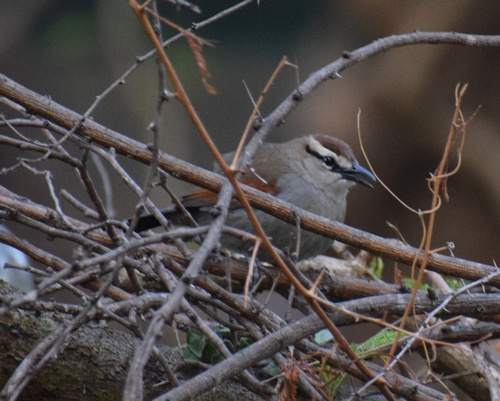 Southern Tchagra
In breve
Il segno distintivo più affidabile per separare il Black-backed Puffback dal Southern Tchagra è il forte contrasto tra le parti superiori nere e bianche e le parti inferiori bianche pure nel Puffback (soprattutto nei maschi adulti), rispetto alla corona marrone del Tchagra, alle strisce oculari nere e alle parti superiori marroni chiare con ali castagne e una coda nera e bianca. I Puffback giovanili e femminili possono essere confusi, ma mancano sempre del supercilio bianco audace e della corona marrone del Tchagra. Anche la struttura aiuta: il Tchagra è visibilmente più pesante, con una coda più lunga e un becco più lungo e più ricurvo. Entrambe le specie possono essere attive in habitat cespugliosi, ma il Tchagra preferisce cespugli densi e vegetazione costiera, mentre il Puffback si trova più spesso nella chioma degli alberi.
Consigli di identificazione
- Head pattern: Il Southern Tchagra mostra sempre una corona marrone, audaci strisce oculari nere e un ampio supercilio bianco. Il Puffback non ha mai una corona marrone; i maschi hanno un cappello nero solido, le femmine e gli immaturi hanno una macchia lorale nera e un'area supralorale bianca, ma non hanno mai un supercilio completo o una corona marrone.
- Upperparts color: I maschi Puffback sono di un blu-nero profondo sopra con una lucentezza; le femmine e gli immaturi sono più grigi ma mancano comunque delle parti superiori marroni chiare uniformi del Tchagra.
- Underparts: I maschi Puffback hanno parti inferiori bianche pure; le femmine e gli immaturi sono di un bianco sporco a buffo ma non sono mai grigi come il Tchagra. Le parti inferiori del Tchagra sono grigie chiare (le più scure nel nominato, le più chiare nel natalensis).
- Wing pattern in flight: Il Puffback mostra bordi bianchi sulle remiganti e una barra scapolare bianca (la più ampia in alcune sottospecie, la più stretta in cubla), soprattutto nei maschi. Le ali ripiegate del Tchagra sono castagne e in volo il pannello castano è visibile.
- Tail: Il Tchagra ha una lunga coda nera con punta bianca; la coda del Puffback è più corta e manca della punta bianca audace.
- Bill shape: Il becco del Tchagra è più lungo, più pesante e più ricurvo; quello del Puffback è più corto e meno curvo.
- Iris color: Gli adulti Puffback hanno iridi rosse o arancioni (a seconda della sottospecie); gli immaturi hanno marroni. Il colore dell'iride del Tchagra non è specificato, ma non mostra il rosso/arancione sorprendente dei maschi Puffback.
- Sex differences: I sessi del Puffback sono simili ma distinguibili (maschi con cappello nero solido, femmine con macchia lorale nera e dorso più grigio). I sessi del Tchagra sono simili, ma i giovani uccelli sono più opachi con una striscia oculare buffa.
- Juvenile confusion: I Puffback giovanili assomigliano alle femmine ma mancano sempre della corona marrone e del supercilio audace del Tchagra. Il Tchagra giovanile è più opaco ma mantiene il motivo della testa.
- Size and structure: Il Tchagra è più robusto, con una coda più lunga e più pesante (46.8g vs 26.0g), con un becco più lungo. Il Puffback è più compatto.
- Behavior: Il Puffback è più attivo e arboricolo, spesso nella chioma degli alberi; il Tchagra è furtivo e preferisce vegetazione densa e bassa.
- Habitat: Il Puffback si trova in boschi e ai margini delle foreste; il Tchagra si trova in cespugli densi e vegetazione costiera.
- Vocalization: Se senti il canto fischiante discendente del Tchagra o il trill della femmina, è diagnostico. La voce del Puffback non è descritta qui.
- Subspecific variation: Le sottospecie di Puffback differiscono per l'estensione del bianco sulle ali e sulle parti inferiori, ma mancano sempre del motivo della testa del Tchagra.
- Common pitfalls: Le femmine e gli immaturi Puffback possono apparire opachi e possono essere confusi con il Tchagra, ma controlla sempre la presenza/assenza della corona marrone e del supercilio, e nota la struttura e l'habitat.
Taglia
Il Southern Tchagra è significativamente più grande e più pesante del Black-backed Puffback (massa corporea: 46.8g vs 26.0g [wikidata]), ed è anche più lungo (17–21 cm vs 17 cm [wikipedia]). Il Tchagra appare più robusto, con una coda più lunga e un becco più prominente e ricurvo. Il Puffback è più compatto e leggero, con un becco e una coda più corti. Queste differenze sono più evidenti quando entrambe le specie sono viste fianco a fianco o con esperienza, ma anche singolarmente, la dimensione e la forma del Tchagra si distinguono, specialmente negli uccelli in pericolo.
Piumaggio
I Puffback giovanili e femminili possono essere confusi con il Southern Tchagra a causa dei loro toni più grigi e buffi, ma rimangono differenze chiave. Il Puffback (tutte le età) manca della corona marrone del Tchagra e mostra sempre un po' di nero sulla testa (solido nei maschi, striscia lorale nelle femmine/immaturi). I maschi Puffback sono sorprendenti con le parti superiori nere lucide, cappello nero, iridi rosse o arancioni e parti inferiori bianche pure. Le femmine e gli immaturi sono più opachi, con dorso più grigio e parti inferiori più buffe, ma mostrano comunque una macchia lorale nera e mancano del supercilio bianco ampio del Tchagra. Il Southern Tchagra di tutte le età mostra una corona marrone, audaci strisce oculari nere, ampio supercilio bianco, parti superiori marroni chiare, ali castagne e una coda nera con punta bianca. Il Tchagra giovanile è più opaco con una striscia oculare buffa ma mostra comunque il distintivo motivo della testa. In volo, il pannello delle ali castagne del Tchagra e la coda nera con punta bianca sono visibili, mentre il Puffback mostra bordi bianchi sulle remiganti (più ampi in alcune sottospecie) e una barra scapolare bianca (distinta nei maschi, meno nelle femmine/immaturi).
Comportamento
Il Black-backed Puffback è irrequieto e attivo, spesso muovendosi singolarmente, in coppie o in gruppi familiari attraverso le chiome degli alberi, raramente fermandosi a lungo. Il Southern Tchagra è più furtivo, tipicamente trovato in cespugli densi o vegetazione, spesso vicino al suolo o in copertura spessa. Il Puffback tende a cercare cibo più in alto e più apertamente, mentre il Tchagra è segreto e potrebbe essere trascurato a meno che non canti o si esibisca. Il movimento del Puffback è più energetico e agile, mentre quello del Tchagra è più lento e più deliberato.
Habitat
Il Black-backed Puffback è comune o abbastanza comune in una gamma di habitat boschivi a sud dell'equatore, inclusi boschi, margini forestali e giardini, preferendo generalmente alberi e strati superiori. Il Southern Tchagra è più ristretto a cespugli densi e vegetazione costiera nel sud e sud-est del Sudafrica e in Eswatini, raramente avventurandosi in boschi più alti o aree aperte. Se visto in vegetazione densa, bassa e intricata, è più probabile che si tratti di un Tchagra; in boschi più alti o nella chioma, ci si aspetta un Puffback.
Voce
Il Southern Tchagra ha un canto fischiante discendente distintivo (ttttrtr te te te teuuu) emesso in volo di esibizione o da un posatoio, e la femmina emette un trill tzerrrrrrrr. Le vocalizzazioni del Black-backed Puffback non sono descritte nelle note fornite, quindi la voce è solo diagnostica per il Tchagra quando si sente il canto. Se senti il canto del Tchagra descritto, il Puffback può essere escluso.
Black-backed Puffback · Southern Tchagra · I miei uccelli difficili