

Motmot

Schwarzmantel-Schneeballwürger vs Kaptschagra

Dryoscopus cubla gegen Tchagra tchagra

Ein Quiz mit Schwarzmantel-Schneeballwürger und Kaptschagra spielen
Schwarzmantel-Schneeballwürger (Dryoscopus cubla) Schwarzmantel-Schneeballwürger
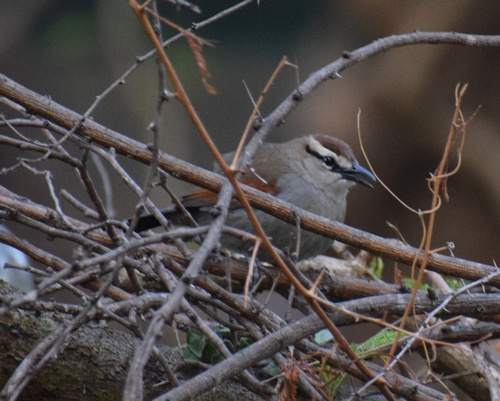
Kaptschagra (Tchagra tchagra) Kaptschagra

Medien

Laden…

Kurz gesagt

The most reliable field mark to separate Black-backed Puffback from Southern Tchagra is the strong contrast of black-and-white upperparts and pure white underparts in the Puffback (especially adult males), versus the Tchagra’s brown crown, black eye-stripes, and pale brown upperparts with chestnut wings and a black-and-white tail. Juvenile and female Puffbacks can be confusing, but always lack the Tchagra’s bold white supercilium and brown crown. Structure also helps: Tchagra is noticeably heavier-bodied, longer-tailed, and has a longer, more decurved bill. Both species can be active in bushy habitats, but Tchagra prefers dense scrub and coastal bush, while Puffback is more often in woodland canopy.

Bestimmungstipps

  1. Head pattern: Southern Tchagra always shows a brown crown, bold black eye-stripes, and a broad white supercilium. Puffback never has a brown crown; males have a solid black cap, females and immatures have a black loral spot and white supraloral area, but never a full supercilium or brown crown.
  2. Upperparts color: Puffback males are deep blue-black above with a glossy sheen; females and immatures are greyer but still lack the Tchagra’s uniform pale brown upperparts.
  3. Underparts: Puffback males have pure white underparts; females and immatures are off-white to buffy but never as grey as Tchagra. Tchagra underparts are pale grey (darkest in nominate, palest in natalensis).
  4. Wing pattern in flight: Puffback shows white edging to remiges and a white scapular bar (broadest in some subspecies, narrowest in cubla), especially in males. Tchagra’s folded wings are chestnut, and in flight, the chestnut panel is visible.
  5. Tail: Tchagra has a long, black tail tipped white; Puffback’s tail is shorter and lacks the bold white tip.
  6. Bill shape: Tchagra’s bill is longer, heavier, and more decurved; Puffback’s is shorter and less curved.
  7. Iris color: Puffback adults have red or orange irides (depending on subspecies); immatures have brown. Tchagra’s iris color is not specified, but does not show the striking red/orange of Puffback males.
  8. Sex differences: Puffback sexes are similar but distinguishable (males with solid black cap, females with black loral spot and greyer back). Tchagra sexes are similar, but young birds are duller with a buff eye-stripe.
  9. Juvenile confusion: Juvenile Puffbacks resemble females but always lack the Tchagra’s brown crown and bold supercilium. Juvenile Tchagra is duller but maintains the head pattern.
  10. Size and structure: Tchagra is bulkier, longer-tailed, and heavier (46.8g vs 26.0g), with a longer bill. Puffback is more compact.
  11. Behavior: Puffback is more active and arboreal, often in tree canopies; Tchagra is skulking and prefers dense, low vegetation.
  12. Habitat: Puffback is in woodland and forest edge; Tchagra is in dense scrub and coastal bush.
  13. Vocalization: If you hear the Tchagra’s descending whistling song or female trill, it is diagnostic. Puffback’s voice is not described here.
  14. Subspecific variation: Puffback subspecies differ in extent of white on wings and underparts, but always lack the Tchagra’s head pattern.
  15. Common pitfalls: Female and immature Puffbacks can look dull and may be confused with Tchagra, but always check for the presence/absence of brown crown and supercilium, and note structure and habitat.

Größe

Southern Tchagra is significantly larger and heavier than Black-backed Puffback (body mass: 46.8g vs 26.0g [wikidata]), and also longer (17–21 cm vs 17 cm [wikipedia]). Tchagra appears bulkier, with a longer tail and a more prominent, decurved bill. Puffback is more compact and lighter, with a shorter bill and tail. These differences are most obvious when both species are seen side by side or with experience, but even singly, Tchagra’s size and shape stand out, especially in perched birds.

Gefieder

Juvenile and female Black-backed Puffbacks can be confused with Southern Tchagra due to their greyer and buffier tones, but key differences remain. Puffback (all ages) lacks the Tchagra’s brown crown and always shows some black on the head (solid in males, loral stripe in females/immatures). Puffback males are striking with glossy black upperparts, black cap, red or orange irides, and pure white underparts. Females and immatures are duller, with greyer backs and buffier underparts, but still show a black loral spot and lack the Tchagra’s broad white supercilium. Southern Tchagra of all ages shows a brown crown, bold black eye-stripes, broad white supercilium, pale brown upperparts, chestnut wings, and a black tail tipped white. Juvenile Tchagra is duller with a buff eye-stripe but still shows the distinctive head pattern. In flight, Tchagra’s chestnut wing panel and white-tipped black tail are visible, while Puffback shows white edging to remiges (broader in some subspecies) and a white scapular bar (distinct in males, less so in females/immatures).

Verhalten

Black-backed Puffback is restless and active, often moving singly, in pairs, or family groups through tree canopies, rarely sitting still for long. Southern Tchagra is more skulking, typically found in dense scrub or bush, often low to the ground or in thick cover. Puffback tends to forage higher and more openly, while Tchagra is secretive and may be overlooked unless singing or displaying. Puffback’s movement is more energetic and agile, whereas Tchagra’s is slower and more deliberate.

Lebensraum

Black-backed Puffback is common to fairly common in a range of wooded habitats south of the equator, including woodland, forest edge, and gardens, generally preferring trees and higher strata. Southern Tchagra is more restricted to dense scrub and coastal bush in southern and southeastern South Africa and Eswatini, rarely venturing into taller woodland or open areas. If seen in dense, low, tangled vegetation, Tchagra is more likely; in taller woodland or canopy, Puffback is expected.

Stimme

Southern Tchagra has a distinctive descending whistling song (ttttrtr te te te teuuu) given in display flight or from a perch, and the female gives a trilled tzerrrrrrrr. Black-backed Puffback’s vocalizations are not described in the provided notes, so voice is only diagnostic for Tchagra when the song is heard. If you hear the described Tchagra song, Puffback can be ruled out.

Eine bessere Beschreibung senden

Nutze dieselben Abschnitte wie der Vergleich. Dein Text ist sofort veröffentlicht.

The most reliable field mark to separate Black-backed Puffback from Southern Tchagra is the strong contrast of black-and-white upperparts and pure white underparts in the Puffback (especially adult males), versus the Tchagra’s brown crown, black eye-stripes, and pale brown upperparts with chestnut wings and a black-and-white tail. Juvenile and female Puffbacks can be confusing, but always lack the Tchagra’s bold white supercilium and brown crown. Structure also helps: Tchagra is noticeably heavier-bodied, longer-tailed, and has a longer, more decurved bill. Both species can be active in bushy habitats, but Tchagra prefers dense scrub and coastal bush, while Puffback is more often in woodland canopy.

  1. Head pattern: Southern Tchagra always shows a brown crown, bold black eye-stripes, and a broad white supercilium. Puffback never has a brown crown; males have a solid black cap, females and immatures have a black loral spot and white supraloral area, but never a full supercilium or brown crown.
  2. Upperparts color: Puffback males are deep blue-black above with a glossy sheen; females and immatures are greyer but still lack the Tchagra’s uniform pale brown upperparts.
  3. Underparts: Puffback males have pure white underparts; females and immatures are off-white to buffy but never as grey as Tchagra. Tchagra underparts are pale grey (darkest in nominate, palest in natalensis).
  4. Wing pattern in flight: Puffback shows white edging to remiges and a white scapular bar (broadest in some subspecies, narrowest in cubla), especially in males. Tchagra’s folded wings are chestnut, and in flight, the chestnut panel is visible.
  5. Tail: Tchagra has a long, black tail tipped white; Puffback’s tail is shorter and lacks the bold white tip.
  6. Bill shape: Tchagra’s bill is longer, heavier, and more decurved; Puffback’s is shorter and less curved.
  7. Iris color: Puffback adults have red or orange irides (depending on subspecies); immatures have brown. Tchagra’s iris color is not specified, but does not show the striking red/orange of Puffback males.
  8. Sex differences: Puffback sexes are similar but distinguishable (males with solid black cap, females with black loral spot and greyer back). Tchagra sexes are similar, but young birds are duller with a buff eye-stripe.
  9. Juvenile confusion: Juvenile Puffbacks resemble females but always lack the Tchagra’s brown crown and bold supercilium. Juvenile Tchagra is duller but maintains the head pattern.
  10. Size and structure: Tchagra is bulkier, longer-tailed, and heavier (46.8g vs 26.0g), with a longer bill. Puffback is more compact.
  11. Behavior: Puffback is more active and arboreal, often in tree canopies; Tchagra is skulking and prefers dense, low vegetation.
  12. Habitat: Puffback is in woodland and forest edge; Tchagra is in dense scrub and coastal bush.
  13. Vocalization: If you hear the Tchagra’s descending whistling song or female trill, it is diagnostic. Puffback’s voice is not described here.
  14. Subspecific variation: Puffback subspecies differ in extent of white on wings and underparts, but always lack the Tchagra’s head pattern.
  15. Common pitfalls: Female and immature Puffbacks can look dull and may be confused with Tchagra, but always check for the presence/absence of brown crown and supercilium, and note structure and habitat.

Southern Tchagra is significantly larger and heavier than Black-backed Puffback (body mass: 46.8g vs 26.0g [wikidata]), and also longer (17–21 cm vs 17 cm [wikipedia]). Tchagra appears bulkier, with a longer tail and a more prominent, decurved bill. Puffback is more compact and lighter, with a shorter bill and tail. These differences are most obvious when both species are seen side by side or with experience, but even singly, Tchagra’s size and shape stand out, especially in perched birds.

Juvenile and female Black-backed Puffbacks can be confused with Southern Tchagra due to their greyer and buffier tones, but key differences remain. Puffback (all ages) lacks the Tchagra’s brown crown and always shows some black on the head (solid in males, loral stripe in females/immatures). Puffback males are striking with glossy black upperparts, black cap, red or orange irides, and pure white underparts. Females and immatures are duller, with greyer backs and buffier underparts, but still show a black loral spot and lack the Tchagra’s broad white supercilium. Southern Tchagra of all ages shows a brown crown, bold black eye-stripes, broad white supercilium, pale brown upperparts, chestnut wings, and a black tail tipped white. Juvenile Tchagra is duller with a buff eye-stripe but still shows the distinctive head pattern. In flight, Tchagra’s chestnut wing panel and white-tipped black tail are visible, while Puffback shows white edging to remiges (broader in some subspecies) and a white scapular bar (distinct in males, less so in females/immatures).

Black-backed Puffback is restless and active, often moving singly, in pairs, or family groups through tree canopies, rarely sitting still for long. Southern Tchagra is more skulking, typically found in dense scrub or bush, often low to the ground or in thick cover. Puffback tends to forage higher and more openly, while Tchagra is secretive and may be overlooked unless singing or displaying. Puffback’s movement is more energetic and agile, whereas Tchagra’s is slower and more deliberate.

Black-backed Puffback is common to fairly common in a range of wooded habitats south of the equator, including woodland, forest edge, and gardens, generally preferring trees and higher strata. Southern Tchagra is more restricted to dense scrub and coastal bush in southern and southeastern South Africa and Eswatini, rarely venturing into taller woodland or open areas. If seen in dense, low, tangled vegetation, Tchagra is more likely; in taller woodland or canopy, Puffback is expected.

Southern Tchagra has a distinctive descending whistling song (ttttrtr te te te teuuu) given in display flight or from a perch, and the female gives a trilled tzerrrrrrrr. Black-backed Puffback’s vocalizations are not described in the provided notes, so voice is only diagnostic for Tchagra when the song is heard. If you hear the described Tchagra song, Puffback can be ruled out.

Änderungen verwerfen?

Du hast ungespeicherte Änderungen. Wenn du jetzt gehst, gehen sie verloren.

Schwarzmantel-Schneeballwürger · Kaptschagra · Meine schwierigen Vögel