

Gipeto vs Grifone
Gypaetus barbatus contro Gyps fulvus
Fai un quiz con Gipeto e Grifone
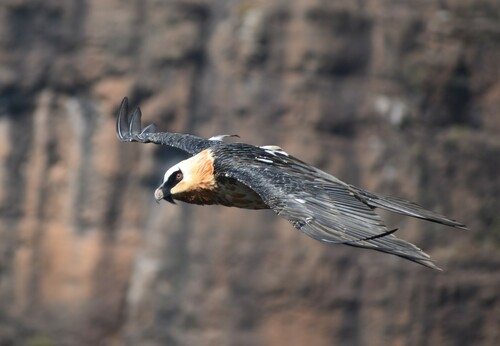 Gipeto
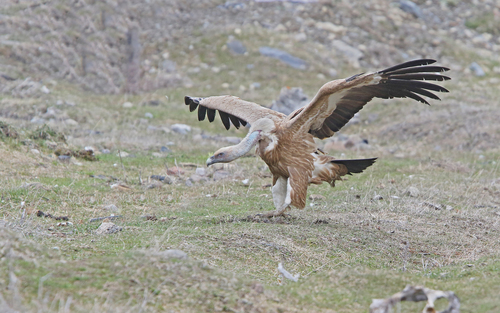 Grifone
In breve
Il segno distintivo più affidabile tra Gipeto e Grifone è la coda: il Gipeto ha una coda lunga e a forma di cuneo che è notevolmente più lunga della larghezza della sua ala, mentre il Grifone ha una coda corta e squadrata. In volo, il Gipeto appare più snodato e simile a un falco, con ali lunghe e strette e una testa piccola, mentre il Grifone appare più massiccio, con ali larghe e una grande testa chiara. I giovani Gipeti sono scuri nel complesso, mentre i giovani Grifoni mostrano già teste chiare e copritrici delle ali contrastanti. Queste differenze si mantengono a tutte le età, ma sono particolarmente evidenti in volo. Entrambe le specie sono enormi, ma il Grifone è più pesante e massiccio.
Consigli di identificazione
- Forma e lunghezza della coda: Il Gipeto ha una coda lunga e a forma di cuneo che si estende ben oltre la larghezza dell'ala; la coda del Grifone è corta e quadrata. Questo è il segno distintivo più affidabile in volo per tutte le età.
- Silhouette complessiva in volo: Il Gipeto appare snodato ed allungato, con ali lunghe e strette e una testa piccola, che ricorda un falco gigante. Il Grifone è più massiccio, con ali larghe e una grande testa chiara che sporge di più in volo.
- Testa e collo: Il Gipeto ha una testa piumata con una fronte chiara (cremosa) e una striscia nera sugli occhi e una barba. Il Grifone ha una testa calva e bianca e un evidente collare bianco sul collo, visibile anche a una certa distanza.
- Colore del piumaggio (adulti): Gli adulti Gipeti sono grigi scuri sopra, con parti inferiori rugginose o cremose (spesso macchiate di arancione a causa del fango o del bagno di polvere), e una barba nera. Gli adulti Grifoni hanno una testa chiara, con corpo e copritrici delle ali color crema che contrastano con le piume di volo scure.
- Piumaggio giovanile: I giovani Gipeti sono scuri in tutto, con un petto grigio-marrone e senza testa chiara. I giovani Grifoni mostrano già una testa chiara e un collare sul collo, con corpo color crema e ali scure contrastanti.
- Becco e faccia: Il Gipeto ha un becco relativamente piccolo e scuro e una 'barba' nera di setole sotto il mento. Il Grifone ha un becco più grande e giallastro e non ha barba.
- Dimensioni e massa: Il Grifone è più pesante e massiccio, sia in volo che a terra. Il Gipeto è grande ma più snodato e allungato.
- Comportamento in volo: Il Gipeto spesso vola da solo o in coppia e può essere visto trasportare ossa. Il Grifone è più propenso a essere visto in grandi stormi in volo.
- Comportamento a terra: Il Gipeto ha un passo ondeggiante e appare con la coda lunga e curvata. Il Grifone è più eretto e massiccio.
- Contesto dell'habitat: Il Gipeto è più ristretto a montagne alte e terreni accidentati, spesso solitario. Il Grifone può essere trovato in una gamma più ampia di habitat aperti ed è più sociale.
- Voce: Non è un segno distintivo affidabile; entrambi sono per lo più silenziosi, ma il Gipeto può emettere fischi acuti o un richiamo simile a quello di un falco vicino al nido.
- Colorazione cosmetica: Il Gipeto può apparire arancione o color ruggine sulla testa, sul petto e sulle gambe a causa delle macchie di fango ricco di ferro. Il Grifone non mostra mai questa colorazione.
- Sesso e stagione: Nessun dimorfismo sessuale o stagionale significativo nei segni distintivi per entrambe le specie; le differenze strutturali e di piumaggio sono costanti tutto l'anno.
- Trappole: A grande distanza, entrambe le specie possono apparire enormi e scure, ma la lunga coda a forma di cuneo del Gipeto e la testa chiara/collare del Grifone sono affidabili anche in scarsa luce.
- Quando i segni falliscono: In silhouette, concentrati prima sulla lunghezza e sulla forma della coda; se la testa appare chiara e la coda è corta, è un Grifone. Se l'uccello ha la testa scura con una lunga coda, è un Gipeto.
Taglia
Il Grifone è significativamente più pesante del Gipeto, con una massa media adulta di 8328 g contro 5544 g per il Gipeto [wikidata]. Entrambe le specie hanno un'apertura alare simile (circa 2,3–2,8 m), ma il Gipeto è più snodato e allungato, mentre il Grifone è più massiccio e ha ali più larghe. A terra, il Gipeto appare più allungato con una coda più lunga, mentre il Grifone è più massiccio e ha una corporatura più robusta.
Piumaggio
- Uccelli giovanili/immaturi: I giovani Gipeti sono scuri, nero-marroni su gran parte del corpo, con un petto grigio-marrone, e mancano della testa chiara e del collare del Grifone. I giovani Grifoni, al contrario, hanno già una testa chiara (bianca) e un collare sul collo, con corpo color crema e copritrici delle ali che contrastano con le piume di volo scure. Questo contrasto nel colore della testa e del corpo è una separazione chiave a tutte le età.
- Adulti: Gli adulti Gipeti sono per lo più grigi scuri sopra con parti inferiori cremose o rugginose, una fronte chiara e una distintiva striscia nera sugli occhi e barba. La testa non è mai calva. Gli adulti Grifoni hanno una testa bianca e calva, un evidente collare bianco sul collo e un becco giallo, con corpo e copritrici delle ali color crema e piume di volo scure. La coda rimane corta e quadrata nel Grifone, lunga e a forma di cuneo nel Gipeto.
- Schema delle ali e della coda in volo: Le ali del Gipeto sono lunghe e strette, e la coda è lunga e a forma di cuneo, mentre le ali del Grifone sono larghe e la coda è corta e quadrata. Non è descritto alcun schema distintivo della parte superiore dell'ala per entrambe le specie, ma la forma complessiva e la lunghezza della coda sono diagnostiche.
Comportamento
Il Gipeto è specializzato nel nutrirsi di ossa ed è spesso visto trasportare ossa in alto per farle cadere sulle rocce e romperle. Il suo volo è più simile a quello di un falco, con un profilo snodato e allungato e una lunga coda. Il Grifone è un tipico spazzino, nutrendosi di carogne, ed è spesso visto volare in grandi gruppi. A terra, il Gipeto ha un passo ondeggiante e appare più allungato, mentre il Grifone è più massiccio e più eretto.
Habitat
Entrambe le specie si trovano in regioni montuose, ma il Gipeto è più specializzato per terreni accidentati ad alta quota dove può trovare ossa da mangiare. Il Grifone è più diffuso e può essere trovato in una varietà di habitat aperti, comprese scogliere, gole e talvolta a quote più basse. In Europa, il Grifone è più probabile che venga visto in gruppi più numerosi, mentre il Gipeto è solitamente solitario o in coppie.
Voce
Il Gipeto è generalmente silenzioso, tranne per fischi acuti durante le esibizioni di corteggiamento e un richiamo simile a quello di un falco 'cheek-acheek' vicino al nido. Le vocalizzazioni del Grifone non sono descritte nelle note, ma nessuna delle due specie è probabile che venga identificata per voce sul campo.