

Band-rumped Swift vs Short-tailed Swift
Chaetura spinicaudus contro Chaetura brachyura
Fai un quiz con Band-rumped Swift e Short-tailed Swift
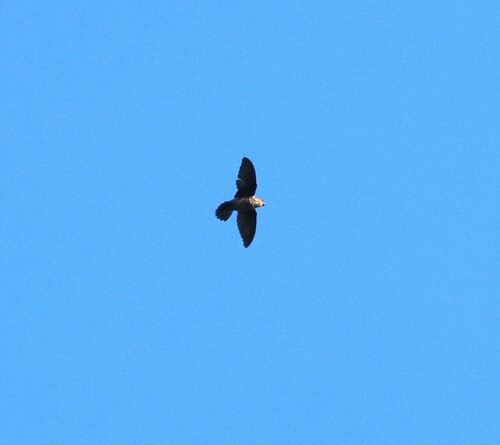 Band-rumped Swift
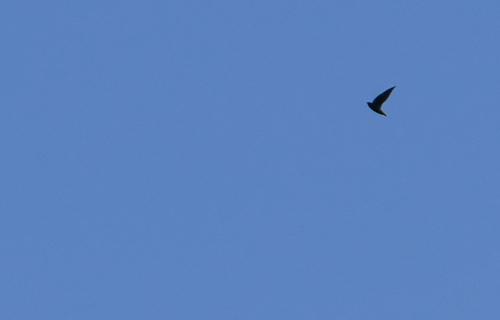 Short-tailed Swift
In breve
Il segno di campo più affidabile tra Band-rumped Swift e Short-tailed Swift è il contrasto tra il sottocoda e la coda: il Band-rumped mostra una banda sottocoda bianca o chiara nettamente distinta da una coda molto più scura, mentre il sottocoda dello Short-tailed Swift è chiaro ma si fonde dolcemente nella coda, mancando di un forte contrasto. I giovani Band-rumped Swift mostrano anche piume delle ali con punte bianche, una caratteristica assente nello Short-tailed. Entrambi sono simili in dimensioni e struttura, ma differenze sottili nella forma della coda e nelle proporzioni delle ali possono aiutare. Un'attenta attenzione al contrasto sottocoda/coda e, per i giovani, alle punte delle piume delle ali, è fondamentale per la separazione sul campo.
Consigli di identificazione
- I giovani Band-rumped Swifts mostrano punte bianche su alcune piume delle ali—cerca queste in volo o quando l'uccello si inclina in buona luce. Gli Short-tailed Swifts non mostrano mai questa caratteristica a nessuna età.
- Il contrasto sottocoda-coda è il segno di campo più importante: il Band-rumped Swift ha una banda sottocoda bianca o chiara ben definita che spicca contro una coda molto più scura. Il sottocoda dello Short-tailed Swift è chiaro ma si fonde dolcemente nella coda, che non è molto più scura—nessun contrasto netto.
- Forma della coda: la coda del Band-rumped è corta e quadrata, a volte appare leggermente più squadrata rispetto a quella dello Short-tailed, ma entrambe sono corte e le differenze sono sottili; usare con cautela.
- Forma delle ali: le ali del Band-rumped Swift si gonfiano nel mezzo e si incurvano alla fine, mentre le ali dello Short-tailed sono lunghe e strette. Questa è una differenza sottile e meglio visibile in confronto diretto o con esperienza.
- Colore delle parti inferiori: entrambi sono scuri sotto, ma il Band-rumped può mostrare una gola leggermente più chiara, specialmente nella sottospecie C. s. aetherodroma. Questo è un segno minore e non sempre visibile.
- Variazione delle sottospecie: C. s. aetherodroma (Band-rumped) è più piccolo, con un sottocoda più grigio e una gola più chiara, ma il contrasto sottocoda/coda rimane il segno migliore.
- Dimensioni e robustezza: lo Short-tailed Swift è leggermente più pesante e può apparire più robusto, ma la sovrapposizione delle dimensioni è ampia e questo non è un segno di campo sicuro.
- Comportamento alimentare: entrambe le specie si nutrono in volo, ma il Band-rumped può essere visto più in alto nell'aria o sopra l'acqua all'alba/tramonto. Non è affidabile per la separazione.
- Vocalizzazioni: se senti un 'pseee-trr' bisillabico o un 'prrrree-trtr' ronzante, è probabile che sia un Band-rumped Swift. Le chiamate dello Short-tailed non sono descritte, quindi solo le chiamate positive del Band-rumped sono utili.
- I sessi sono simili in entrambe le specie: non usare il sesso per l'identificazione.
- Contesto e distribuzione: entrambe le specie si sovrappongono ampiamente in distribuzione e habitat; non fare affidamento solo sulla posizione.
- Composizione del gruppo: il Band-rumped può nutrirsi più in alto o più in basso a seconda della composizione del gruppo, ma questo è sottile e non diagnostico.
- Illuminazione e angolo di visione: il contrasto sottocoda/coda del Band-rumped è meglio visibile in buona luce e quando l'uccello si inclina o vola via. La scarsa illuminazione può oscurare questo segno, quindi più visualizzazioni sono utili.
- Trappole: fai attenzione a confondere i sottocoda chiari in scarsa luce o a distanza—cerca sempre la nitidezza del contrasto con la coda, non solo la presenza di un sottocoda chiaro.
- Cautela per l'età: se vedi piume delle ali con punte bianche, stai guardando un giovane Band-rumped Swift; l'assenza di questo non esclude il Band-rumped, ma la presenza è diagnostica.
Taglia
Entrambe le specie sono molto simili in lunghezza, con il Band-rumped Swift che varia da 10.5 a 12.6 cm e lo Short-tailed Swift circa 10.5 cm. Tuttavia, lo Short-tailed Swift è più pesante in media (circa 20 g contro 13.8–18.5 g per il Band-rumped), conferendogli un aspetto leggermente più robusto. In pratica, la dimensione da sola non è un separatore affidabile, ma lo Short-tailed può apparire più robusto in confronto diretto.
Piumaggio
- Giovane Band-rumped Swift: Mostra punte bianche su alcune piume delle ali, visibili in buona luce e specialmente in volo. Questa caratteristica è assente nello Short-tailed Swift di qualsiasi età.
- Adulti: il Band-rumped Swift ha una banda sottocoda bianca o chiara ben definita che spicca contro una coda e parti superiori molto più scure. Anche lo Short-tailed Swift ha un sottocoda chiaro, ma la transizione alla coda è graduale, con poco contrasto—la coda non è marcatamente più scura del sottocoda.
- Parti inferiori: entrambi sono scuri sotto, ma il Band-rumped può mostrare una gola leggermente più chiara. Esiste una variazione delle sottospecie (ad es., C. s. aetherodroma ha un sottocoda più grigio e una gola più chiara), ma il contrasto sottocoda/coda rimane il segno chiave.
- Coda: entrambe hanno code corte, ma quella del Band-rumped è quadrata e può apparire leggermente più squadrata, mentre quella dello Short-tailed è anch'essa corta ma non così distintamente squadrata.
Comportamento
Entrambe le specie sono insettivori aerei, nutrendosi in volo. Il Band-rumped Swift spesso cerca cibo in gruppi di specie singole a quote più elevate, ma rimarrà più in basso quando mescolato con altri swift, ed è spesso visto sopra l'acqua all'alba e al tramonto. Anche lo Short-tailed Swift si nutre in volo, spesso su formiche volanti e termiti. Il comportamento è ampiamente simile e non è affidabile per la diagnosi sul campo.
Habitat
Entrambe le specie si sovrappongono ampiamente in distribuzione e habitat, presenti da Panama attraverso il nord del Sud America e Trinidad. Entrambi si trovano su aree aperte, vicino all'acqua e nelle foreste di pianura. L'habitat non è un separatore affidabile dove le loro distribuzioni si sovrappongono.
Voce
Il Band-rumped Swift emette un 'pseee-trr' bisillabico diagnostico o un 'prrrree-trtr' ronzante, e a volte una serie di note ripetute 'tsee-tsee-tsee'. Le vocalizzazioni dello Short-tailed Swift non sono descritte nelle fonti, quindi la voce è utile solo se si sentono le chiamate distintive del Band-rumped. Altrimenti, la vocalizzazione non è un forte separatore.
Band-rumped Swift · Short-tailed Swift · I miei uccelli difficili