

Piviere americano vs Killdeer
Pluvialis dominica contro Charadrius vociferus
Fai un quiz con Piviere americano e Killdeer
 Piviere americano
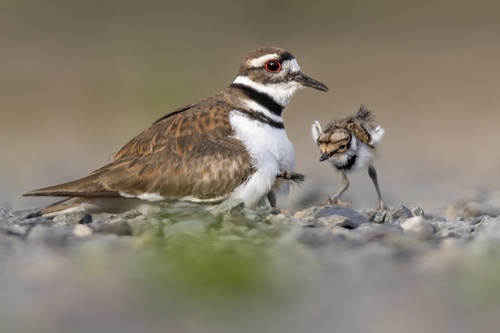 Killdeer
In breve
Il segno di campo più affidabile per separare il Piviere americano dal Killdeer è la presenza di due bande nere bold sul petto del Killdeer, rispetto a una sola pancia nera solida e sottocoda (in abito nuziale) o parti inferiori semplici (in non nuziale) sul Piviere americano. In volo, il Killdeer mostra una striscia bianca brillante sulle ali e un sottocoda ruggine, mentre il Piviere americano manca di entrambi. Anche la struttura aiuta: il Killdeer ha una coda più lunga e un becco più spesso, mentre il Piviere americano è più snello con una testa e un becco più piccoli. Gli uccelli giovanili e non nuziali possono essere confusi, ma il modello delle bande sul petto e i contrasti ali/sottocoda rimangono affidabili. L'habitat e il comportamento possono sovrapporsi, ma il Killdeer è molto più probabile nei campi aperti e nelle aree urbane, mentre il Piviere americano preferisce la tundra o le pianure fangose aperte durante la migrazione.
Consigli di identificazione
- Bande sul petto: Il Killdeer mostra sempre due bande nere bold su uno sfondo bianco (adulti e la maggior parte dei giovanili). Il Piviere americano non ha mai due bande sul petto; gli adulti in abito nuziale hanno una pancia nera solida, mentre gli uccelli non nuziali e giovanili hanno parti inferiori semplici e chiare.
- Striscia sulle ali in volo: Il Killdeer mostra una striscia bianca evidente alla base delle penne alari, visibile in tutte le età e stagioni. Il Piviere americano non ha alcuna striscia bianca sulle ali.
- Sottocoda ruggine: Il Killdeer mostra un sottocoda ruggine e una parte superiore della coda in volo o quando si esibisce. Il sottocoda del Piviere americano è semplice, senza ruggine.
- Modello della coda: La coda del Killdeer è marrone con una banda subterminale nera e una banda terminale bianca, spesso aperta in mostra. La coda del Piviere americano è semplice e priva di queste bande contrastanti.
- Forma del becco: Il Killdeer ha un becco corto, spesso e scuro; il becco del Piviere americano è più corto, più snello e più delicato.
- Testa e faccia: Il Killdeer ha una fronte bianca, un supercilio bianco (sopracciglio) e una maschera nera con un collare bianco. Il Piviere americano in abito nuziale ha una faccia e una gola nere con una corona e una nuca bianche, ma senza collare o maschera.
- Anello oculare: Il Killdeer ha un anello oculare rosso evidente, assente nel Piviere americano.
- Parti superiori: Il Piviere americano mostra parti superiori macchiate d'oro in abito nuziale; il Killdeer è marrone semplice con frange ruggine.
- Colore delle gambe: Il Killdeer ha gambe color carne; il colore delle gambe del Piviere americano non è specificato ma non è un segno di campo forte in questo confronto.
- Confusione giovanile: Il giovanile Killdeer può mostrare brevemente solo una banda sul petto, ma sviluppa rapidamente la seconda. I giovanili del Piviere americano non mostrano mai bande sul petto.
- Voce: Se senti un forte richiamo ripetuto 'kill-deer', è un Killdeer. Il Piviere americano è molto più silenzioso e meno vocale durante la migrazione.
- Habitat: In ambienti urbani, suburbani o agricoli, il Killdeer è molto più probabile. Il Piviere americano preferisce la tundra (riproduzione) o pianure fangose/campi aperti (migrazione), raramente in aree costruite.
- Comportamento: Il Killdeer esegue spesso la mostra del 'ala rotta', esponendo il suo sottocoda ruggine e aprendo la coda. Il Piviere americano non mostra questo comportamento.
- Tempistica stagionale: Il Piviere americano cambia in abito invernale più tardi (settembre-ottobre) rispetto al Piviere orientale, ma questo non è diagnostico rispetto al Killdeer.
- Dimensione del gruppo: Il Killdeer è spesso visto in coppie o piccoli gruppi in aree aperte; il Piviere americano può essere solitario o in stormi sciolti, specialmente durante la migrazione.
Taglia
Il Piviere americano è leggermente più pesante in media (massa corporea ~145 g [wikidata]) rispetto al Killdeer (tipicamente 72–121 g [wikipedia]), ma entrambi sono simili in lunghezza (Piviere americano: 24–28 cm; Killdeer: 20–28 cm) e apertura alare (Piviere americano: 65–67 cm; Killdeer: 59–63 cm). Sul campo, il Killdeer appare spesso più alto e con una coda più lunga, mentre il Piviere americano appare più compatto e snello, specialmente quando si nutre o è all'erta.
Piumaggio
- Volo giovanile/immaturo: Il Killdeer di tutte le età mostra una forte striscia bianca sulle ali alla base delle penne alari e un sottocoda ruggine, entrambi visibili in volo. Il Piviere americano manca di entrambe queste caratteristiche, mostrando ascellari grigi semplici e nessuna striscia bianca sulle ali o sottocoda ruggine.
- Riproduzione adulta: Il Piviere americano ha una faccia, un collo, un petto e una pancia neri straordinari, con una corona/nuca bianca e un dorso macchiato d'oro. Il Killdeer non mostra mai questo modello; invece, ha parti superiori marroni, una fronte bianca e due bande nere sul petto su una pancia bianca.
- Non riproduzione/adulto giovanile: Il Piviere americano diventa grigio-marrone sopra e chiaro sotto, con un sopracciglio biancastro ma senza bande sul petto. Il Killdeer mantiene le sue due bande nere sul petto tutto l'anno, e i giovanili mostrano una singola banda sul petto quando sono molto giovani, acquisendo rapidamente la seconda. Il Killdeer ha anche un collare bianco con un bordo superiore nero e un anello oculare rosso, mentre il Piviere americano manca di queste caratteristiche.
- Coda e sottocoda: Il Killdeer ha una coda marrone con una banda subterminale nera, una banda terminale bianca e un sottocoda ruggine; la coda e il sottocoda del Piviere americano sono semplici, privi di questi contrasti.
Comportamento
Entrambe le specie sono terrestri e spesso corrono in brevi scatti, ma il Killdeer è particolarmente noto per la sua mostra di distrazione 'ala rotta', dove finge un infortunio ed espone il suo sottocoda ruggine per attirare i predatori lontano dal nido. Il Killdeer è anche più vocale e appariscente, spesso richiamando in volo o a terra. Il Piviere americano è più riservato, specialmente durante la migrazione, ed è meno probabile che esegua mostre di distrazione. Entrambi difendono i territori, ma il Killdeer è più probabile che venga visto in coppie o piccoli gruppi in habitat alterati dall'uomo.
Habitat
Il Killdeer è altamente adattabile e comune in campi aperti, terreni agricoli, lotti di ghiaia e persino tetti, spesso lontano dall'acqua. Il Piviere americano nidifica sulla tundra artica e migra attraverso pianure fangose aperte, erba corta e talvolta campi agricoli, ma è molto meno probabile trovarlo in ambienti urbani o suburbani. Se vedi un piviere in un parco cittadino o in un parcheggio, è quasi certamente un Killdeer.
Voce
Il Killdeer è estremamente vocale, con un forte richiamo ripetuto 'kill-deer' o 'kee-deeyu', spesso udito anche di notte. Il suo richiamo di allerta è un trillo rapido. Il Piviere americano è più silenzioso e meno probabile che chiami persistentemente durante la migrazione o l'inverno; i suoi richiami non sono descritti nelle note fornite, ma sono generalmente più morbidi e meno distintivi rispetto a quelli del Killdeer.